Related traditions, not one origin story
Work songs, field hollers and spirituals appear frequently in explanations of the blues. All belong in conversations about African American musical history, but they are not three names for the same kind of song. They served different purposes, took shape in different settings and could be performed in different ways. Treating them as interchangeable can make both the older traditions and the blues harder to understand.
There is no single, tidy path from one tradition to another. People carried vocal habits, rhythms, phrases and ways of responding to a singer between work, worship and social life. The blues emerged within that wider musical world, alongside other forms of expression. Listening for connections is useful; assuming that every resemblance proves a direct line of descent is less so.
Work songs: making time together
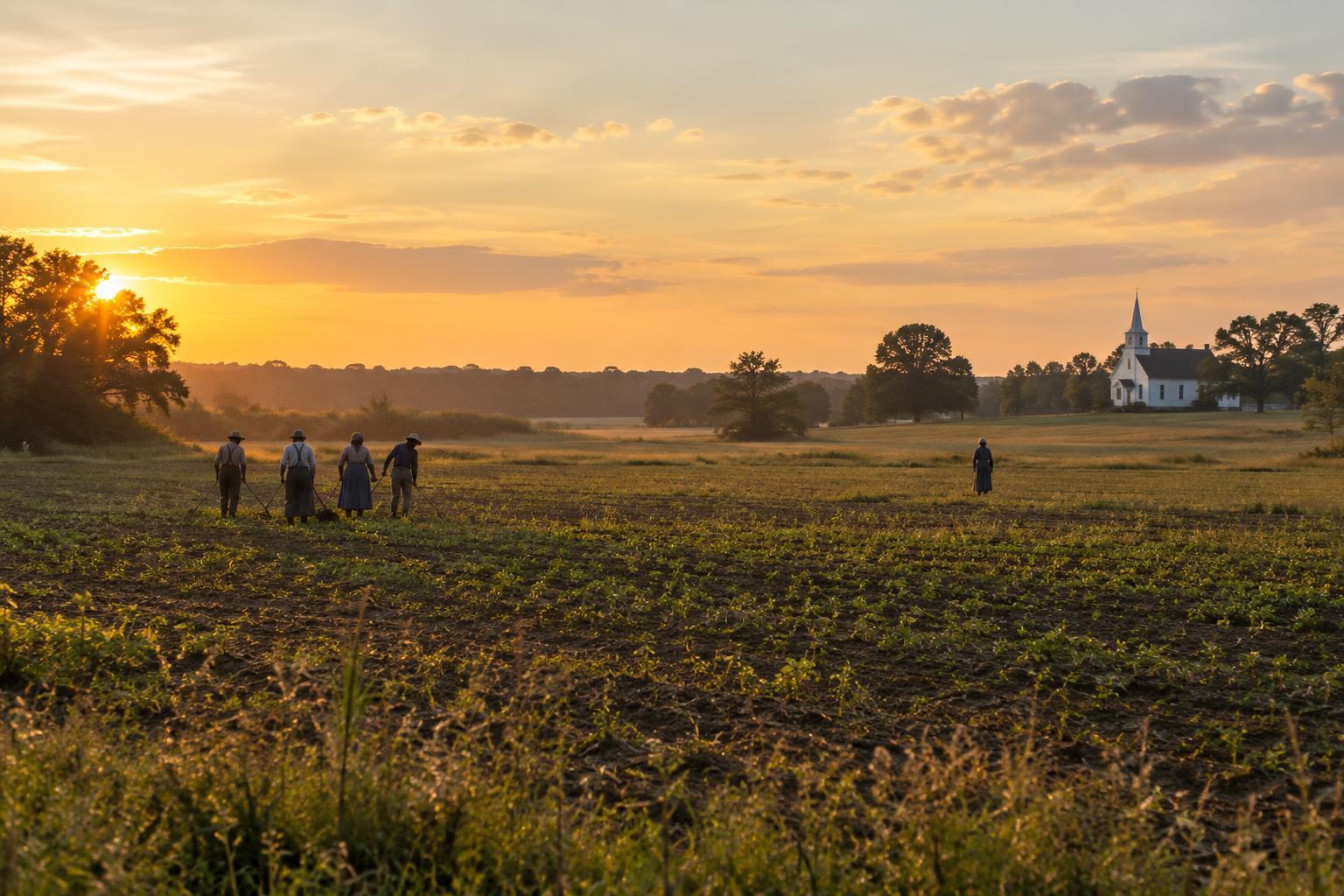
A work song helps a group coordinate or endure a shared task. Its beat might mark a repeated movement, while a leader's line gives others a place to answer. Repetition makes participation possible even when singers change words from one pass to the next. The sound and pace of a work song depend partly on what people are doing: a rhythm suited to a coordinated task is different from a song sung while individuals work at separate speeds.
Accounts of work songs must also keep the conditions of labor in view. Some of the best-known examples are associated with forced or exploitative labor. The ingenuity of singers should not soften the reality of those conditions. A song might help workers keep time, communicate or find a measure of expression, but it did not make the work freely chosen.
Call and response is one connection listeners may notice between work songs and later blues performances. Yet a blues singer inviting an instrumental reply is not necessarily performing a work song. The musical device can travel beyond its original task.
Field hollers: a voice across space
A field holler is often described as a solo vocal expression, sung or called by someone working outdoors or across a distance from others. Unlike a group work song, it need not keep several people moving in time. A singer might stretch a syllable, bend a pitch, vary a line or let the rhythm follow the words rather than a steady pulse. Another voice could answer, but an answer was not required.
Those flexible vocal gestures can sound familiar to blues listeners. A drawn-out note, a slide between pitches or a phrase that feels close to speech may recall a blues vocal line. Similarity, though, does not make every holler an early blues song. The setting and purpose matter: a voice carrying across a field has a different immediate function from a singer addressing an audience.
Hollers were not all alike, and the examples available to listeners cannot capture every way people used their voices. It is better to hear an individual performance closely than to treat one recording as the definitive sound of the tradition.
Spirituals: singing within religious life
Spirituals are songs rooted in African American religious experience. They can bring together biblical imagery, hope, sorrow, testimony and collective participation. Some invite a group to join a refrain; others allow a singer to shape a line with considerable freedom. Their words and musical forms vary, and their meaning cannot be reduced to a single mood or message.
A spiritual may share repetition, expressive pitch or call and response with a work song or a blues performance. Its religious setting remains important, even when the same singer also knows secular music. Spirituals are not simply work songs with sacred words, nor are they blues songs before the blues had a name. Each description overlooks how singers and communities understood what they were doing.
Performance setting can change what a listener hears. A spiritual sung in communal worship, arranged for a concert and preserved on a recording may sound quite different in each case. None of those versions alone can stand for every use of the song.
How to listen for connections without flattening them
When comparing these traditions with the blues, start with questions rather than a family tree. Is the voice leading a group, calling across a space or addressing fellow worshippers? Does the rhythm organize physical movement, support shared singing or give a soloist room to pause? Listen for the response to a line, the shape of a repeated phrase and the way a singer bends or sustains a note.
Then consider what the comparison cannot tell you. A recording gives access to a performance, not the full circumstances in which a tradition lived. Labels such as “work song” or “holler” can be helpful, but they may hide differences among singers, communities and occasions. Blues musicians could draw on sounds they knew while making music for new purposes; they did not merely reproduce older forms.
The most rewarding connection is not a claim that all three traditions became the blues. It is the chance to hear how African American singers used voice, rhythm and shared language in varied parts of life. Holding those differences alongside the similarities makes the history richer—and each performance more worth hearing on its own terms.