Start with a question, not a checklist
A self-guided blues walking tour does not need to cover every famous name or landmark in a city. It works better when you begin with a question: Where did musicians gather? How did a neighborhood support live performance? What can you learn about the relationship between music and everyday life? A clear focus helps you choose stops that belong together rather than racing between distant addresses.
Choose a compact area you can comfortably explore on foot. A former performance district, a cluster of current venues or a route between a public archive and nearby gathering places can all provide a starting point. Aim for a few meaningful stops, with time to pause between them. If you are new to the area, build in extra time for crossings, rest and unexpected closures. The point is to notice your surroundings, not to finish a scavenger hunt.
Choose stops and check what they represent
Begin with places you can identify through dependable local information, such as museum descriptions, public historical markers, venue pages or library collections. For each possible stop, note why it matters and whether the connection is to a building, a wider neighborhood or a tradition that moved through many places. A plaque outside a former venue may tell one story; a club with music on its calendar tells another. Neither stands for the whole history of the blues.
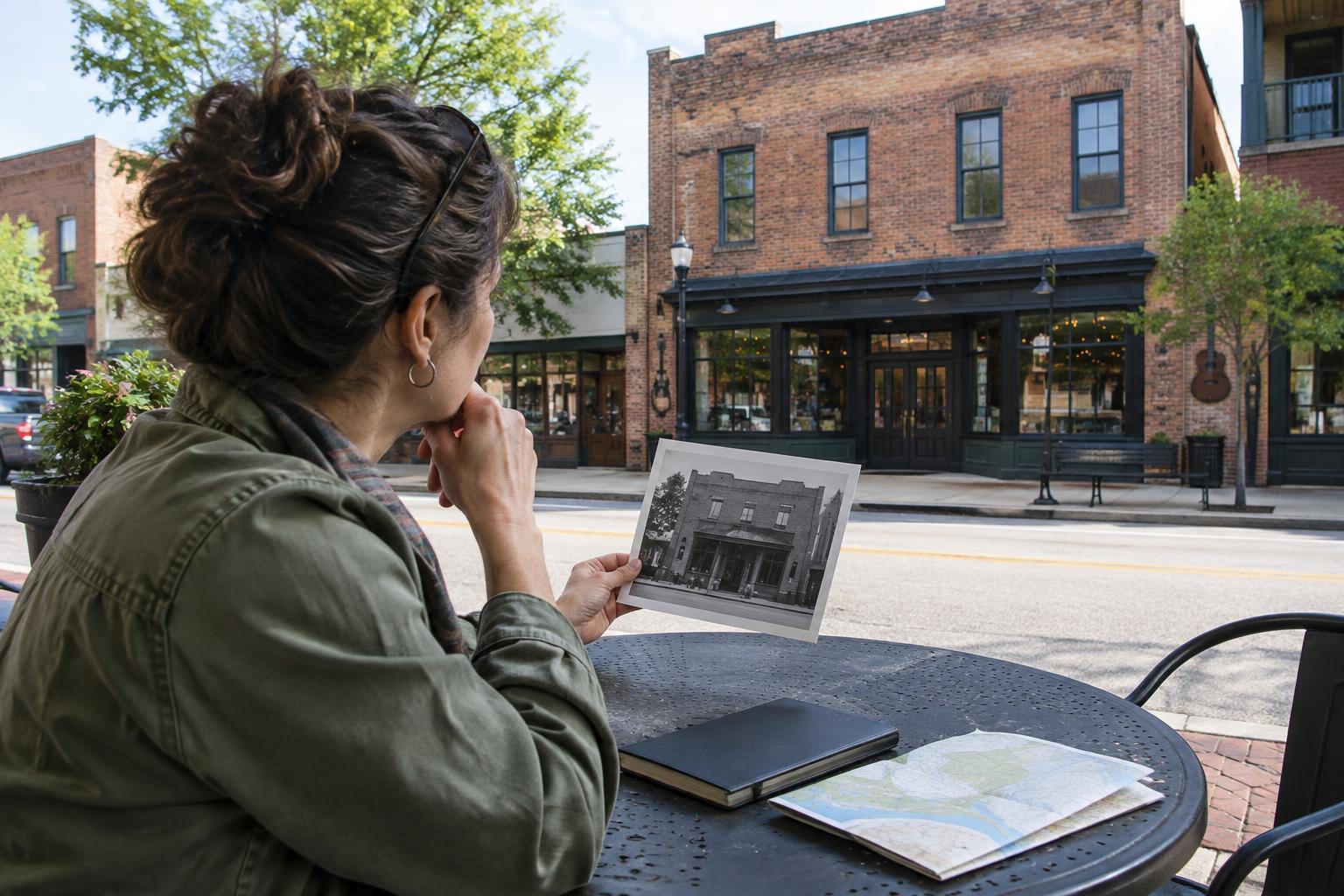
Check practical details separately from historical details. An old photograph does not tell you whether a building is open today, and a venue listing may not explain its past. Before you leave, verify any opening hours, admission requirements and performance schedules directly with the place you hope to visit. If a site is closed, you can often appreciate its exterior from a public walkway, but do not assume that a historically significant address is open to visitors.
Look beyond the best-known performers when shaping the route. Record shops, churches, community spaces and ordinary streets may help you think about the audiences, workers and neighbors who sustained a music scene. Some of these places may be private or still serve a community purpose. Treat them as context for learning, not automatic sightseeing stops.
Build a route that leaves room to listen
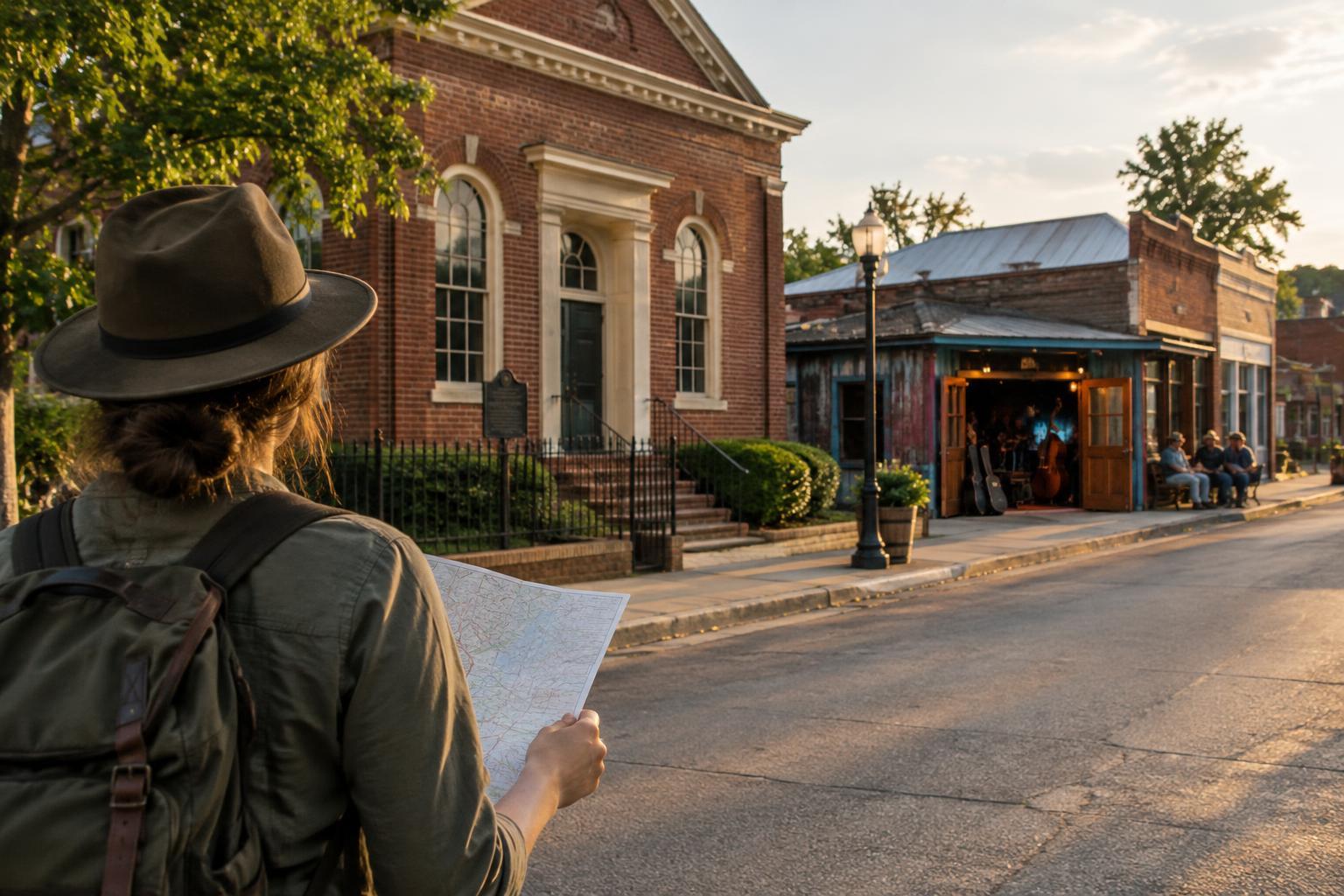
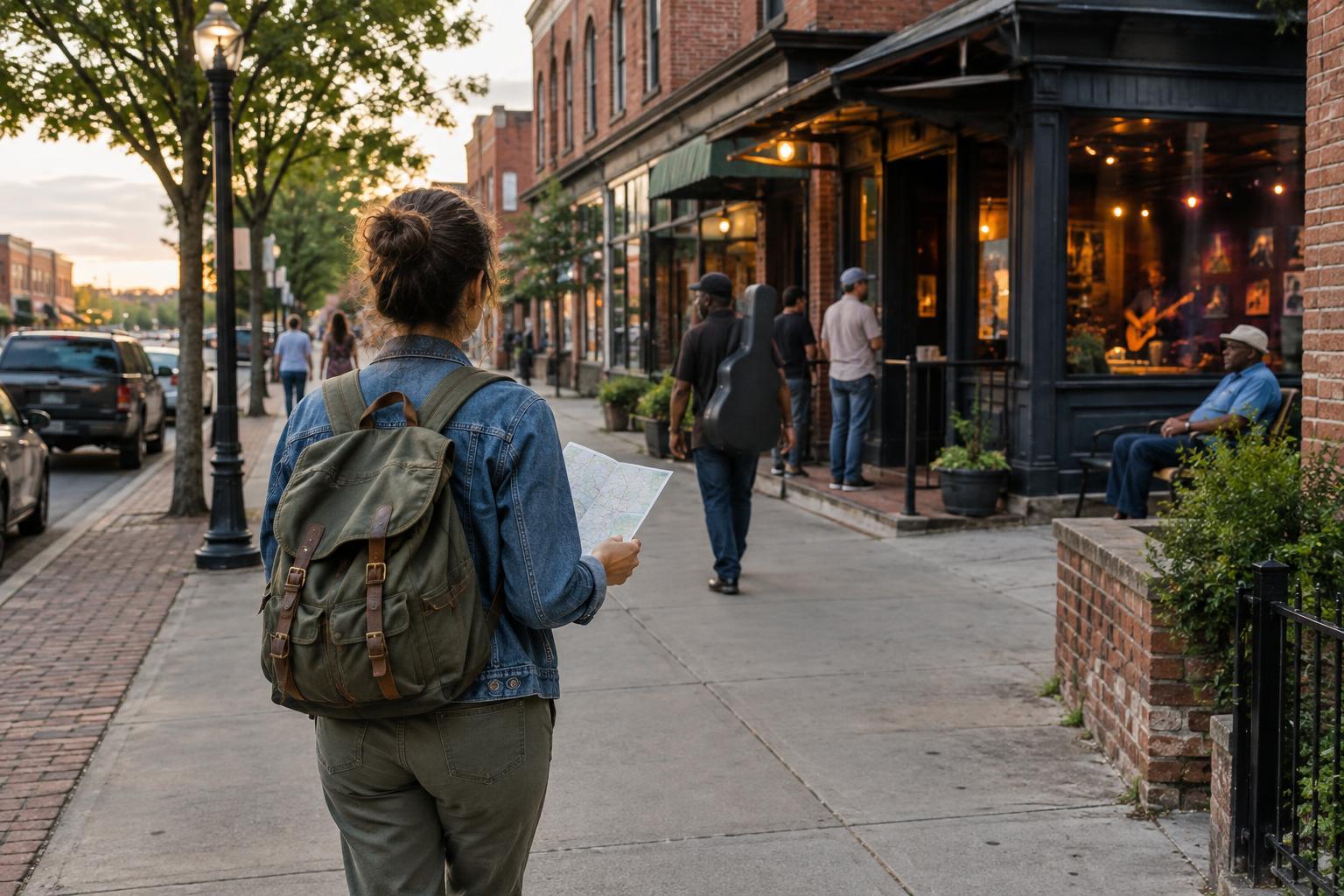
Put your confirmed stops on a map and arrange them in a walkable order. Check for busy roads, steep stretches and accessible crossings, and identify a place to sit or take shelter. A loop can be convenient, but a one-way route ending near transit may be easier if you plan to hear live music afterward. Keep a backup stop in mind rather than packing the schedule so tightly that one closed door disrupts the day.
Prepare a short listening list tied to your theme. You might compare different approaches to guitar, voice or rhythm, or listen for how performers respond to one another. Save tracks for a quiet break or listen before and after the walk; headphones can make it harder to hear traffic and engage with a place. Jot down a question at each stop, such as what kinds of spaces made performance possible there. Your notes and observations can be more valuable than trying to play a song at every address.
Be a considerate guest in a living neighborhood
A music neighborhood is not a stage set. People may live, work, worship or gather at the locations on your map. Stay on public paths unless you have permission to enter, keep entrances clear and be thoughtful with photographs. Ask before taking close-up pictures of people or recording a performance. If a venue has a cover charge, purchase expectation or house rules, check them before settling in.
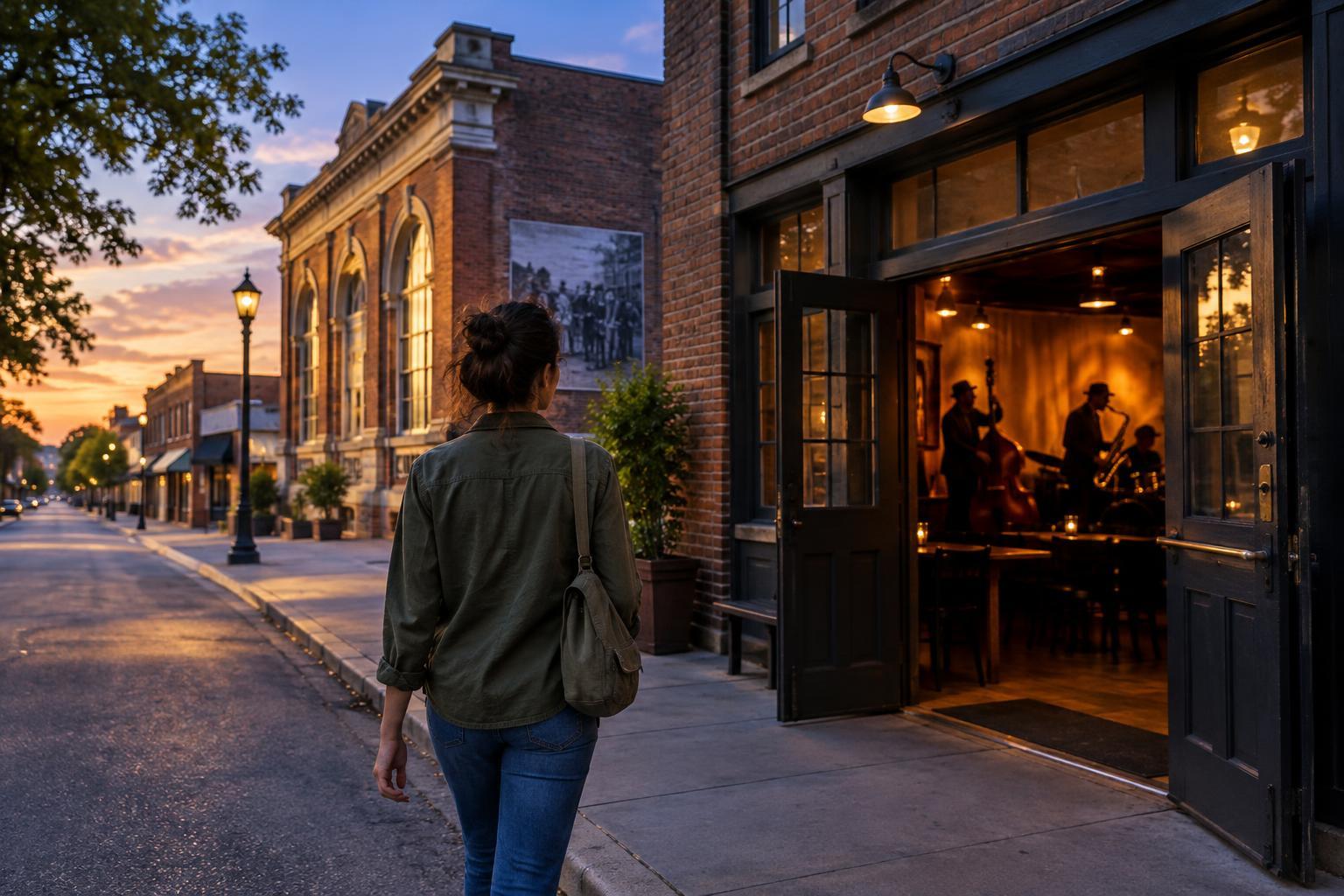
Listening to live music can be part of the tour, but it is not required. If you do go, arrive prepared to give the performance your attention rather than talking over it or treating musicians as background for photos. Follow the venue’s guidance on recording and tipping. Where you can, support places that help keep music accessible, whether by buying a ticket, visiting a local shop or returning for a longer listen.
Let the walk change your understanding
Afterward, look over your notes alongside the music you heard. Which stops revealed something you could not have learned from a playlist alone? Which questions need more careful reading? A building may be gone, a venue may have changed use, and a tradition may continue in places your route did not include. Those gaps are part of the experience, not failures of your itinerary.
The strongest self-guided tour is modest about what it can explain. It connects a few places to a few listening questions while leaving space for the people and stories you have not encountered. Plan carefully, walk attentively and let the route become a beginning for deeper listening rather than a claim to have seen everything.