
Blues ListeningSlow blues and blues ballads can share a gentle pace, expressive singing and spacious solos. The difference is often in what leads the performance: a recurring blues groove or a songlike story. Here are practical cues to listen for without forcing every recording into one category.
Read article · 4 min↗
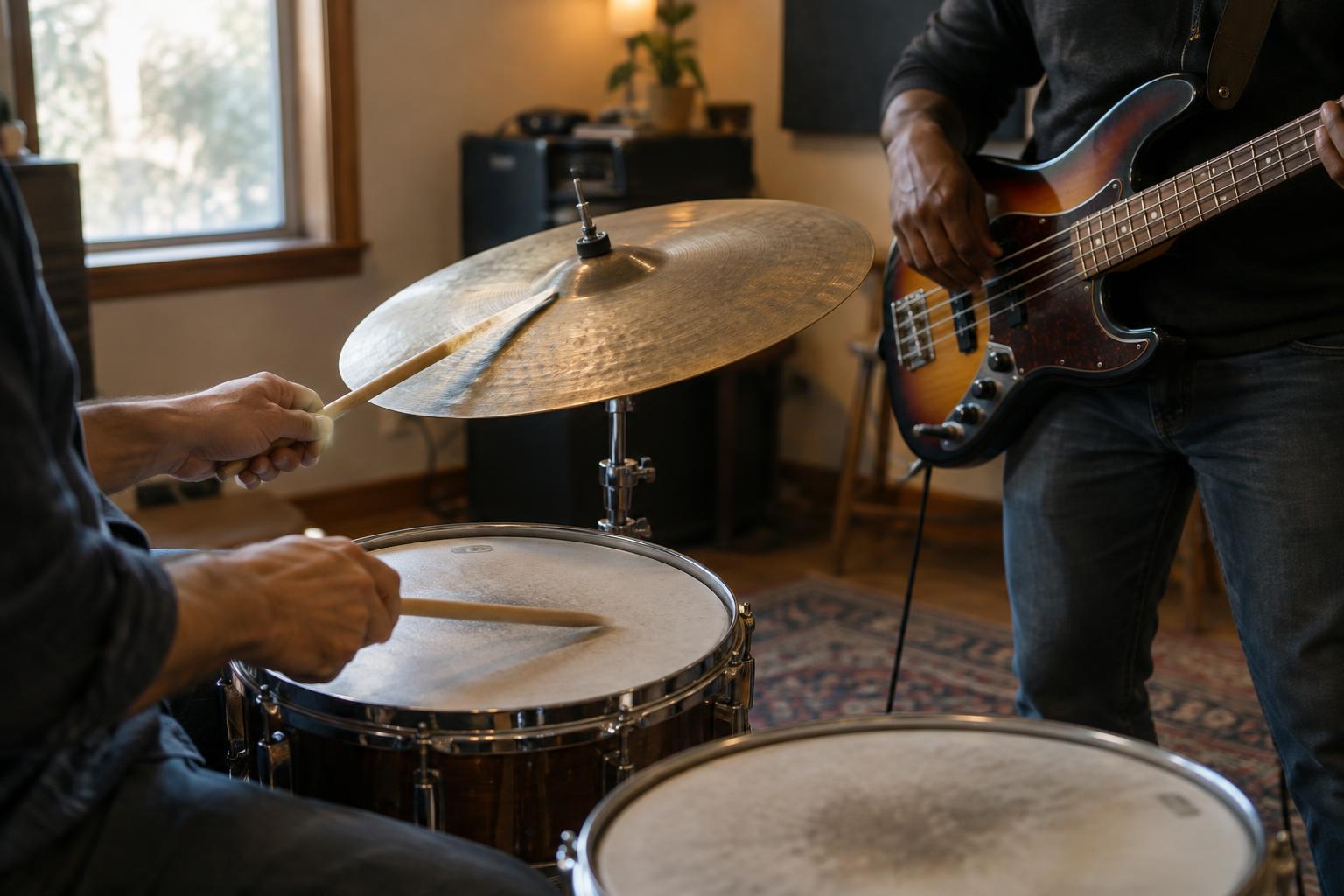
Blues ListeningWhat makes one blues groove roll while another drives forward evenly? Learn to hear the difference between shuffle and straight feel, notice how a rhythm section creates each one, and try a simple listening exercise that works without music theory.
Read article · 4 min↗

Blues ListeningBlue notes give blues melodies their distinctive pull against the harmony. Learn what to listen for in the third, fifth and seventh, and how singers and instrumentalists shape those notes.
Read article · 4 min↗

Blues ListeningA blues recording can feel like a conversation, even when only one person is singing. Learn how to hear the exchange between a voice and an instrument, between repeated lines, and between musicians in an ensemble.
Read article · 4 min↗

Blues ListeningThe 12-bar blues can be easier to hear than to explain. Learn to follow its repeating cycle, recognize the movement between three chords, and find your place again when a player adds a turnaround or changes the pattern.
Read article · 4 min↗