What makes classic blues distinctive?
Classic blues is often associated with the women singers who performed and recorded it in the early twentieth century. Its familiar sound pairs a featured vocalist with piano, small ensembles or larger bands. The singer might deliver a lyric with conversational intimacy, stretch a phrase for dramatic effect or answer an instrumental line. The result can feel both carefully staged and remarkably direct.
The label is useful, but it should not suggest that blues began in a recording studio or followed a single path. Singers drew on musical practices heard in Black communities, traveling entertainment, theater and popular song. Classic blues developed alongside other blues styles rather than neatly replacing them. Hearing it as a meeting point of traditions makes the performers’ choices easier to appreciate.
Women built the stage before records captured it
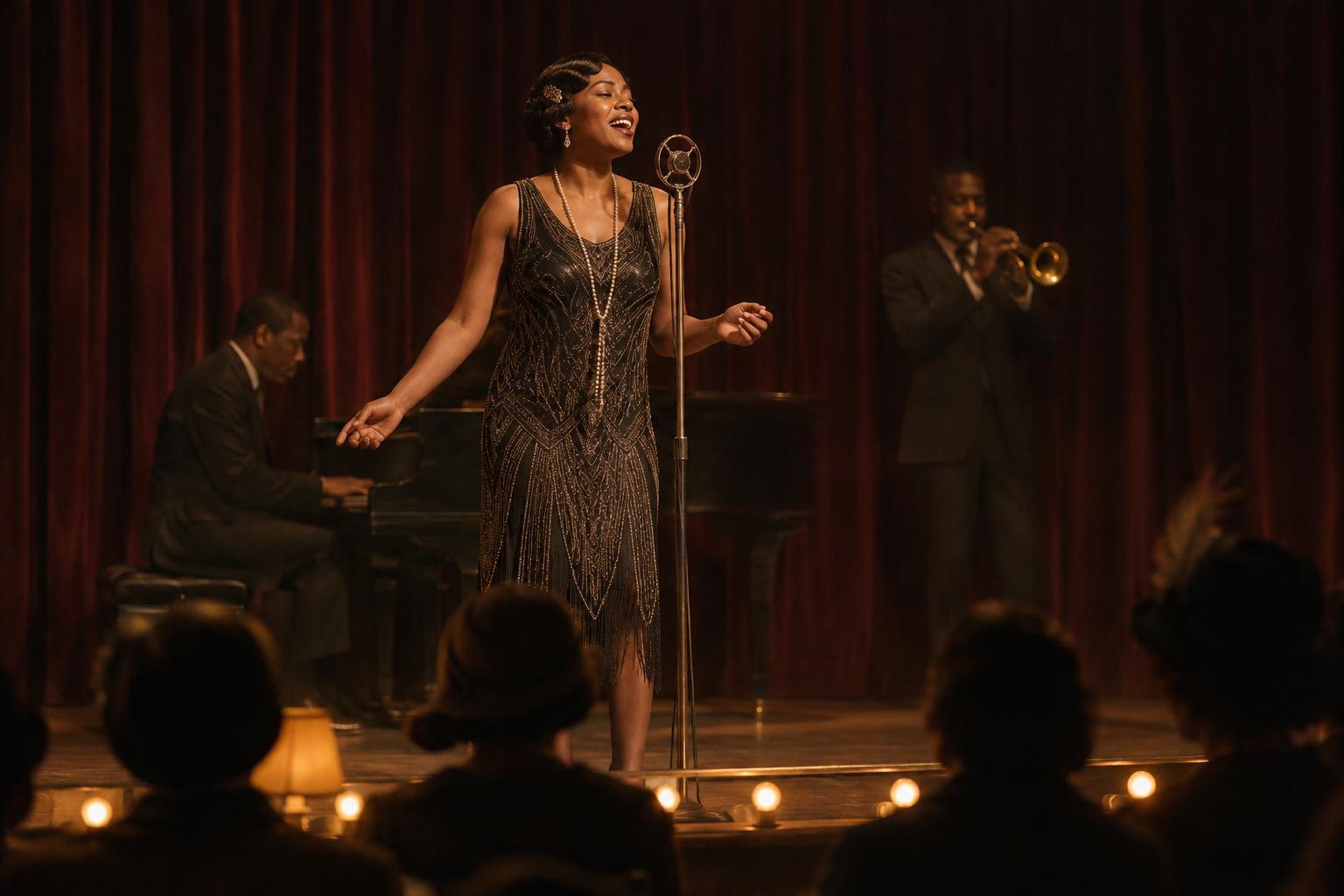
Before blues records reached a broad audience, women were already working as performers in tent shows, vaudeville circuits and theaters. Singing was only part of the job. A performer had to hold an audience, shape a story and make a song carry across a room. Humor, movement, timing and costume could all contribute to the performance. These skills helped turn a familiar lyric into an individual statement.
Ma Rainey is closely associated with this world of live entertainment. Her commanding delivery offers a reminder that classic blues was not simply a recording style: it was music shaped by people responding to other people. Performers could adjust a pause, repeat a line or sharpen a joke according to the room. Much of that exchange could not be preserved on a record, even when the singer’s sense of theater came through clearly.
Recordings carried voices farther
The commercial success of Mamie Smith’s recording of “Crazy Blues” in 1920 helped demonstrate a substantial audience for blues sung by Black women. Record companies subsequently recorded more performers and marketed their work to Black listeners, often under the industry term “race records.” That historical label describes a commercial category, not the range or value of the music within it.
Bessie Smith, Ida Cox and Alberta Hunter are among the singers whose recordings show how varied classic blues could be. One voice might sound expansive and forceful; another might draw a listener in with restraint or a wry turn of phrase. Their records helped circulate performances beyond the cities and venues where the singers appeared. At the same time, the recording industry influenced which songs were released and how artists were presented. The records are invaluable ways to listen, but they do not tell the whole story of a performer’s career.
Songs that made room for complicated lives
Classic blues lyrics often address love, work, money, travel, pleasure and disappointment in plain language. A singer may sound wounded in one verse and defiant in the next. That movement matters: these songs need not be heard as straightforward confessions. The performer could inhabit a character, play with a familiar situation or invite the audience to recognize a feeling without settling on one response.
Women singers brought authority to subjects that popular entertainment did not always allow women to discuss openly. Their performances could express desire, frustration or independence, sometimes through humor rather than a direct declaration. It is worth listening for how a singer handles the repeated lines common in blues: the words may stay nearly the same while a change in emphasis alters their meaning. The band’s response can add another layer, supporting the singer or seeming to challenge her.
How to listen beyond the familiar names
Start with a few recordings by different singers rather than looking for one definitive classic blues sound. Notice the pace of the vocal line, where the singer leaves space and whether an instrument answers her. Then imagine the demands of a live room: which moments might draw laughter, silence or a shouted response? Older recordings may have limited sound quality, so listen past the surface noise for phrasing and interaction.
Classic blues also offers a way to think about music history without reducing performers to a single breakthrough. Women helped establish blues as public entertainment through years of skilled work onstage and on record. Listening to them as artists making distinct choices—rather than only as precursors to later styles—brings the music’s wit, range and emotional complexity into focus.