What a trumpet mute changes
A trumpet mute sits in or near the bell and changes the instrument’s sound. Depending on its shape and material, it may make the tone brighter, softer, thinner, darker or more nasal. It can also change how the trumpet feels to play. “Muted” does not necessarily mean quiet: some mutes create a striking sound that carries clearly across a room.
Mutes give players contrasting colors without changing instruments. A written mute direction may call for a particular sound, while an informal performance may leave more room to choose. For a beginner, the useful question is not “Which mute is best?” but “What sound does this mute make, and can I play comfortably and in tune with it?”
Straight and cup mutes: two useful starting points
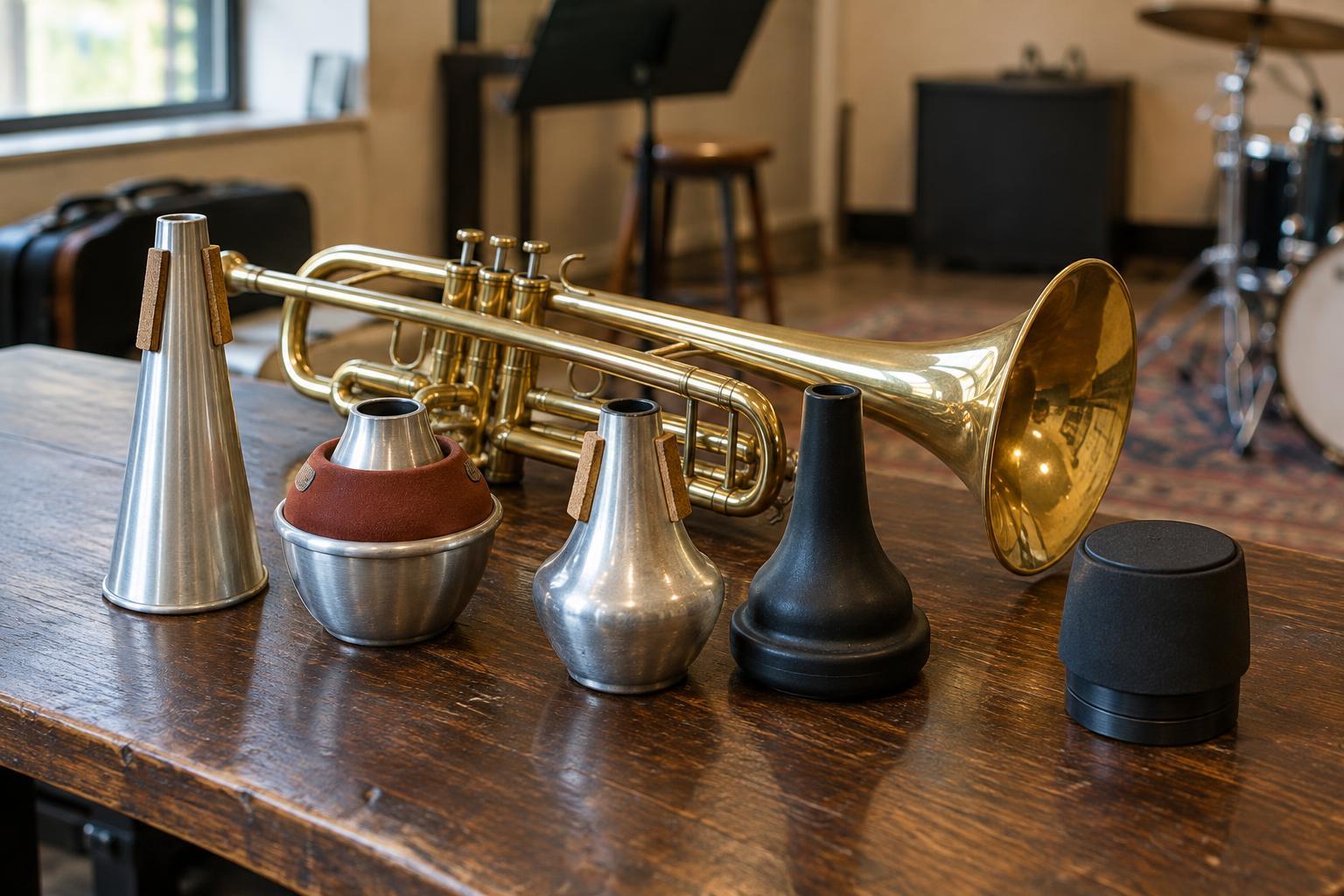
The straight mute is a common first purchase. It fits into the bell, usually held by cork or another gripping material, and produces a more focused tone. A metal straight mute often sounds bright and penetrating; other materials can produce a gentler effect. The exact result depends on the mute, the trumpet and the player.
A cup mute has a cup-shaped section facing the bell. Its sound is often warmer and more covered than that of a straight mute, making it useful when a passage calls for a less pointed color. Some cup mutes allow the player to adjust the distance between cup and bell. Moving the cup changes the sound and may affect how freely notes speak, so make small adjustments and listen rather than assuming one position works everywhere.
Both types are worth trying across the trumpet’s range. A mute that sounds appealing on a comfortable middle note may feel less responsive on low notes or alter the pitch of higher ones. Playing a familiar melody with and without the mute makes those differences easier to hear.
Harmon, plunger and bucket effects
A Harmon-style mute creates a narrow, buzzy tone. Many designs have a removable stem, allowing different sounds with the stem in or out. With a stem, a player may move a hand near its opening to shape a “wah” effect. Because designs vary, use the mute’s intended configuration and experiment gently with hand position.
A plunger mute is held by hand in front of the bell rather than fitted inside it. Opening and closing the space between plunger and bell changes the tone expressively. Players often use a clean, handle-free rubber plunger made for this purpose. Avoid pressing it firmly against the bell: the goal is to control the opening without striking or scraping the instrument.
Bucket mutes generally produce a soft, rounded color, but they come in different designs. Some clip to the bell; others fit differently. Whatever the type, check that it is secure before playing. These effects reward listening as much as technique: a slow phrase can reveal more about a mute’s character than trying to play loudly through it.
Practice mutes are a separate tool
A practice mute is designed primarily to reduce the sound that reaches other people, not to provide the same musical color as a straight or cup mute. That can make it useful for a short warm-up or for practicing where an unmuted trumpet would be disruptive. It is not a substitute for hearing protection, and it cannot guarantee that playing will be inaudible through walls.
Practice mutes can add resistance and change the sound you hear while playing. If you use one regularly, include some unmuted playing whenever your surroundings allow it. This helps you check your natural tone, response and dynamics instead of adjusting all your habits to the feel of the practice mute.
Beginner pitfalls and a simple way to compare mutes
The most common mistake is choosing by name alone. Before buying, confirm that a mute fits your trumpet’s bell and stays in place without being forced. Check that its corks, pads or clips make proper contact and that nothing scratches the finish. If a mute slips, rattles or feels unusually difficult to play, inspect the fit rather than compensating by blowing harder.
Tuning is another reason to test before performing. Play a few sustained notes and a short passage with a tuner or against a steady reference pitch. Notice whether particular notes shift and whether the mute changes how you start notes or control softer playing. You may need small adjustments, but a mute should not make every phrase a struggle.
To build your ear, compare one mute at a time using the same melody at a moderate volume. Listen for tone, note response and pitch, then ask which sound serves the music. Start with a mute you have a reason to use; a small collection you understand is more useful than several unfamiliar mutes in a case.