What the mouthpiece and reed do
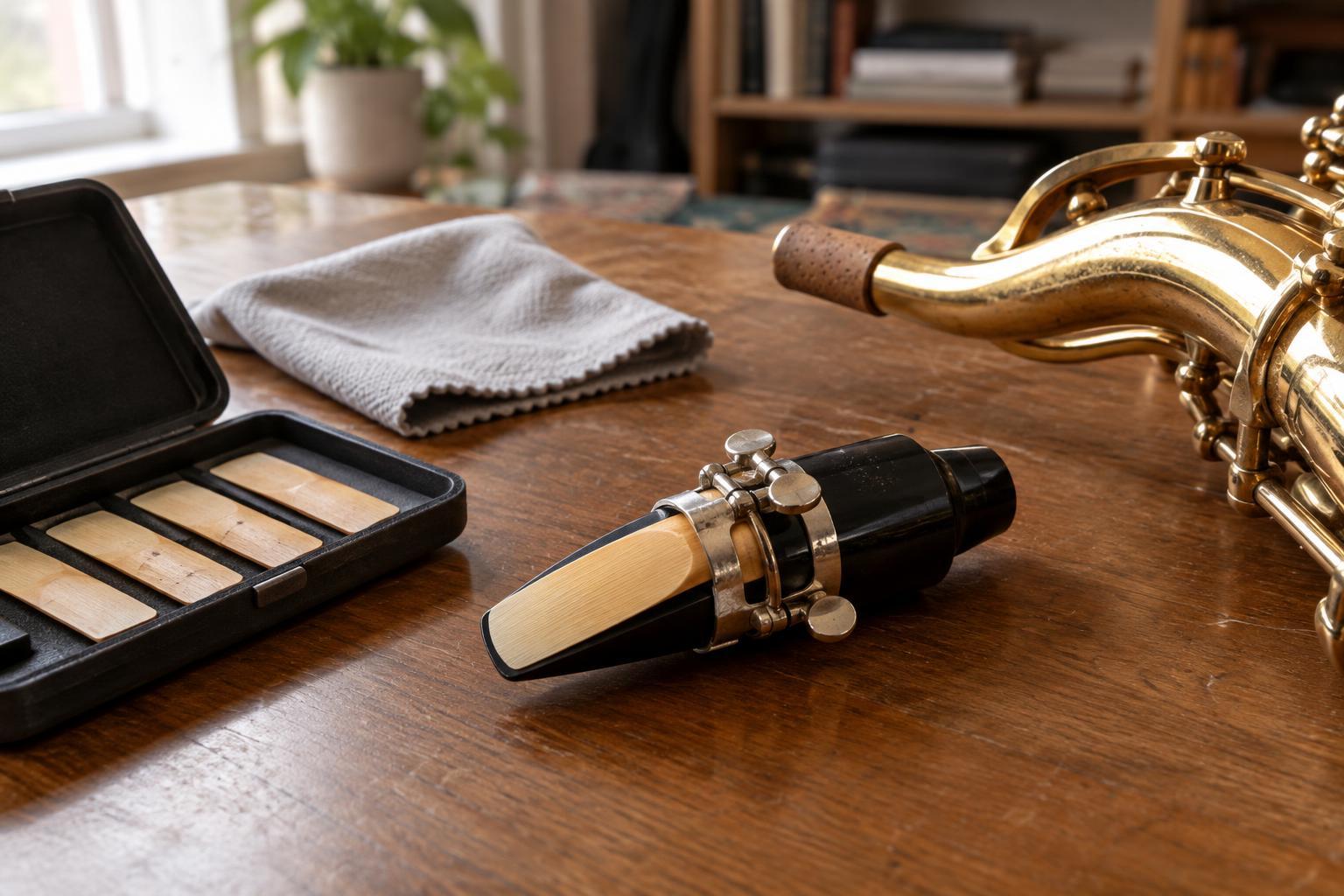
A saxophone makes sound when air causes a reed to vibrate against a mouthpiece. The reed rests on the mouthpiece’s flat surface, called the table, while its thin tip sits close to the mouthpiece tip. A ligature holds the reed in place. If the reed is crooked, chipped or poorly secured, playing can feel much harder than it needs to.
Mouthpieces vary in shape, including the size of the opening between the reed and the mouthpiece tip. These differences can affect how the instrument responds and feels. They do not, by themselves, create a blues or jazz sound. Breath support, embouchure, listening and practice matter more than chasing a particular piece of equipment.
Start by checking that the mouthpiece, reed and ligature are made for your saxophone type. Alto and tenor parts, for example, are not interchangeable just because they look similar. A music shop or teacher can help identify unmarked parts if you are unsure.
Choose a setup that is easy to control
For a first mouthpiece, reliable fit and comfortable response are more useful goals than an unusual design. A mouthpiece with a moderate tip opening is often easier for a beginner to manage than one with an especially wide opening. If your saxophone came with a working mouthpiece, spend some time learning on it before deciding that an upgrade is necessary.
Reeds are sold in numbered strengths, but the numbers are not perfectly consistent across brands and models. A higher number generally indicates a stiffer reed within the same product line. A reed that feels too stiff may make notes slow to speak; one that feels too soft may be difficult to control when you play louder. Begin with a strength that lets you produce a steady sound without biting down or forcing air, then change one variable at a time.
Cane reeds can differ slightly even within one box. Synthetic reeds are another option and may appeal to players who want a more consistent feel. Neither choice removes the need for a reed that suits your mouthpiece and playing comfort.
Assemble the parts without forcing them
Before playing, check that the neck cork is intact and the mouthpiece fits snugly over it. Twist the mouthpiece onto the cork gently rather than pushing it straight on. A small amount of cork grease can help if the fit is tight, but grease belongs on the cork, not on the reed or mouthpiece table. If the mouthpiece is extremely tight or loose, ask a repair technician to assess the cork instead of forcing a fit.
Lightly moisten a cane reed as needed, then place its flat side against the mouthpiece table. Looking straight at the tip, align the reed so a narrow edge of the mouthpiece tip remains visible. Slide the ligature into position and tighten it only enough to prevent the reed from slipping. Excess pressure can damage a reed or make small adjustments difficult.
Play a few comfortable notes before assuming a reed is faulty. If the response feels uneven, check whether the reed is centered and its tip is intact. Make small adjustments, then try again. Handling the reed by its thicker end helps protect its delicate tip.
Keep the setup clean between sessions
After playing, remove the reed, wipe off excess moisture and let it dry in a ventilated reed case that supports its shape. Leaving a damp reed on the mouthpiece can make both harder to keep clean. If you use several reeds, rotating them gives each one time to dry and helps you notice which feel comfortable.
Remove moisture from the mouthpiece after each session. Clean it periodically with water and a soft brush or cloth, following any care guidance for its material. Avoid hot water and harsh cleaners, particularly if you do not know what the mouthpiece is made from. Let it dry before storing it, and use a mouthpiece cap to protect the tip when the saxophone is not in use.
Reeds eventually wear out. Replace one if its tip is chipped, it develops a split, or it stops responding well after you have checked its placement. Mouthpieces and reeds go in your mouth, so keep your own setup clean rather than sharing it casually.
Troubleshoot before buying new gear
When notes squeak or resist, the mouthpiece is only one possible cause. First check the reed’s condition and alignment, the ligature’s fit and whether the saxophone is assembled correctly. Then try playing with a relaxed jaw and steady air. A reed that worked yesterday but feels difficult today may simply need replacing; repeated problems across several reeds may point to another part of the setup.
Give yourself time to learn what a comfortable response feels like. Keeping notes on the reeds and mouthpieces you try can make comparisons more useful than relying on a single practice session. With a dependable fit and simple care routine, you can spend less time adjusting equipment and more time listening, playing and finding your own sound.