Think of the kit as a team
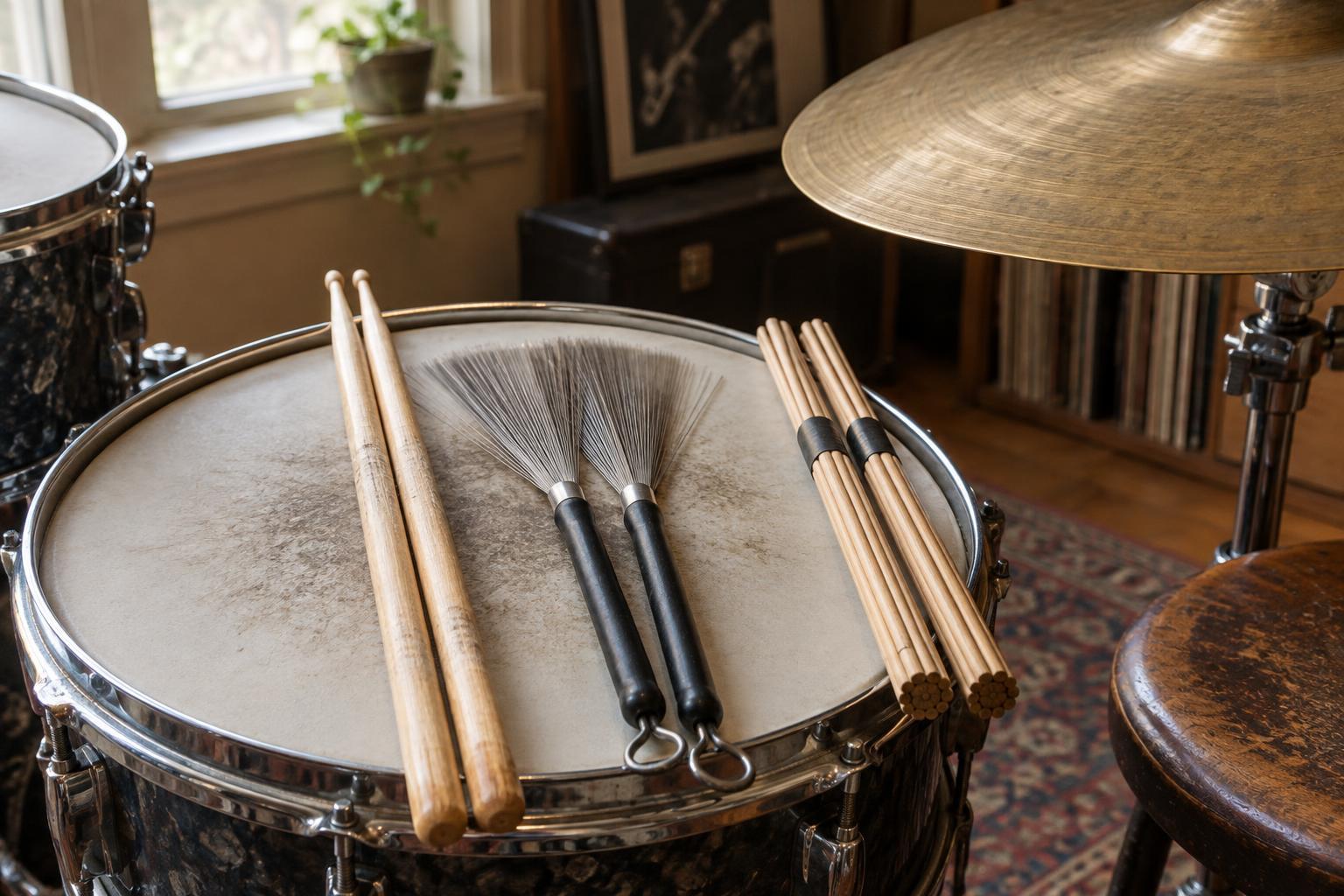
A drum kit lets one player make several sounds at once. The drummer uses sticks or brushes with their hands and operates pedals with their feet. Each part has its own voice, but the kit makes the most sense when you hear those voices working together. One sound may mark a steady beat, another may give the music an accent, and another may signal that a new phrase is coming.
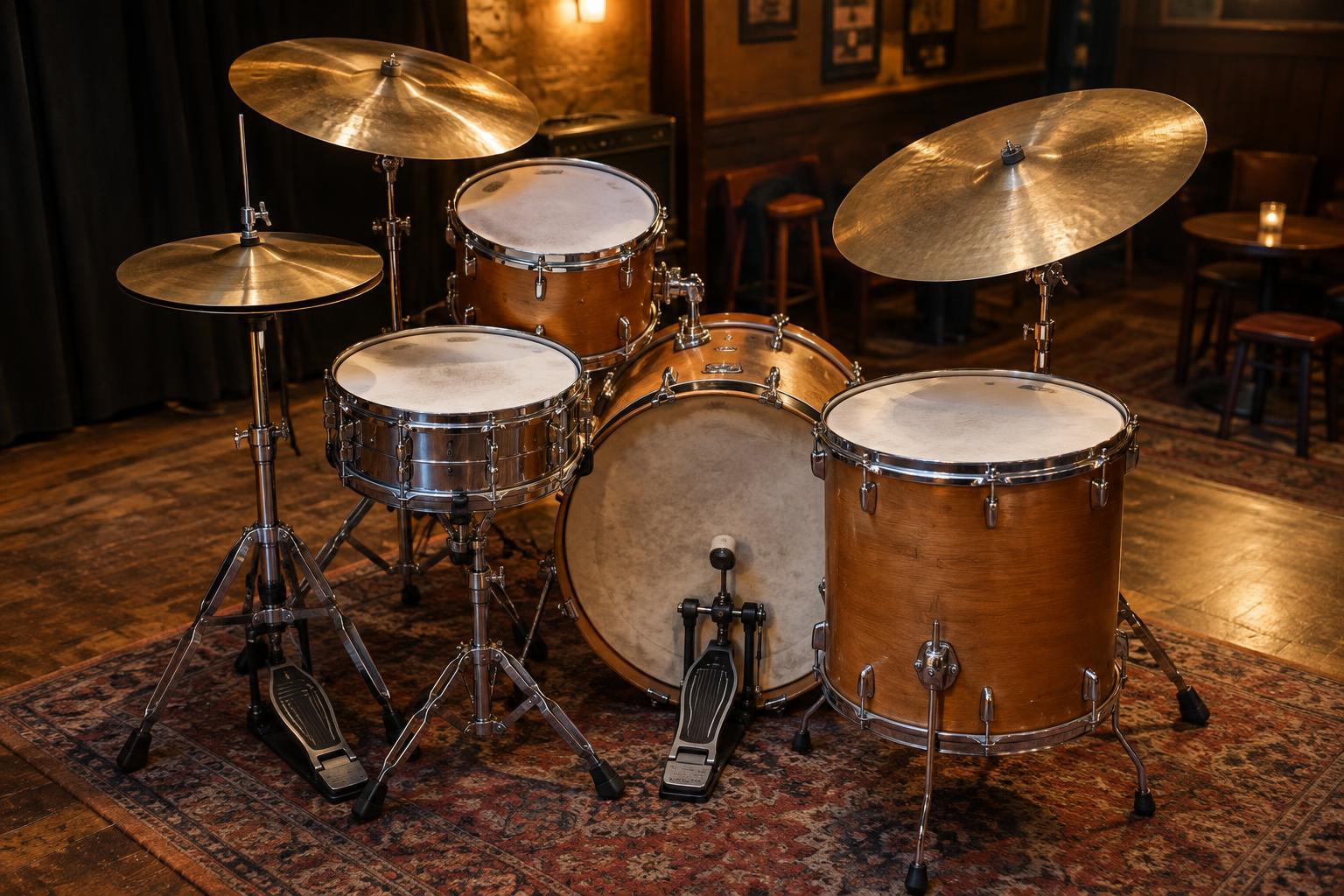
A basic kit usually includes a bass drum, a snare drum, one or more toms, a hi-hat and other cymbals. Sizes, placement and accessories vary, so there is no single setup every drummer must use. Rather than memorizing a diagram, start by listening for three roles: the low sound that helps ground the beat, the sharper sound that gives it shape, and the repeated sound that helps you follow the passing time.
Bass drum and snare: the backbone of a groove
The bass drum is the large drum near the floor. A foot pedal drives a beater against its drumhead, producing a low sound you may feel as much as hear. It can reinforce the pulse, line up with a bass instrument or add an unexpected accent. The drummer does not have to strike it on every beat; the spaces between notes are part of the pattern.
The snare sits within easy reach of the hands. Metal wires beneath its lower head vibrate when the drum is struck, giving it a crisp, rattling character. In many familiar grooves, bass drum and snare alternate in a way that feels like a conversation: low, sharp, low, sharp. Blues drummers can keep that conversation spare or loosen it with softer snare notes between stronger accents. Listen for how the snare changes the feel without necessarily changing the speed.
Hi-hat and cymbals: keeping time and adding color
The hi-hat is a pair of cymbals controlled by a foot pedal. With the cymbals pressed together, a stick produces a short, tight sound. Letting them separate creates a more open, sustained wash. A drummer can play the hi-hat with a stick, close it with a foot or combine both actions. Even when the bass drum and snare play only a few notes, a steady hi-hat pattern can make the groove easy to follow.
Other cymbals often have different jobs. A ride cymbal can carry a repeating pattern, offering a flowing alternative to the hi-hat. A crash cymbal gives a bright accent, often at the start of a phrase or alongside a strong hit from the band. These are common uses, not rules. When listening, notice whether a cymbal is maintaining motion or briefly drawing your attention to a musical moment.
Toms and fills: moving between ideas
Toms are drums without snare wires, so their sound is rounder and less rattling than the snare’s. A kit may have toms mounted above the bass drum and a larger floor tom standing beside it. Moving from a higher-pitched tom to a lower one creates a descending shape that is easy to recognize, even if you cannot see the drummer.
Drummers often use toms in a fill: a short variation that leads from one musical phrase into the next. A fill might travel across several drums, or it might be just a couple of carefully placed notes. Its purpose is not always to show speed. In a quiet passage, a restrained fill can prepare your ear for a singer’s next line or a band’s return to the main groove. The drummer then settles back into the pattern, making the transition feel connected rather than abrupt.
How to hear the whole kit at work
Try listening to a song in layers. First, follow the low bass drum. On a second listen, focus on the snare. Then track the hi-hat or ride and ask whether its pattern stays the same while the other parts change. Finally, listen for fills and cymbal accents around shifts in the melody or vocals. This approach turns a busy-sounding kit into a set of choices you can hear.
A drummer’s hands and feet also control volume, spacing and tone. A soft snare tap, a firmly closed hi-hat or an extra moment of silence can change a groove without adding new equipment. In a live setting, watch how the drummer responds to the other musicians: supporting a steady passage, leaving room for a solo or marking a change together with the band. The parts of the kit work together because the player gives each sound a role—and knows when to leave it out.