Start with the sound the song needs
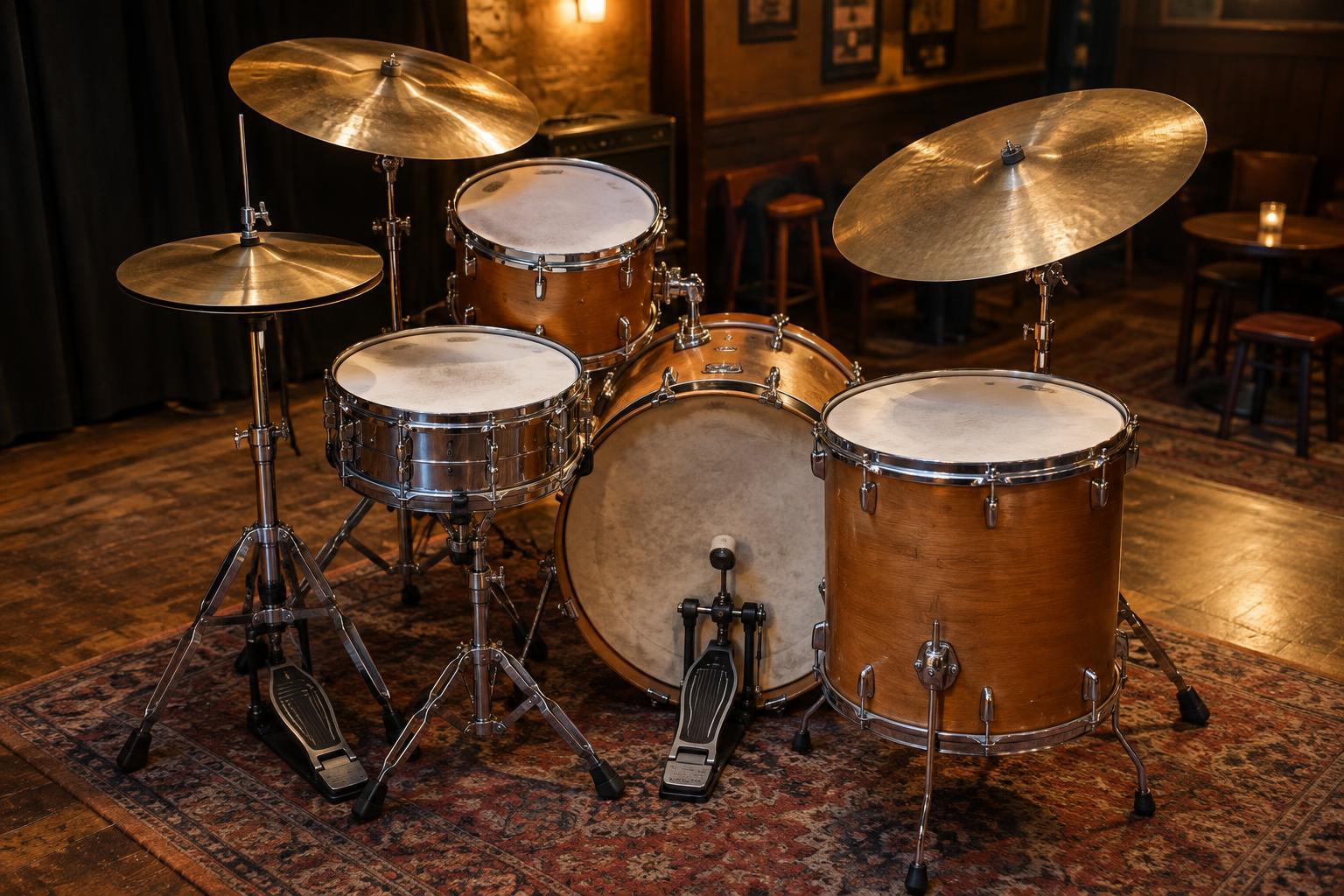
A drumstick choice is part of an arrangement. A driving blues shuffle may need a clear snare backbeat and a firm ride-cymbal pulse. A quiet jazz ballad may leave more room for a soft cymbal pattern or a brush sweep. Before choosing a pair, listen to how the drums should sit alongside the voice and other instruments. The aim is not simply to play louder or softer, but to make each note speak in the right way.
Room size matters, too. In an intimate space, cymbal wash and snare accents can fill the room quickly. On a larger stage, a very light touch may get lost among amplified instruments. Your hands remain the main volume control, but the implement changes the attack, sustain and range of sounds available to you. It helps to carry more than one option rather than asking a single pair of sticks to cover every tune.
Sticks: choose for control and definition
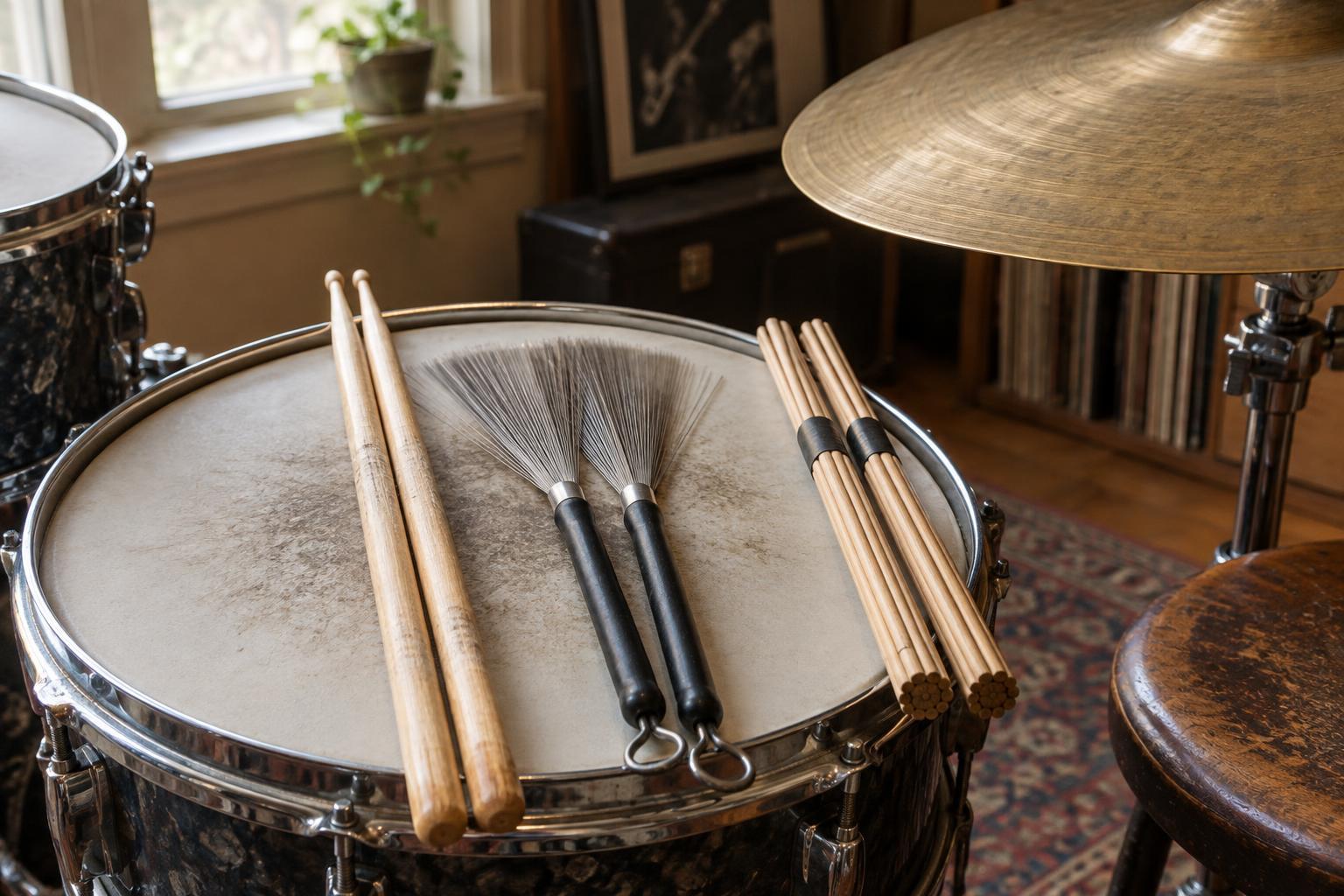
Conventional sticks offer the clearest attack of the three options. They make ride patterns, rim clicks, snare accents and tom fills easy to distinguish. A lighter stick can make low-volume playing feel more comfortable, while a heavier one can offer a substantial feel for a strong backbeat. Neither choice sets your volume automatically: a drummer can play quietly with a heavier stick and loudly with a lighter one.
Pay attention to the tip as well as the stick’s overall weight. Different tip shapes produce different cymbal sounds, from a focused ping to a broader wash. Wood and nylon tips can also feel and sound different on a ride cymbal. Descriptions such as 7A and 5A are useful starting points, but dimensions and balance can vary between makers. If possible, try a few pairs on the cymbals and snare you actually use. A stick that feels good on a practice pad may reveal a very different character on a ride.
Brushes: make space for texture
Brushes are especially useful when a tune calls for motion without a hard attack. On a coated snare head, a circular sweep can provide a continuous, gently textured pulse underneath a singer or soloist. Taps and short strokes can add accents without turning every note into a stick-like crack. Brushes are not limited to ballads: a steady brush pattern can give a medium-tempo blues or swing tune plenty of forward movement.
The snare surface is part of the instrument. A coated head generally gives a brush sweep more audible texture than a smooth head, and the condition of the coating affects the sound. Wire brushes offer a familiar sweep and flexible response; other brush materials may feel softer or sound less scratchy. Retractable brushes are convenient to carry, but check that their spread stays where you set it. Practice alternating a continuous sweep with clear accents so the rhythm remains easy for the band to follow.
Rods: a middle option, not a silent one
Rods, sometimes called bundled sticks, bring several thin dowels or fibers together in one handle. Their attack often feels less sharp than that of a conventional stick, which can suit a restrained backbeat or a rootsy, unplugged-sounding arrangement. They also offer a way to move from brushes to a firmer groove without changing the entire character of the drum part.
They are not an automatic solution to a loud kit. A forceful rod stroke can still overwhelm a small room, and some rods give less precise cymbal definition than sticks. Bundles vary in thickness, flexibility and construction, so test how they respond to a rim click, a ride pattern and a soft snare note. If the cymbal pulse becomes muddy, a lighter stick played gently may serve the music better.
Build a compact, adaptable kit
For a first versatile setup, consider one comfortable pair of sticks, one pair of brushes and, if your repertoire calls for them, a pair of rods. Learn the dynamic range of each before buying many variations. Play the same short shuffle, swing pattern and slow ballad passage with all three. Listen for the snare’s attack, the ride’s definition and how much space the groove leaves for other players.
Make changes between songs when possible, and keep your choices within reach if a set moves between quiet and energetic passages. Most importantly, let the musical setting guide the decision. The right tool is the one that helps the band’s pulse feel clear while giving the melody room to breathe.