Blues on the move
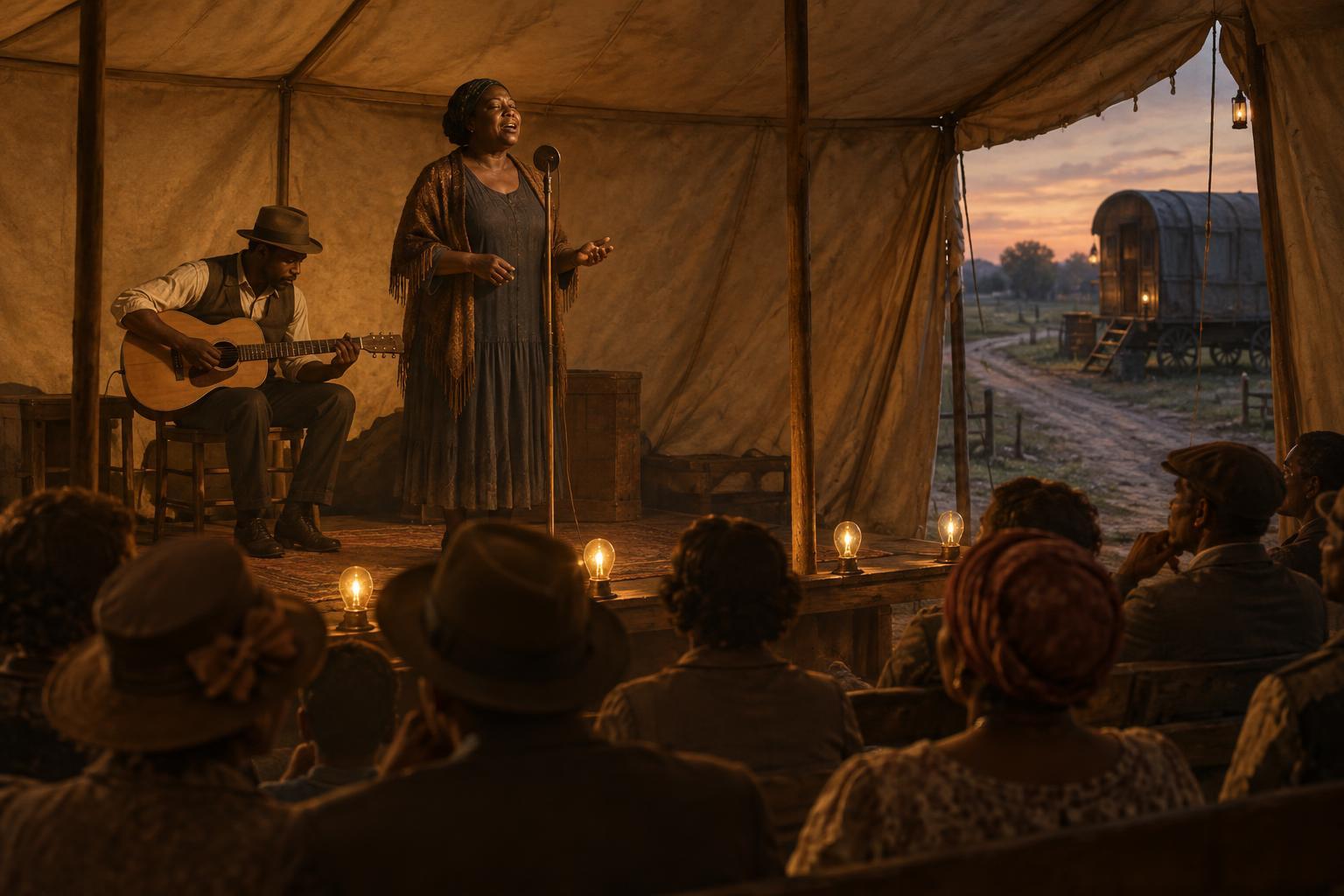
Early blues did not grow in a single kind of venue. It could be heard in homes and at informal gatherings as well as in public entertainment. Traveling shows were one route by which performers brought songs to people who might not otherwise have heard them. A musician working from town to town could meet new audiences, learn material from fellow performers and adapt a song to different settings.
Those encounters mattered because blues was a flexible performance tradition. Singers could vary a lyric, change a song’s length or shift its mood to suit a crowd. Touring did not create that flexibility, and it was not every musician’s path. It did, however, give some performers repeated opportunities to try material in front of listeners beyond their home communities.
What a traveling show might offer
Traveling entertainment took several forms, including tent shows, variety programs and vaudeville bills. A blues performer might appear alongside comedians, dancers or other musicians rather than present a full concert devoted to blues. The setting could call for a clear stage entrance, a memorable refrain and a delivery that carried across a room or tent. Some singers worked with accompanists or bands; others depended on a smaller musical setup.
Touring work could provide an income and a chance to build a reputation, but it also meant uncertain bookings, long journeys and the practical demands of performing night after night. The conditions varied by show and location. For Black performers in particular, racial segregation and discrimination shaped where they could travel, work and stay. The history of these circuits is therefore about labor and access as well as artistic exchange.
Vaudeville and the art of holding a room
Vaudeville was built around short acts sharing a program. In that format, a singer had limited time to establish a presence and draw listeners into a song. Gesture, timing, spoken introductions and interaction with accompanists could all be part of the performance. A blues number on such a bill was not necessarily presented in the same way it would be at a dance, a gathering or a smaller venue.
This variety-show context helps explain why early staged blues can sound theatrical without being less blues. Performers made choices for the audience and space in front of them. At the same time, vaudeville should not be treated as a single, uniform circuit or as a complete account of blues history. Different companies served different audiences, and much of the music’s development took place outside formal stages.
Performers, songs and wider audiences
Touring stages gave some singers, including women who became associated with staged or “classic” blues, room to develop a distinct public style. Their work helped show that a blues performance could combine personal expression with practiced showmanship. It is worth resisting a simple divide between an supposedly untouched folk blues and a polished stage blues: musicians in both settings drew on shared musical ideas while responding to different opportunities.
Songs also traveled with people. A performer might hear a phrase in one place and give it a different emphasis elsewhere; an accompanist might bring a familiar rhythm into a new arrangement. That movement makes it difficult to assign every musical idea to one venue or individual. Recordings later preserved some performances, but a record captures one version, not every way a song was sung on the road.
How to listen for the touring stage
When listening to early staged blues, notice how a singer addresses the audience. Does the vocal leave space for an instrumental reply? Does a repeated line invite anticipation before a change in the final phrase? A strong opening, a pause or a shift in volume can make sense as a way of holding attention in a mixed program. These details are useful listening clues, though sound alone cannot tell you exactly where a performance was learned or first presented.
Traveling shows and vaudeville circuits help us hear early blues as music made by working performers. They offered places to share songs, refine stagecraft and reach listeners across distance. They were also shaped by unequal conditions, and they represent only part of a broader tradition rooted in everyday musical life. Keeping both sides in view makes the touring story richer than a simple tale of songs moving from one stage to the next.