A connection, not a single origin story
The relationship between the Black church and the blues is close, but it is not a straight line from one style to another. Black religious communities in the United States have long included varied forms of worship, from small congregational gatherings to highly structured services. Blues, too, has never been one uniform sound. Both developed within Black communities whose members carried musical habits among homes, churches, streets, work settings and places of entertainment.
That overlap helps explain why a blues singer and a church singer might use a similar vocal turn, rhythmic pause or way of addressing listeners. It does not mean that every blues performance borrowed from a service, or that church music can be understood mainly as a precursor to blues. Each tradition took shape through its own occasions, expectations and relationships between performers and audiences.
What listeners may hear in common
Call and response is one useful point of comparison. A lead voice may offer a phrase that a group answers, or an instrumental phrase may seem to reply to a singer. In a church gathering, a congregation’s response can affirm, encourage or join the message. In a blues performance, a repeated line or answering instrument can give the singer’s thought room to deepen. The device is not exclusive to either tradition; its meaning depends on who is participating and why.
Flexible timing also matters. Singers may stretch a word, enter just after a beat or repeat a phrase with a changed emphasis. Vocal roughness, slides and shifts in intensity can make an account feel immediate rather than fixed on the page. These are listening clues, not rules for identifying a genre. A polished church solo and a restrained blues performance can still belong firmly within their respective traditions.
Different spaces, subjects and expectations
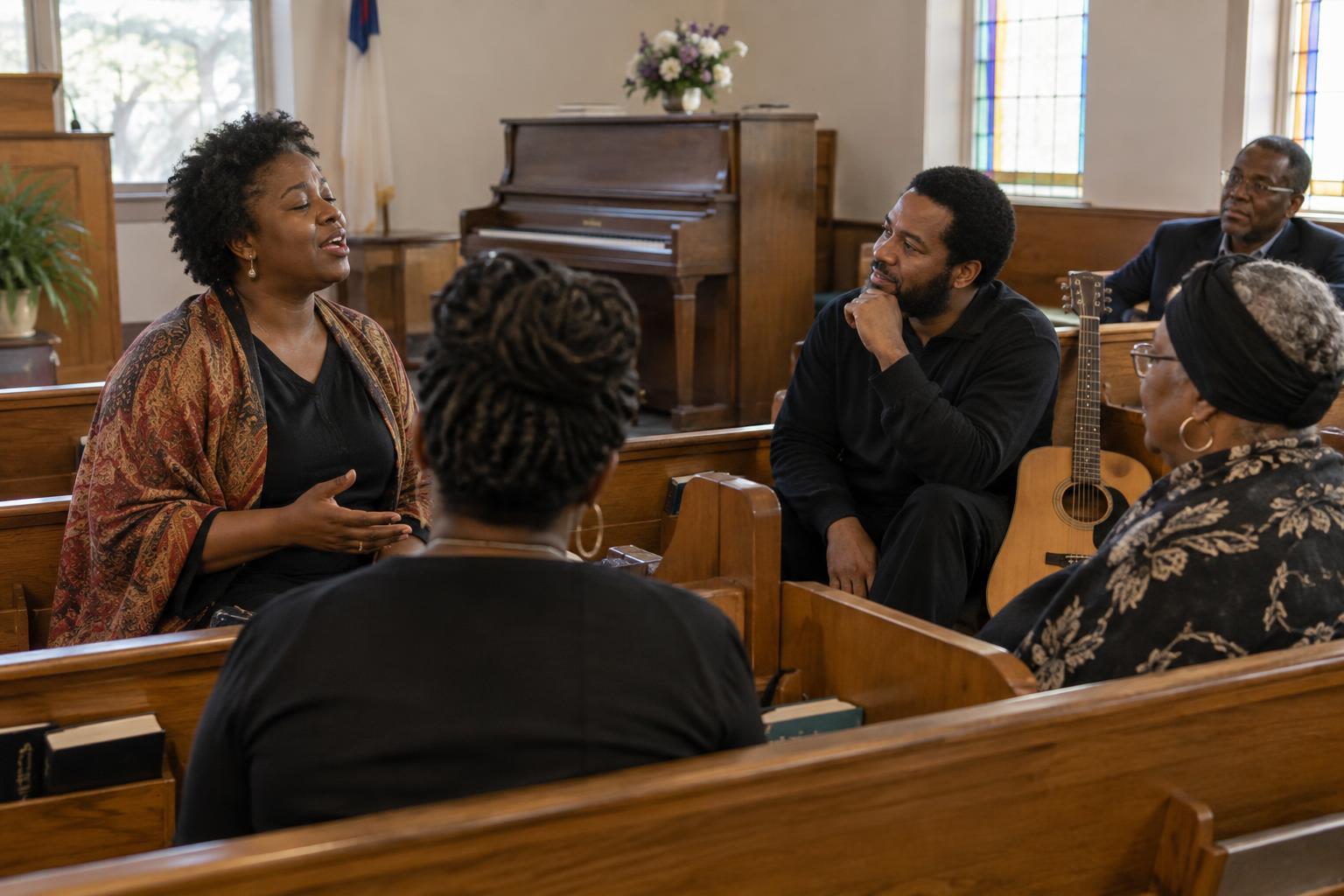
In church, music is commonly part of worship and community life. Its words and performance may be shaped by prayer, scripture, testimony and the congregation’s shared commitments. Participation can be as important as the featured voice: people may sing, answer, clap or listen as an act of support. Practices vary widely among congregations, so no single service stands for the whole Black church.
Blues has often made space for other kinds of testimony: work, travel, desire, loss, humor, disappointment and everyday endurance. It can be intimate or public, serious or playful. A blues singer may address a room of strangers rather than a congregation, and an audience may respond through attention, movement or applause. Those differences do not make one tradition more emotionally truthful than the other. They help explain why similar musical gestures can carry different social meanings.
The boundary was real, but it was crossed
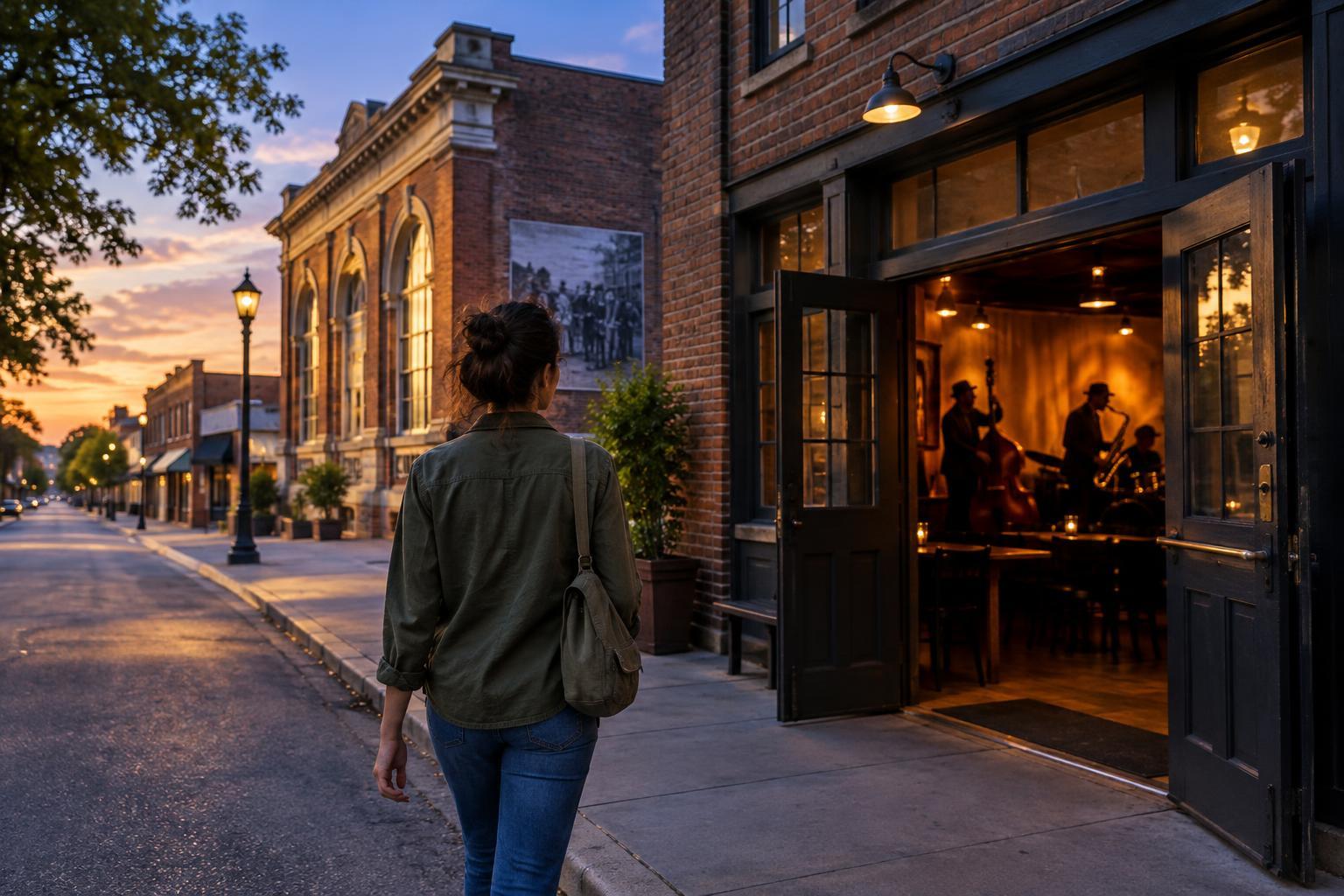
For some people and communities, sacred music and blues were sharply distinguished. Concerns about lyrics, dancing or performance venues could make blues unwelcome in a religious setting. At the same time, musicians and listeners lived beyond neat categories. Someone could know church songs, hear blues at home and bring aspects of one musical experience into another without treating the two as interchangeable.
It is worth resisting the familiar shortcut of describing blues simply as “the opposite” of church music. That contrast can obscure the care, skill and community involved in blues, while reducing religious music to a set of prohibitions. It also leaves little room for personal differences: beliefs about where and how to make music have varied among Black musicians, families and congregations.
A more attentive way to listen
When listening across these traditions, start with a specific performance rather than a broad label. Notice who leads, who answers and whether the singer seems to invite participation. Listen for repeated words that change meaning through timing or emphasis. Ask what role an instrument plays: does it support the voice, echo it or interrupt it? Those questions can reveal shared practices without assuming that two performances have the same purpose.
Then consider the setting the music is made for, while avoiding guesses about a performer’s private beliefs. A worship song, a blues record and a live blues set may all use repetition or an impassioned voice, yet invite different kinds of attention. Hearing both the connection and the distinction offers a richer account of Black musical traditions than either separating them completely or folding them into one story.