What makes a second line?
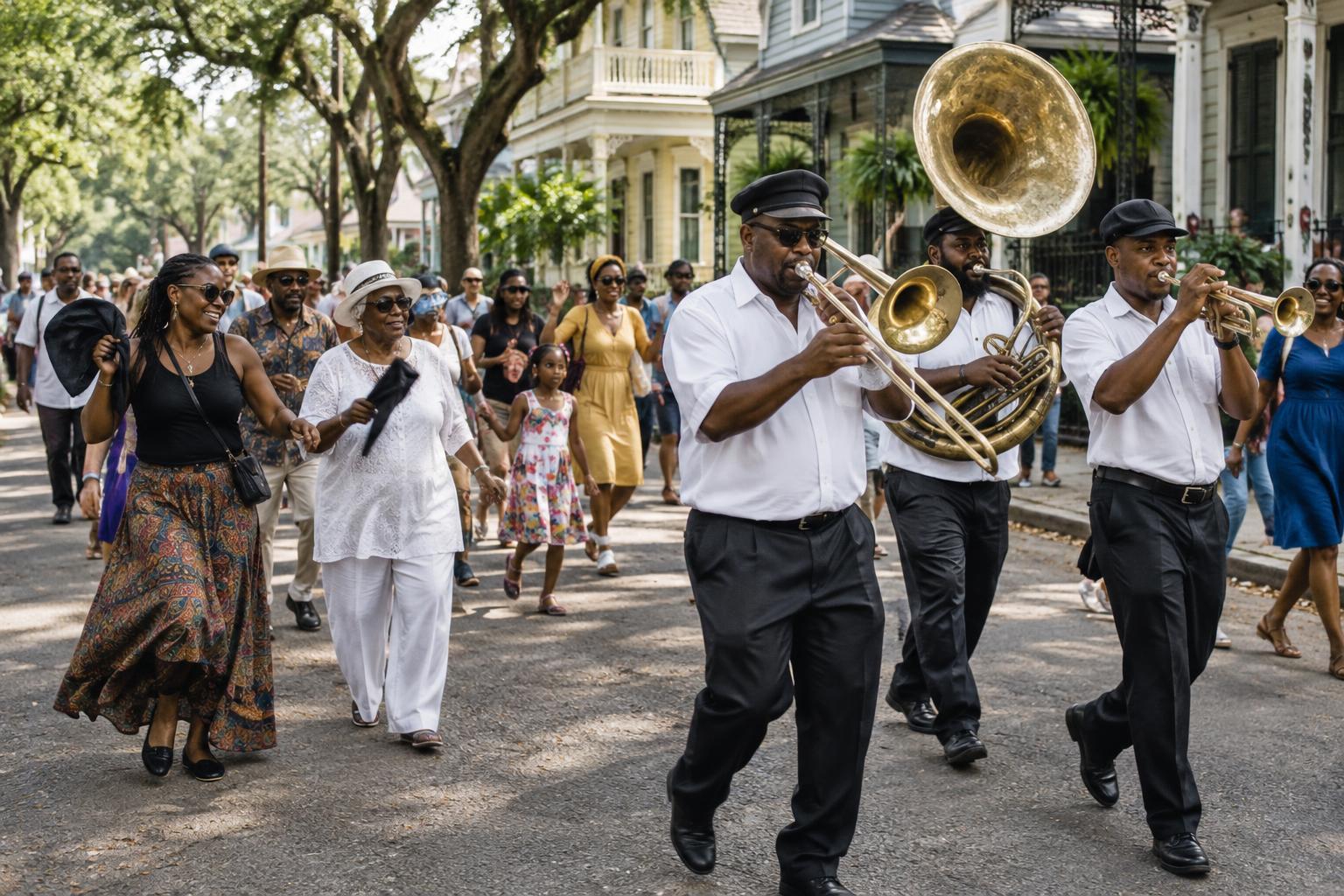
In New Orleans, a second-line parade brings music and people into the street. The “first line” generally refers to the people at the heart of the procession, such as club members, honorees and the brass band. The “second line” is the wider gathering that follows, dances and responds to the music. That distinction describes roles, not a wall between performers and audience: the energy of the people behind the band is part of the event.
A second line may celebrate a social aid and pleasure club, mark an occasion or accompany a funeral procession. It is easy to confuse all second lines with jazz funerals because both can involve a brass band and people walking together. But a club parade is not necessarily a funeral, and the meaning of any procession depends on the people who organized it. Watching for the occasion, rather than assuming every parade tells the same story, is a good first step toward understanding it.
The community roots of the procession
Second lines are closely associated with New Orleans’ Black communities and with social aid and pleasure clubs. These organizations have offered members ways to gather, support one another and celebrate together. Their histories sit within a broader tradition of mutual assistance, shaped in part by times when Black residents faced exclusion from other forms of support. A parade makes those bonds visible: people dress for the day, move through familiar streets and show up for a group that matters to them.
It would be too simple, though, to treat the parade as a relic preserved unchanged from the past. Clubs, musicians, families and neighbors keep the tradition active through their own work and choices. Routes, dress, music and customs can vary. What connects many processions is the idea that public celebration belongs to the community creating it, even when visitors are welcome to share the street.
How the music moves with the crowd
A brass band gives the procession momentum. Drums establish a pulse that walkers can feel under their steps, while horns carry melodies, riffs and responses over the sound of the crowd. The music need not follow a single mood. A band can leave room for reflection, then push into a groove that invites dancing. Repeated phrases help people join in, while changes in rhythm and intensity keep the walk alive.
The street changes how the music works. Unlike a seated concert, the band and listeners travel together. People may step forward, fall back, dance in small groups or call out in response to a musical phrase. The result is not simply a performance with an audience following behind. It is a moving exchange among musicians, club members and participants, with the neighborhood itself providing the setting.
Why the route matters
A second line is tied to place. Passing homes, businesses and gathering spots can connect a club’s celebration to the people and streets around it. Someone watching from a doorway may recognize marchers; someone in the procession may greet a neighbor along the way. These small encounters help explain why the route is more than a path between a starting point and a finish.
For a visitor interested in music travel, that sense of place calls for care. A residential street is not a stage set, and the people in a parade are not there solely for spectators. You can appreciate the sound, style and movement without treating the event as a backdrop for your own experience. Pay attention to who is leading and how others nearby are participating.
Joining in without taking over
If you encounter a public second line, leave room for club members, the band and people working with the procession. Avoid blocking the route or stepping into the first line for a photograph. Be considerate when recording: not everyone wants to be filmed, especially at an occasion involving grief. If the purpose of the gathering is unclear, observe before joining, and follow directions from organizers or people managing the route.
Most of all, listen. Notice how a drum pattern changes the pace, how a horn phrase draws a response and how dancers make the rhythm their own. A second line can be joyful and welcoming, but it remains a community tradition with its own hosts and purpose. Respecting that balance lets visitors experience the music while leaving the center of the procession where it belongs.