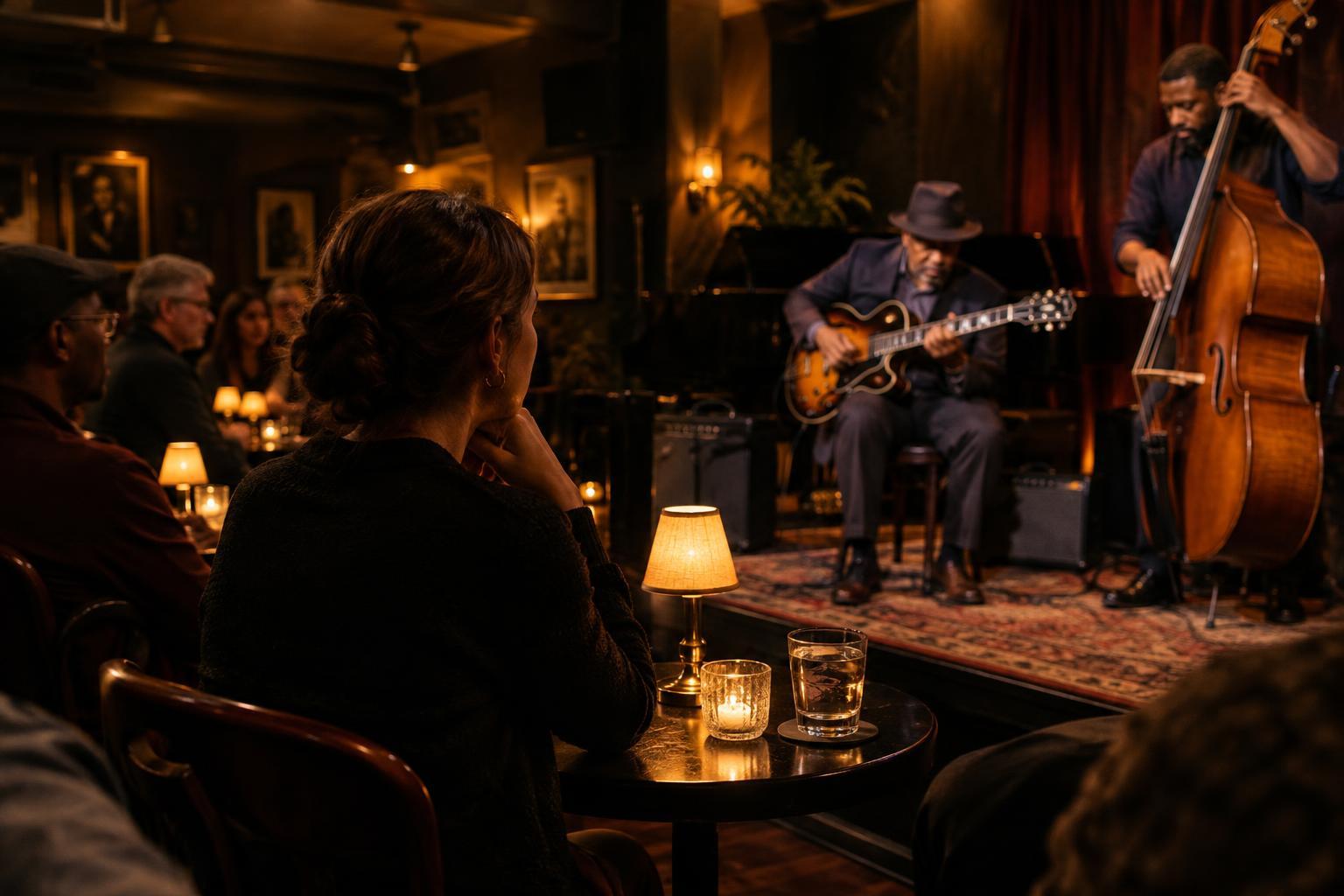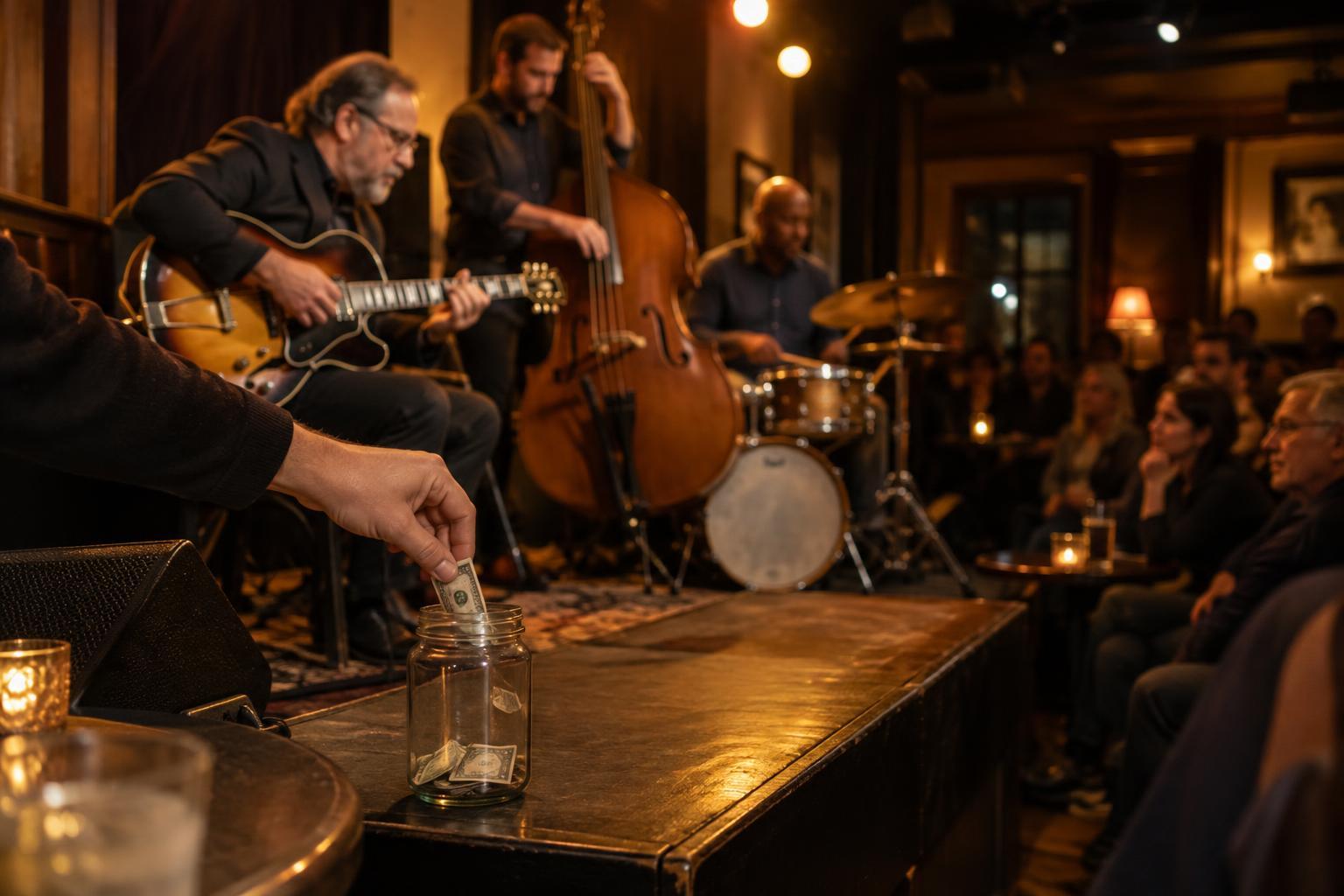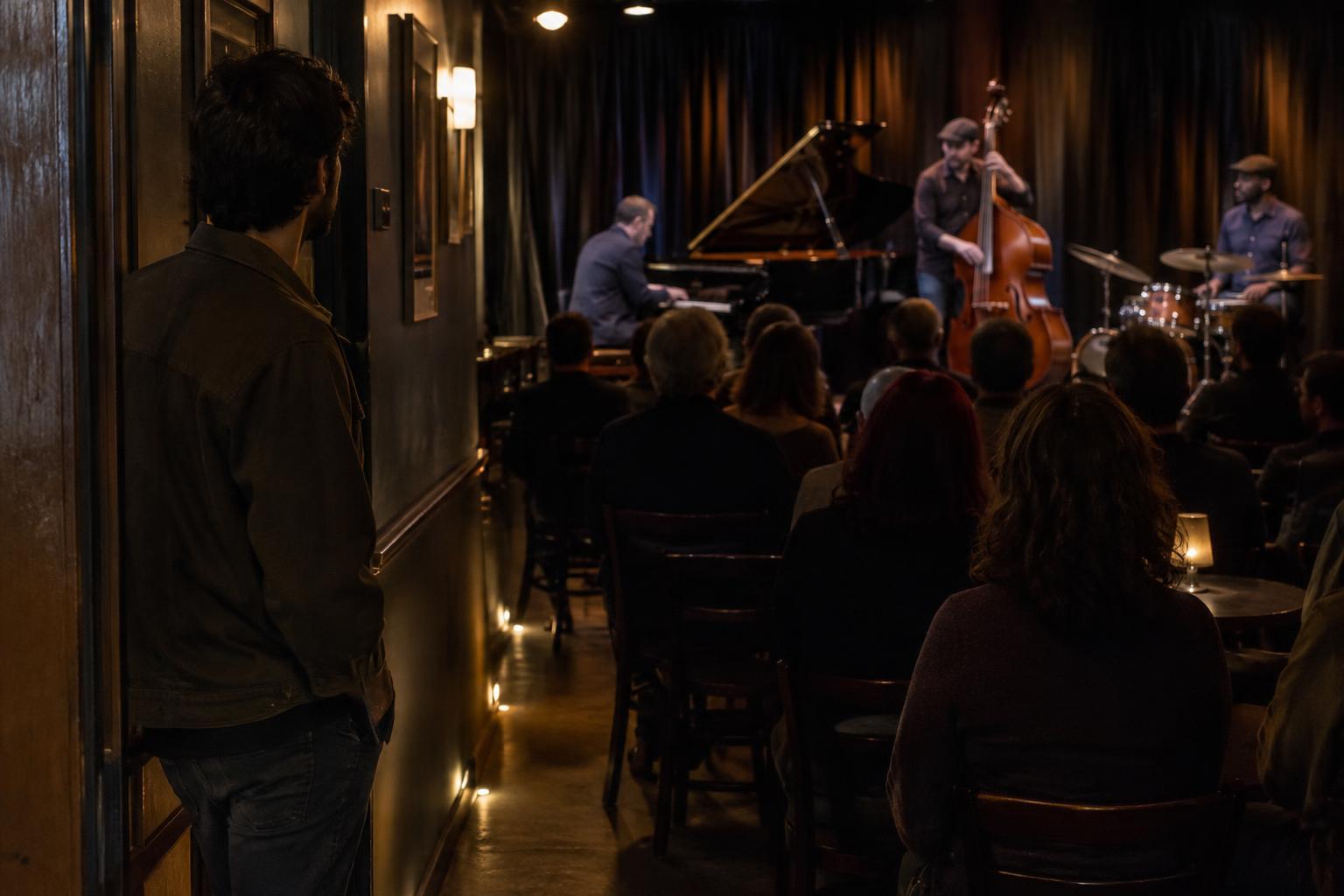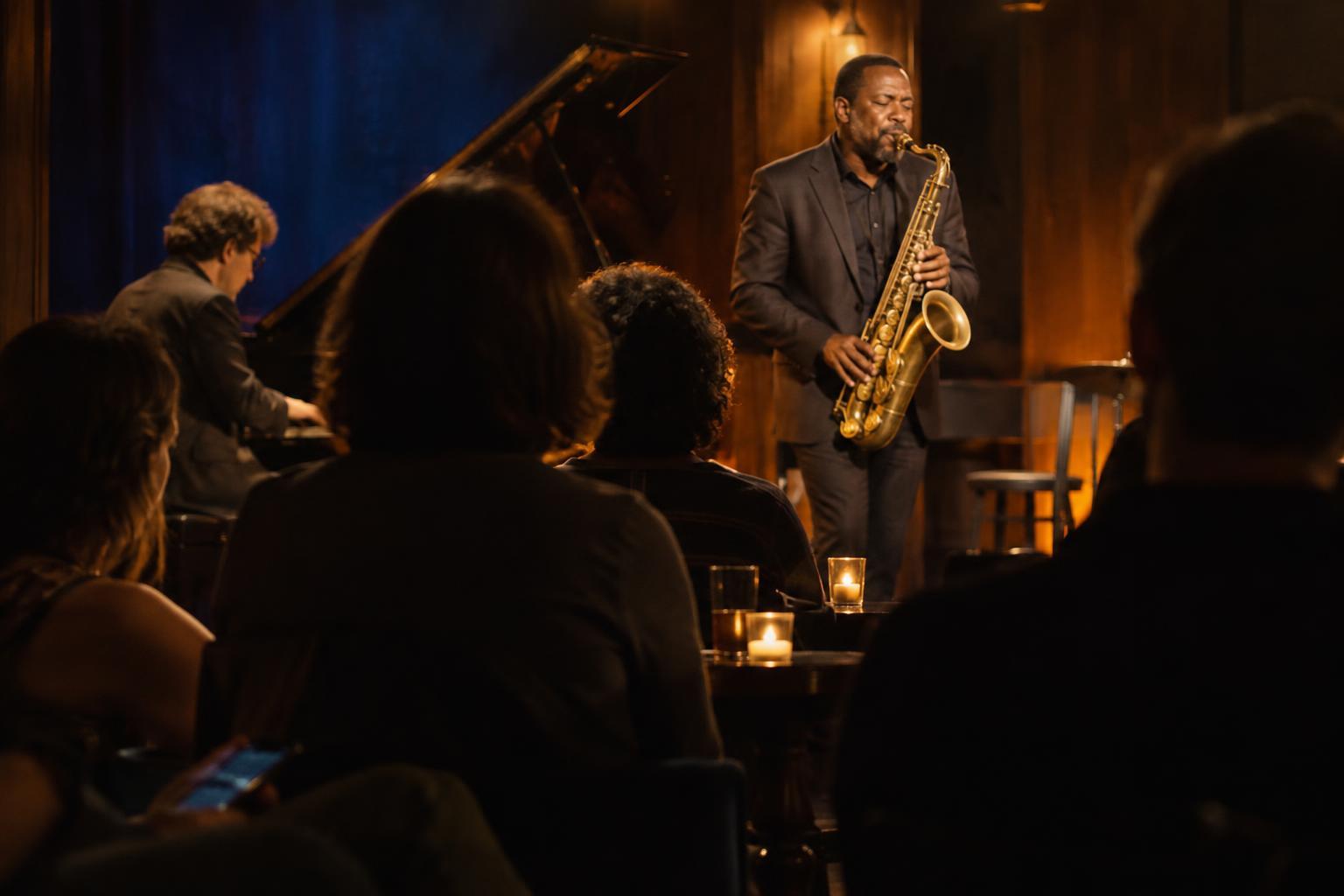
Start with the room’s rules
A live show can make you want to save a moment: a guitarist leaning into a solo, a singer holding a quiet note, or a room responding to the band. Before reaching for your phone, find out whether photography or recording is welcome. Look for signs, ticket information, an announcement from the stage, or guidance from venue staff. Rules may differ between a large concert hall, a small club, and an informal session. Do not assume that permission to take photos also means permission to record audio or video.
If the policy is unclear, ask a staff member at a suitable moment rather than interrupting the music or calling out to a performer. Follow any request to stop, even if you have already seen someone else filming. A performer may also ask the audience to put phones away for a song. Treat that request as part of the performance, not an invitation to negotiate.
Notice what your camera changes
Even when photos are allowed, the way you take them matters. A bright screen can draw attention in a dim room, while a raised phone can block the view of someone behind you. Turn off the flash, dim your screen, silence camera sounds where possible, and keep your device below other people’s sightlines. Take a few deliberate shots rather than holding your phone up through an entire song.
Think about the sound as well as the view. In an intimate blues set or a quiet jazz passage, whispered plans for the perfect shot can be more noticeable than they seem. Stay in your place unless there is room to move without disturbing others, and avoid leaning into aisles or standing suddenly. If you need to adjust your camera or leave your seat, waiting for a break between songs is often the kinder choice.
Treat recording as a separate decision
An audio or video recording captures more than a photograph. It can preserve a full performance, including material an artist may not want circulated out of context. A venue that permits still photos may restrict recording, and an artist’s preferences may be more specific than a general house policy. Ask before making an extended recording if permission has not been made clear. If the answer is no, enjoy the music without trying to record discreetly.
Permission to capture something is not necessarily permission to publish it. Before posting a clip, consider its length, sound quality, and context. A short excerpt that seems harmless to you might include an unreleased song, an onstage conversation, or another guest who did not expect to appear online. When in doubt, keep the memory for yourself or ask the people concerned.
Remember the audience is part of the room
A crowd shot may tell the story of a night out, but it also brings other people into your image. Be especially careful with close-ups of strangers and with footage that clearly captures private conversations. If someone asks not to be photographed, lower the camera and respect the request. Where guests are packed close together, it may be easier to frame the stage than to avoid including recognizable faces; that is a good reason to be selective about what you share.
Consider access needs, too. Some guests rely on a clear view of performers or interpreters, and a phone held overhead can create an obstacle. Others may be sensitive to bright screens or sudden flashes. You do not need to know anyone’s circumstances to make the room more comfortable: keep your screen low, skip the flash, and check the space around you before lifting a device.
Leave room to listen
Photos can be a meaningful part of remembering a show. The goal is not to abandon your camera but to let it serve the experience rather than take it over. You might decide in advance to photograph one song if allowed, then put the phone away. That leaves more attention for the exchanges that make live music distinctive: a band responding to a soloist, a change in the room’s energy, or a quiet ending that asks everyone to listen.
If a show has a strict no-camera policy, a few words written afterward can preserve details a recording might miss. Note the sounds, the setting, and how the performance felt to you. Whether you leave with an image, a short permitted clip, or no file at all, respecting the people who made the night possible is part of being a good guest.