Make a plan before the music starts
Live music does not always fit neatly around trains, work shifts or other commitments. If you know you may arrive late or need to leave early, check the venue’s admission and re-entry rules before you go. Some rooms allow movement throughout a set; others ask guests to wait for a break. Follow the staff’s guidance rather than assuming there will be a convenient moment to slip in.
If you have a choice of seats, pick one near an aisle or exit. At a standing show, leave yourself a route that does not require squeezing through the densest part of the crowd. Keep your ticket ready and silence your phone before you reach the door. These small preparations let you pay attention to the music instead of searching your bag or screen while someone is playing.
Let the room tell you when to enter
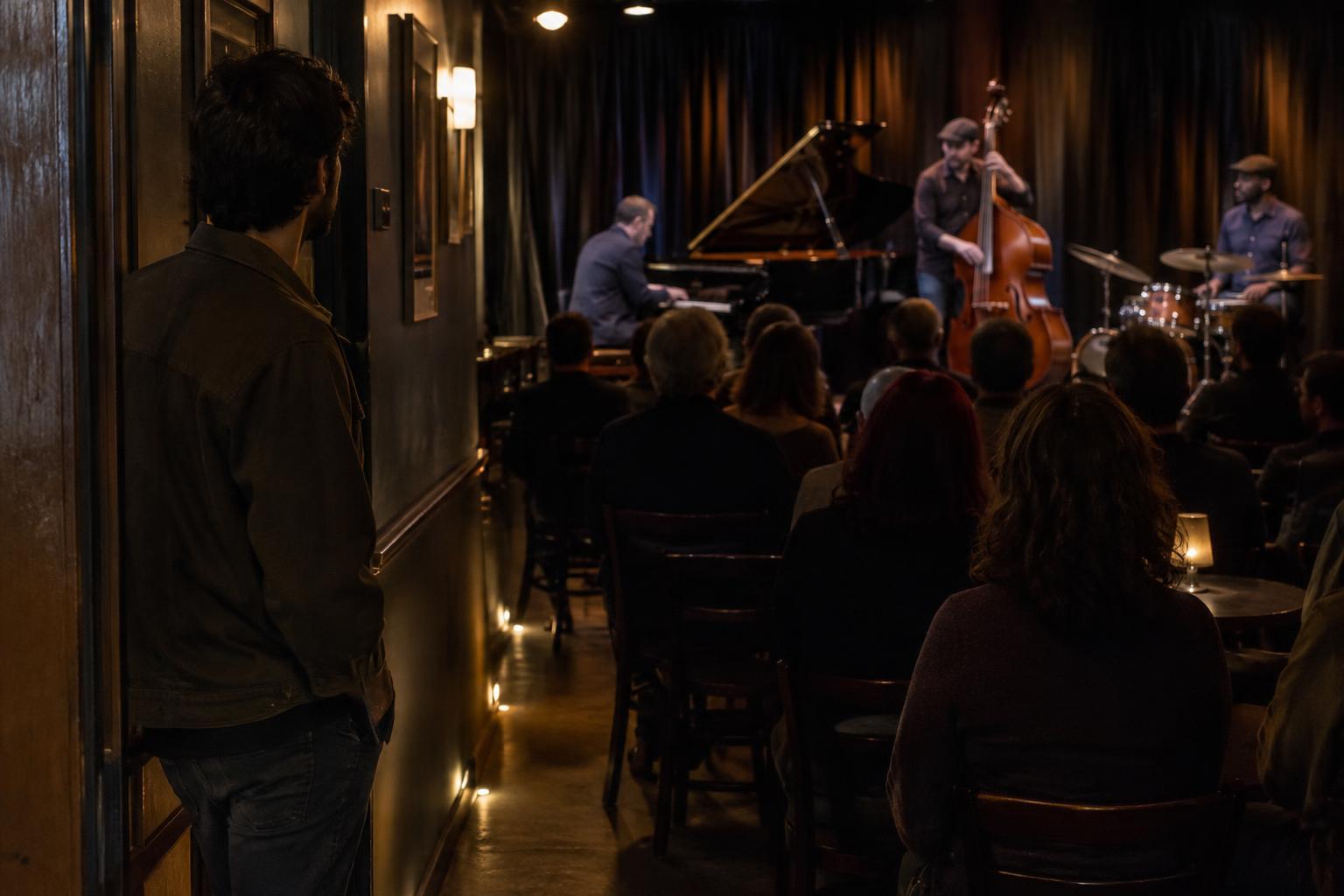
A song’s ending is usually a better time to move than its quietest passage. Pause at the entrance and listen before stepping forward. Applause can provide a natural opening, but it may be brief, so be ready to follow an usher’s direction. If the music resumes before you can reach your place, it is fine to wait at the side until another pause.
When you do enter, move steadily without rushing. Avoid crossing directly in front of the stage or stopping in a doorway where you block someone’s view. If you need help finding a seat, ask staff quietly rather than using your phone light to scan the room. A quick nod to the people who let you pass is enough; explanations can wait until the set is over.
Keep necessary movement low-key
A late arrival is more noticeable when it becomes a conversation. Save greetings, drink orders and questions about what you missed for a break or a suitable area away from the performance. Settle your coat and bag in one motion if you can, and be mindful of chairs, glasses and floor space. In a small room, even a short exchange can compete with an unamplified instrument or a quiet vocal.
The aim is consideration, not perfect stillness. People sometimes need to move for comfort, access or an urgent reason, and no one else knows their circumstances. If someone must pass, make room without comment. Where the venue provides an accessible route or assistance, use it or ask staff for help rather than attempting an awkward path through the audience.
Choose an exit you can reach calmly
If you know your departure time, locate the exit when you arrive. Before the set begins, place belongings where you can collect them quietly, and avoid ordering something you will have to finish in a hurry. If possible, wait for the end of a song or a change between performers. A solo, spoken introduction or soft ending is rarely a good moment to start gathering your things.
When it is time to go, move directly toward the exit and leave conversation until you are outside the listening area. Do not call a farewell across the room or stop to take a final photo. If you are seated far from an aisle, you might move closer during an interval so your eventual departure is easier. If you have to leave urgently, go; courtesy should not become a reason to delay a necessary exit.
Follow the venue’s cues and give others grace
Every performance space has its own rhythm. A lively club may tolerate more movement than a seated listening room, while an intimate acoustic set can make the sound of a closing door stand out. Watch how staff manage entry and exits, and take your cue from them. If you are unsure whether there is a break coming, a brief question to a staff member is more useful than trying to predict the set.
You may still miss a good song or draw a glance despite your best efforts. Do not turn that moment into a larger interruption by apologizing to everyone nearby. Settle in, or step out, and let attention return to the musicians. Thoughtful timing and a quiet route are usually all it takes to share the room respectfully, even when you cannot be there from the first note to the last.