Why open tunings suit the slide
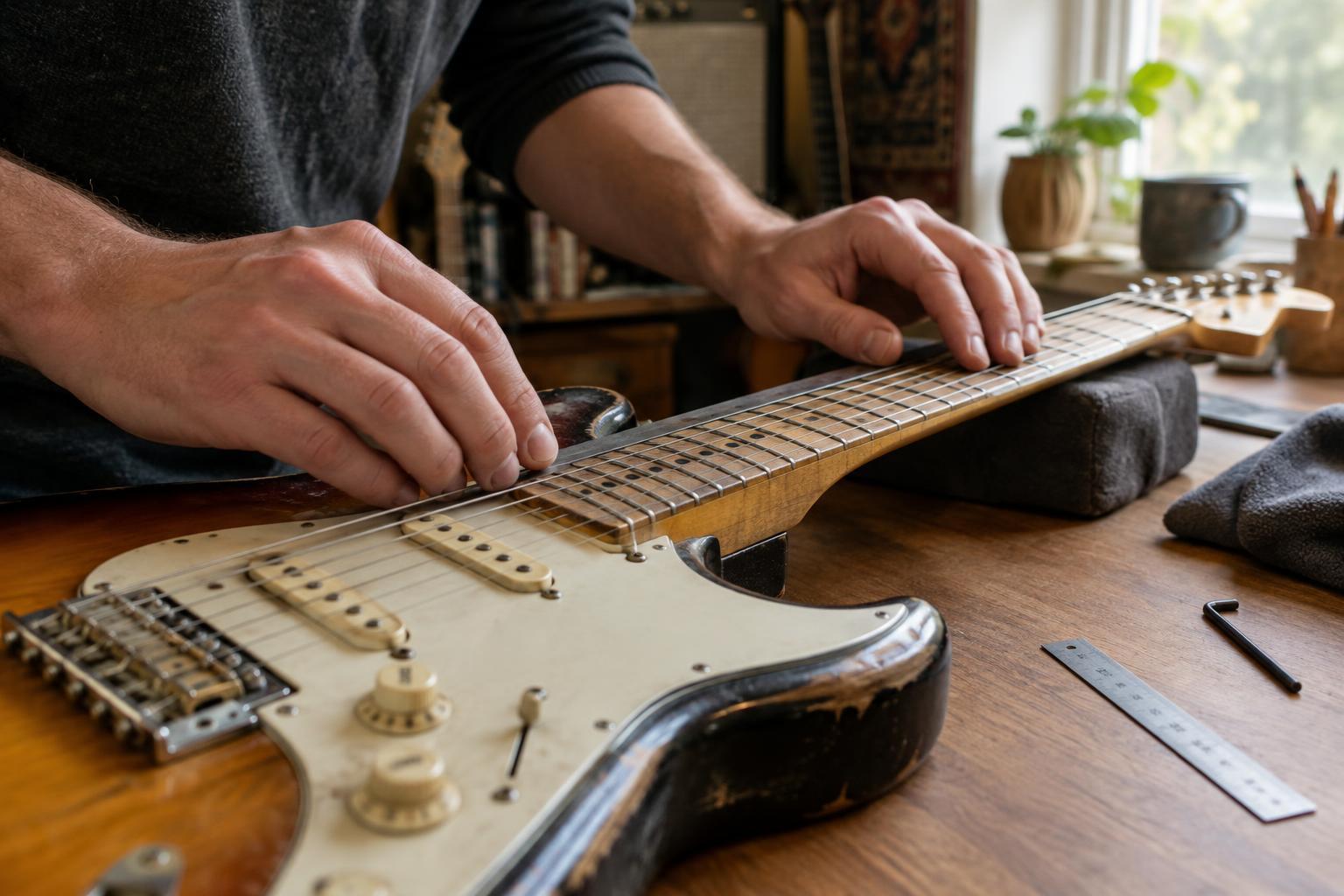
In standard tuning, the six open strings do not form a simple major chord. That is useful for many styles of guitar playing, but it can make it harder to find a full chord with a straight slide. An open tuning rearranges the string pitches so that strumming the open strings produces a chord. Move the slide across those strings at one fret and the chord moves with it.
This layout gives you an accessible starting point, not an obligation to play every string at once. A two-string phrase can sound more expressive than a broad strum. Open tunings also leave familiar shapes behind, inviting you to listen for how a note rises, falls and settles rather than relying only on memorized finger positions.
Start with open D or open G
Two useful starting points are open D and open G. String names below run from the thickest string to the thinnest. Open D is D–A–D–F#–A–D. From standard tuning, lower the sixth string from E to D, the third from G to F#, the second from B to A and the first from E to D. The fifth and fourth strings stay where they are. A tuner helps you check each note without guessing how far to turn a peg.
Open G is D–G–D–G–B–D. From standard tuning, lower the sixth string from E to D, the fifth from A to G and the first from E to D. The other strings stay unchanged. Because some adjacent strings now share chord tones, even a small movement of the slide can produce a strong sense of harmony.
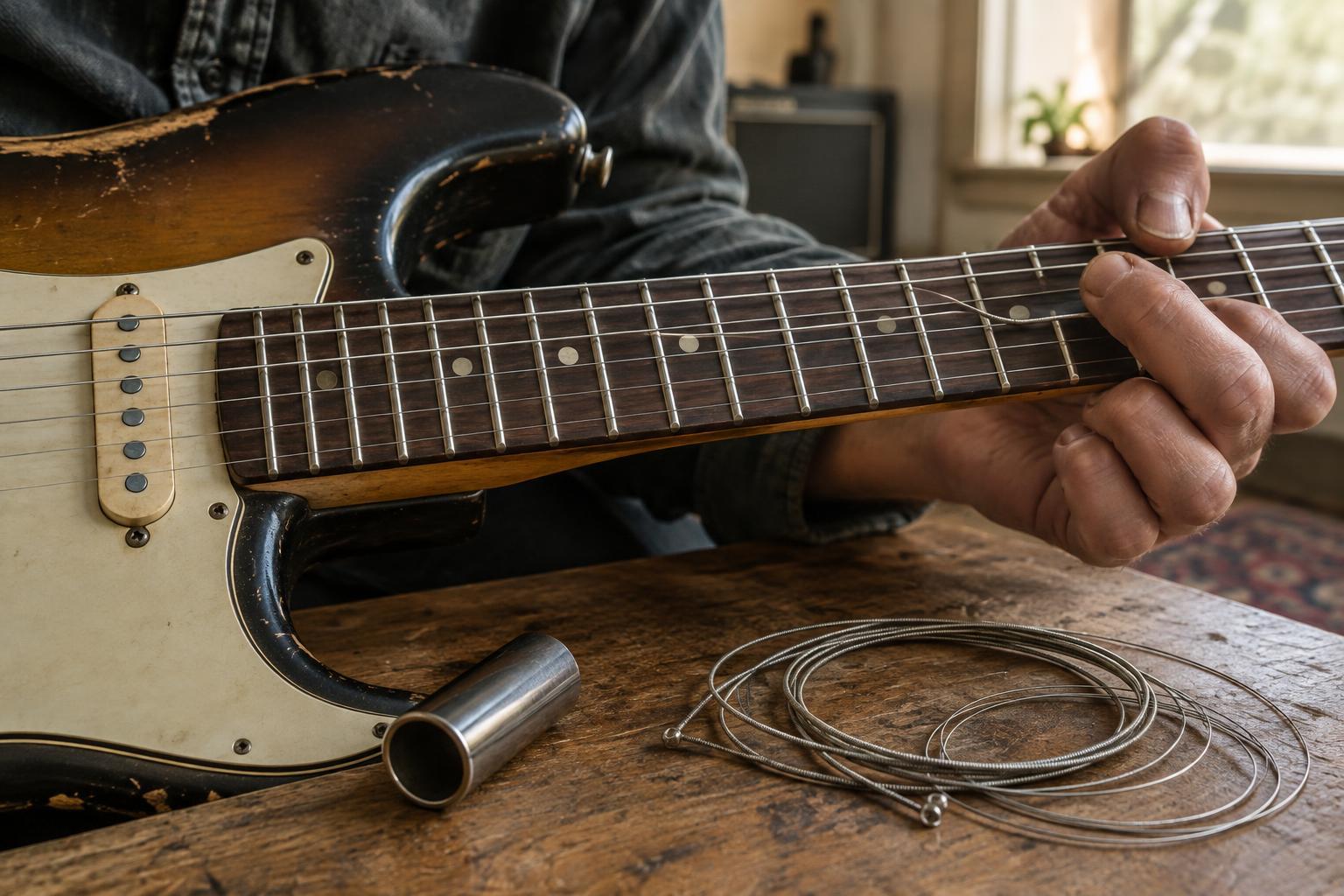
Both tunings involve lowering strings from standard pitch, making them approachable choices for a first experiment. Retune slowly, pluck the string between adjustments and check it again after you play for a minute: changing one string can affect the instrument’s overall tuning. If a string feels unusually loose or your guitar is difficult to play cleanly, a technician can help you assess its setup.
Find the note before chasing the sound
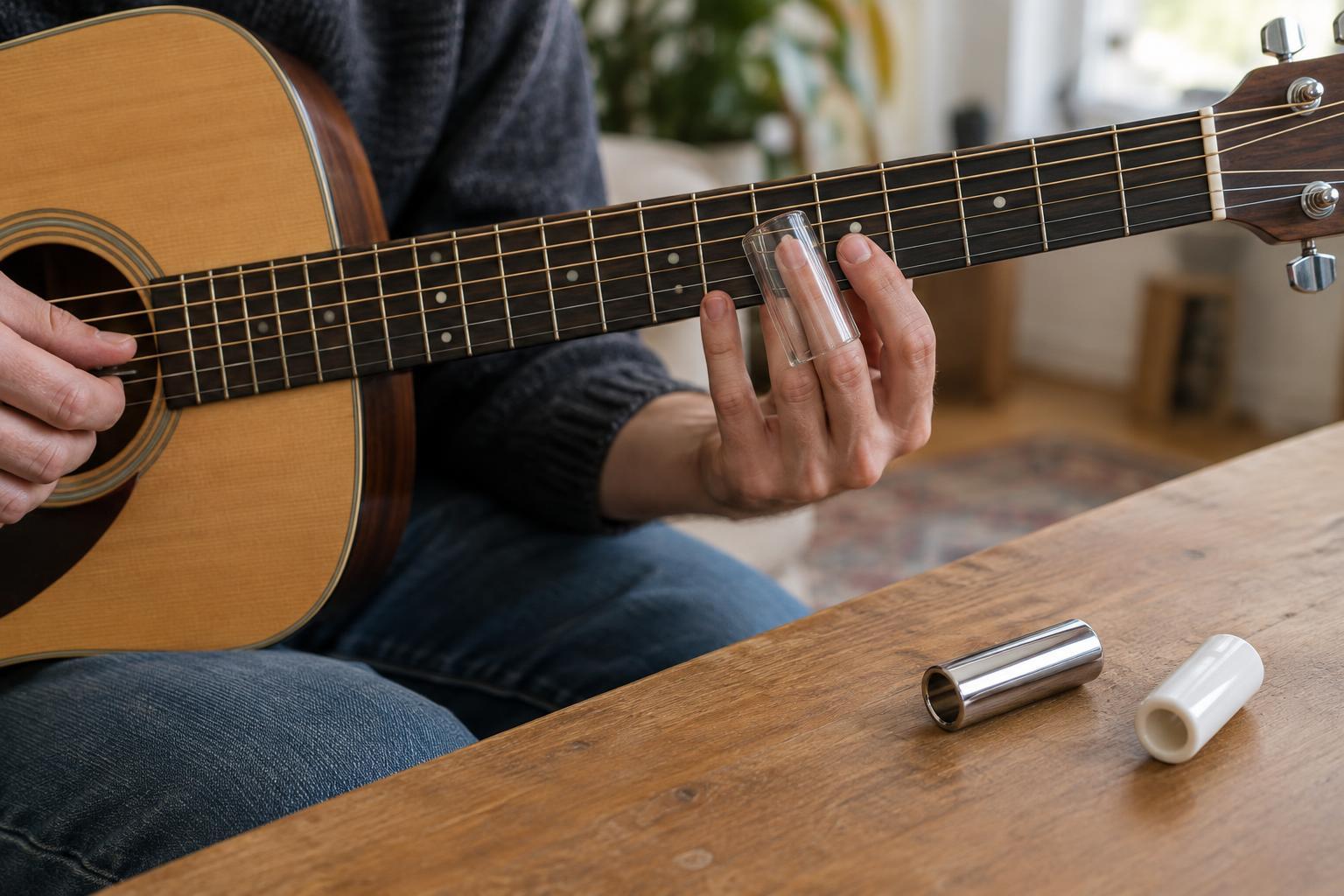
A slide works differently from a fingertip. Instead of pressing a string down behind a fret, place the slide lightly over the fret wire itself. Pick one string and move the slide until the note sounds centered. The metal fret remains a visual guide, but the slide determines the sounding length of the string, so small shifts matter.
Try a slow journey from the open string to the twelfth fret, stopping at a few positions along the way. Listen to each arrival before adding vibrato. Then gently rock the slide across the pitch, keeping the movement narrow enough that you can still hear its center. Whether you use a glass or metal slide is less important at first than steady contact, careful listening and a comfortable fit.
Make room for silence with muting
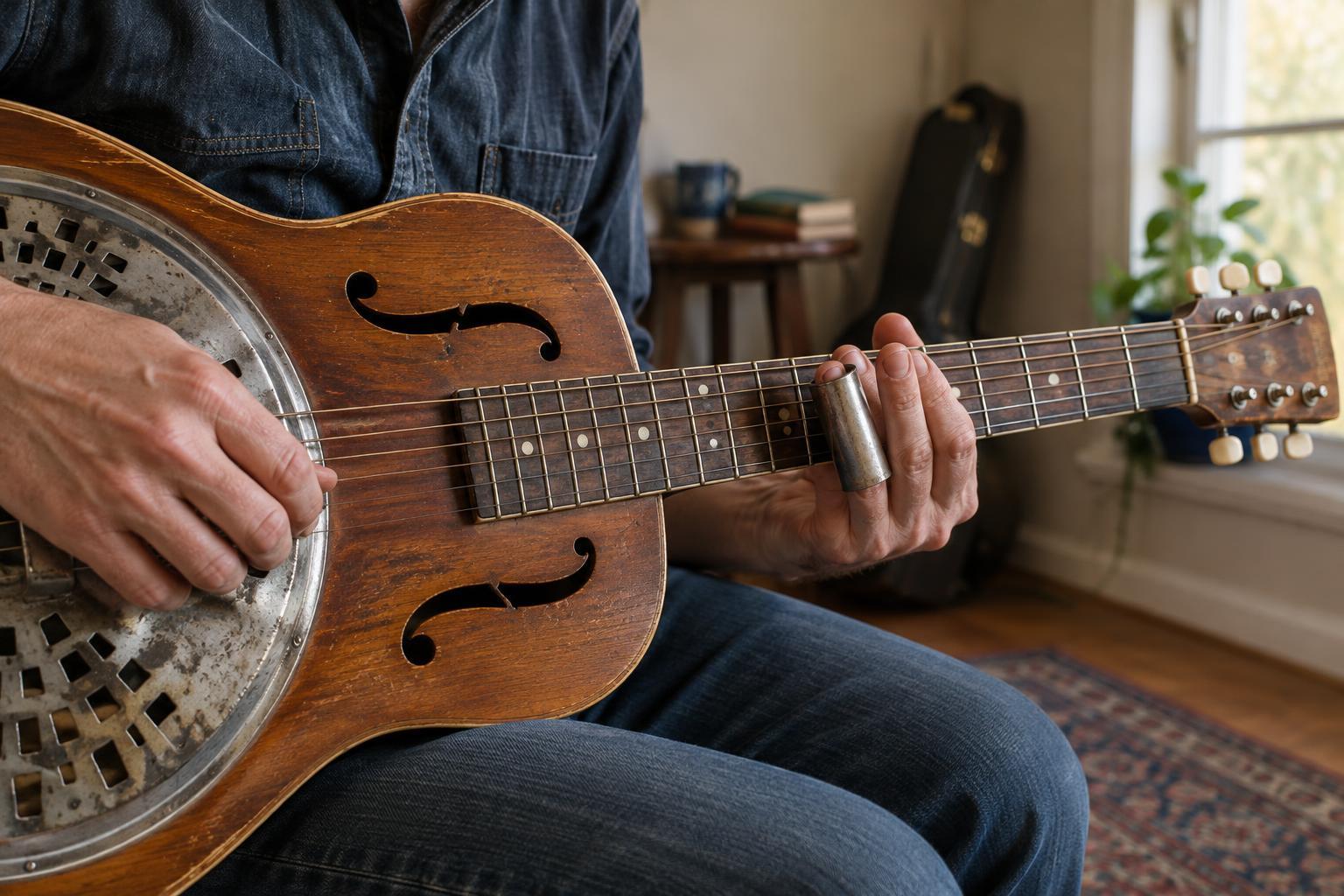
Open strings can ring beautifully, but they can also blur a melody. When you wear a slide on your fretting hand, let an unused finger rest lightly on the strings behind it. This helps quiet incidental noise as the slide travels. Your picking hand can control the other side of the note: touch strings you do not want to hear while picking the ones you do.
Begin with one string, then play pairs of strings before attempting a full chord. In open D, for example, the fourth and third strings offer a compact place to explore movement; in open G, the third and second strings do the same. Pick a short phrase, let its final note ring, and deliberately stop the sound. Treating the end of a note as part of the phrase makes even simple playing feel more intentional.
Build a short, repeatable practice loop
Choose one tuning for a session rather than switching constantly. First, strum the open chord and check the tuning. Next, slide across two or three strings at the fifth and seventh frets, listening for clean arrivals. Return to the open chord between moves so your ear has a reference point. Finally, invent a three-note response to each chord and leave a little space before repeating it.
Record a brief pass if you can, then listen for pitch and unwanted ringing rather than speed. Once the sound is controlled, vary where you pick, how long you hold a note and how widely you move the slide. Open tunings offer an easy doorway into slide guitar, but the character of a phrase comes from those choices: which strings speak, where the note settles and when you let it go.