Start with the way you play
A good setup is not necessarily the one with the lowest strings. For blues, comfort includes being able to fret cleanly, push a note through a full bend and let it sustain without an unwanted rattle. A player with a light touch may enjoy lower action than someone who picks hard. Before changing anything, tune the guitar, plug into a familiar amp at a moderate volume and play the phrases you actually use. Test open chords, single-note lines, bends and vibrato across the neck.
Write down what feels wrong rather than adjusting everything at once. Are the first few frets tiring to play? Do notes choke during bends high on the neck? Is one string much louder than its neighbours? These clues help you identify the right adjustment. If the guitar already feels good, a setup may only need fresh strings, tuning and a check for obvious problems.
Choose strings that suit your hands
String gauge affects both feel and sound, but heavier is not automatically better for blues. Lighter strings generally take less effort to bend; heavier strings can feel firmer under the pick. Choose a set that lets you control bends and vibrato without straining. String material and construction can also change the feel, so it is worth giving a new set some playing time before deciding whether it works for you.
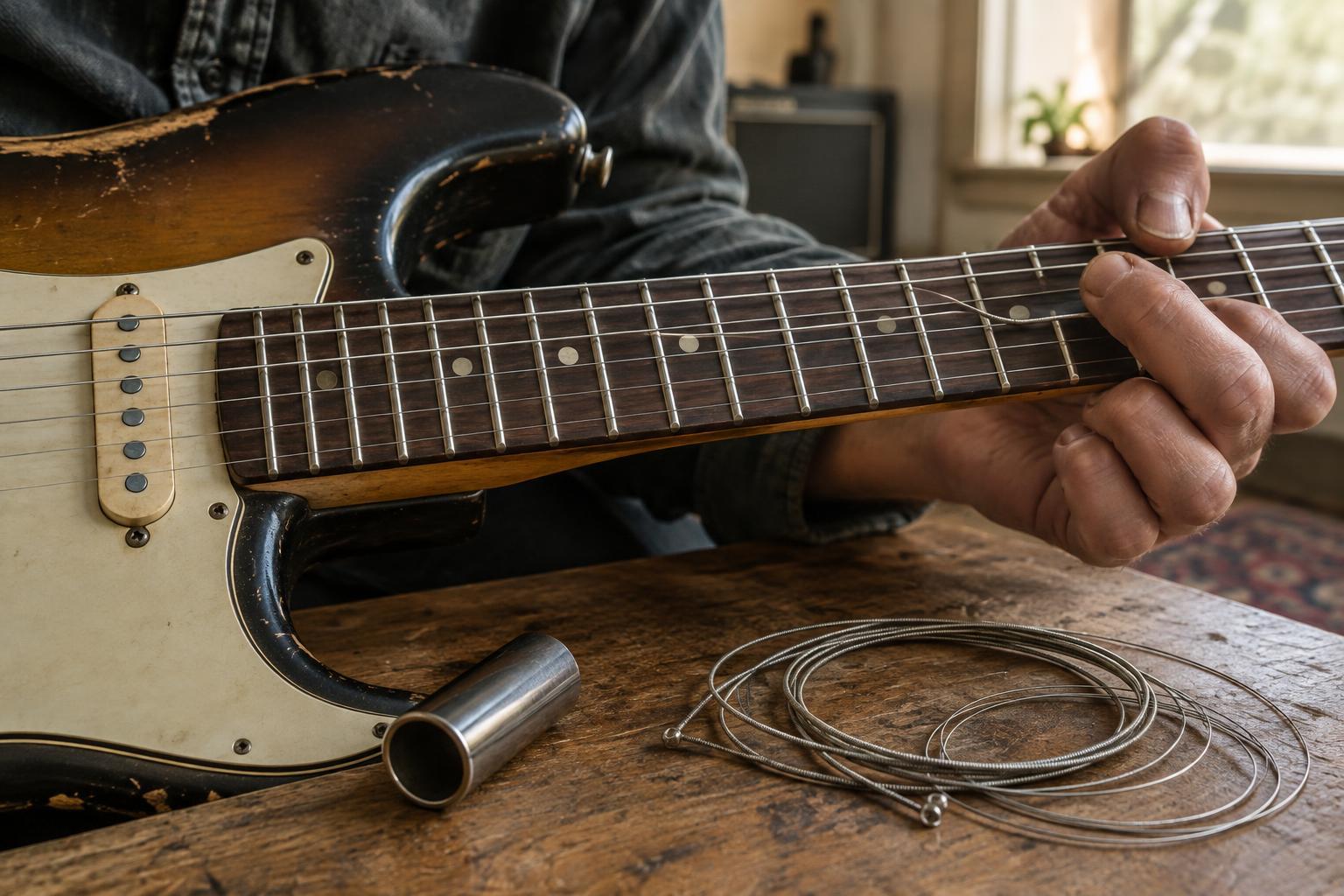
Change strings before making fine adjustments, especially if the old ones are worn or uneven. Stretch new strings gently, tune them repeatedly until they settle, and check that each string sits properly in its nut slot and bridge saddle. If you change gauge substantially, the neck and bridge may respond differently. On a guitar with a floating tremolo, even a modest change can shift the bridge’s resting position.
Check neck relief and playing height
Neck relief is the slight forward curve that gives vibrating strings space to move. To make a basic check, hold a string down at the first fret and near the last fret, then look for a small gap around the middle of the neck. A perfectly straight neck is not automatically ideal, and too much curve can make fretting feel difficult. Relief interacts with string gauge, tuning and playing style.
The truss rod changes relief, not the overall height of the strings at every point. If you know how your instrument’s rod works, make only small adjustments with the correct tool, retuning and reassessing between changes. Never force a rod that resists turning. If you are unsure, a qualified repairer is the safer choice. Once relief is reasonable, assess action at the bridge. Raise a string if strong picking makes it buzz excessively or bends choke; lower it cautiously if fretting feels needlessly hard. A little unplugged buzz may be acceptable if it does not intrude through the amp.
Make bends and chords work together
Play slow bends on every string and in several areas of the neck. Listen for a note that dies before reaching its target, particularly on the higher frets. Raising the affected string slightly at the bridge may help, but persistent choking can point to uneven frets or another issue that saddle height alone will not solve. Check full chords too: a setting that makes lead lines easy should not make rhythm playing awkward.
Pay attention to the nut if open chords sound sharp even after tuning, or if a string catches and then jumps in pitch while you tune or bend. Nut slots are small and easy to cut too deeply. Rather than filing them by guesswork, have a repairer inspect a suspected nut problem. The aim is a guitar that responds predictably, not one that meets a particular number on a ruler.
Finish with intonation, pickups and a playing test
After changing string height, check intonation with a tuner. Tune an open string, then compare its fretted note at the twelfth fret. If the fretted note is sharp, moving the saddle farther from the neck will generally help; if it is flat, moving the saddle closer will generally help. Retune after each small adjustment. Repeat for each string, following your bridge’s instructions and keeping track of the saddle’s original position if you are learning.
Pickup height is a final balance check. Pickups set too close to the strings may sound harsh or produce an uneven response; set too far away, they may sound weak. Adjust gradually while comparing strings and pickup positions at your usual playing volume. Then put the tools down and play for a while. Comfortable blues playing depends on how the whole guitar behaves under your fingers, so let sustained notes, expressive bends and relaxed rhythm work have the last word.