What a slide changes
A guitar slide is a short tube worn over a finger and moved along the strings. Instead of pressing a string against a fret, you touch it lightly with the slide and let the string vibrate beneath it. That makes it possible to glide between pitches and shape notes with small movements. Slide playing is closely associated with blues, but the same basic technique appears in many styles.
The first surprise for many beginners is that a slide asks for less downward pressure than an ordinary fretted note. Push too hard and the string may hit the frets, producing a rattle or an unwanted pitch change. The goal is firm, steady contact without pressing the string all the way to the fingerboard. A comfortable slide helps, but clean sound comes mainly from touch, listening and control of the strings you do not want to hear.
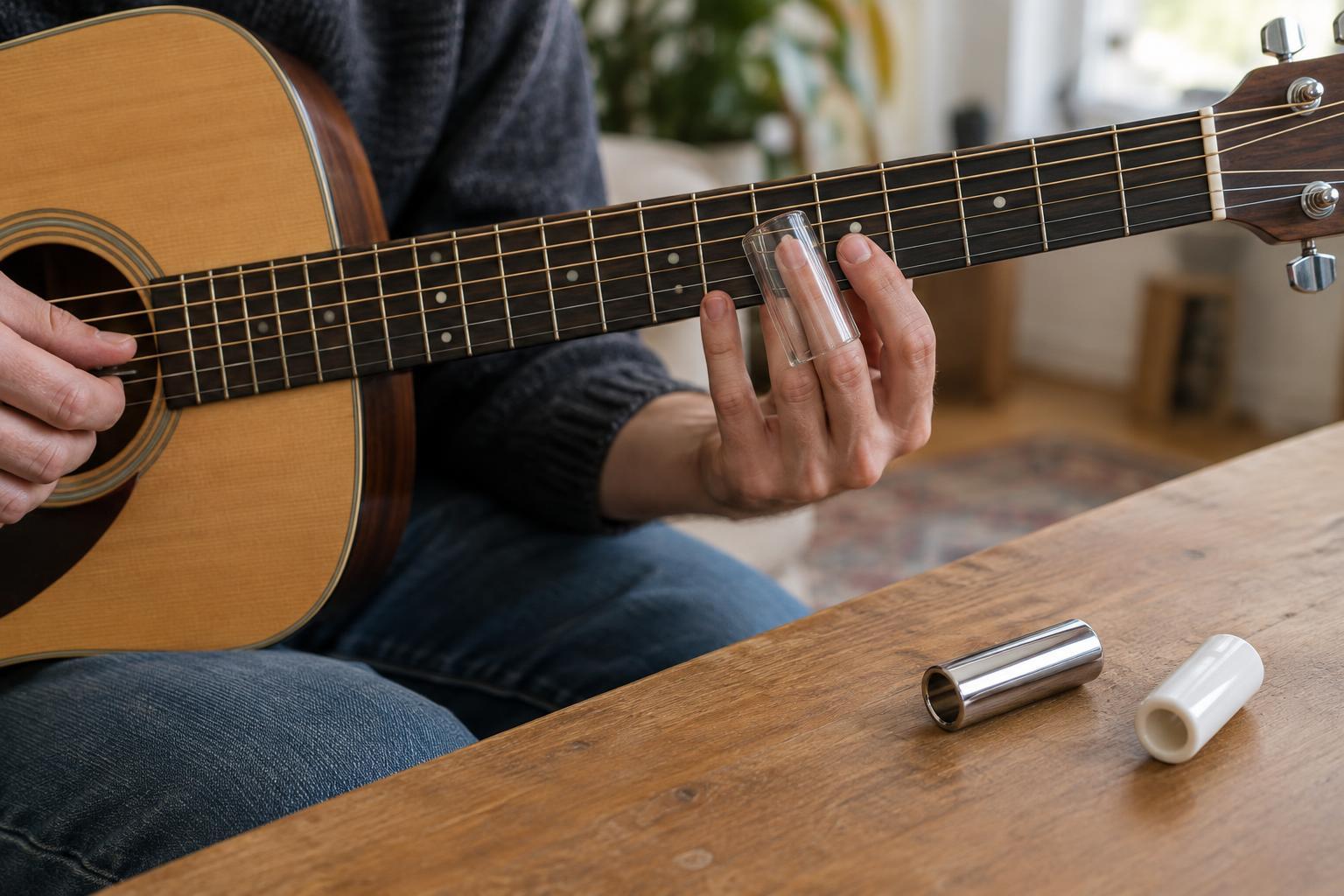
Choosing between glass, metal and ceramic
Glass slides often have a smooth feel on the strings and can produce a rounded sound. Metal slides tend to sound bright and clear, and their weight may help a note sustain. Ceramic sits somewhere between these broad descriptions for many players, though its feel and sound depend on the particular slide. None is automatically the best material for blues or for beginners.
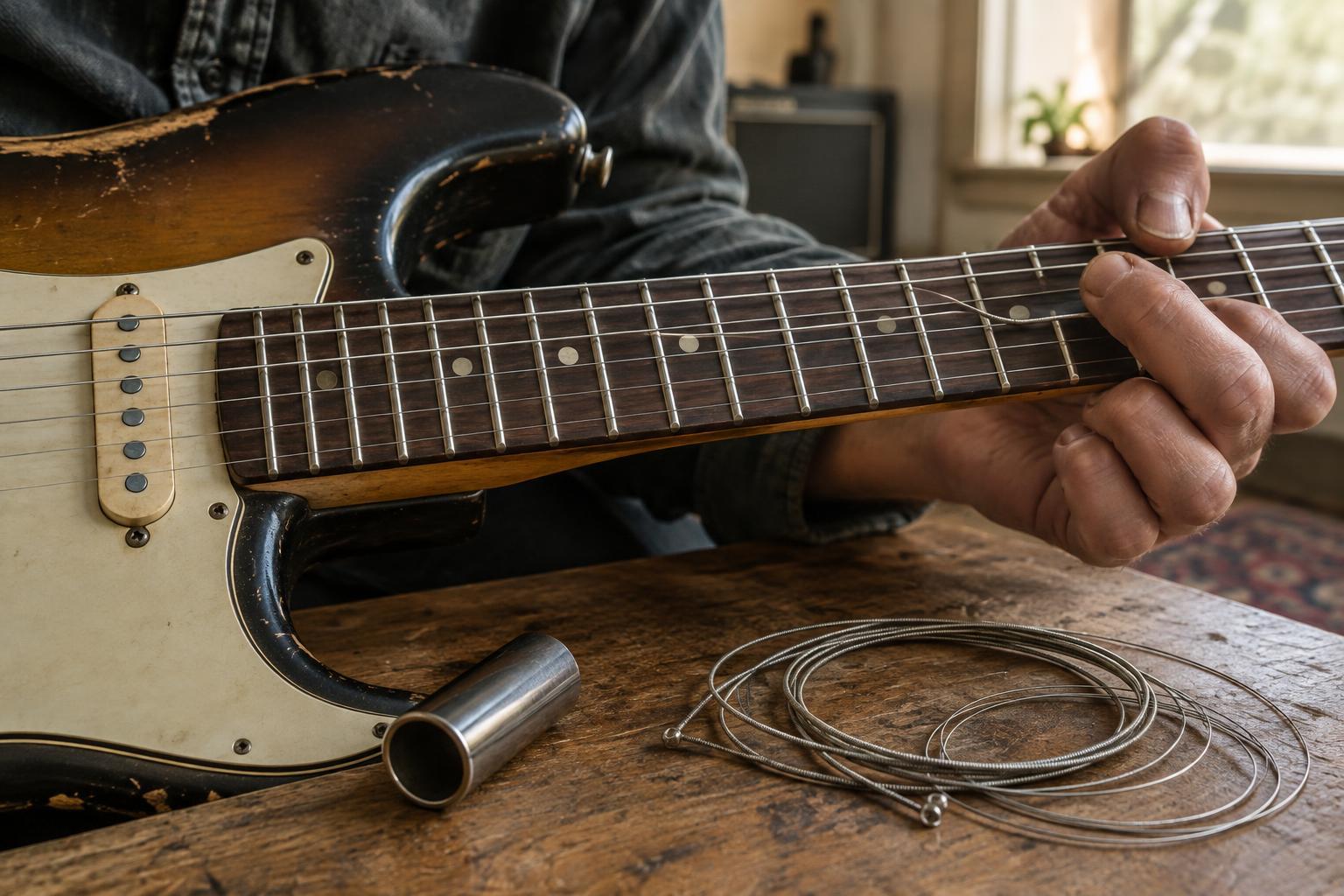
Pay attention to weight and wall thickness as well as material. A heavier slide can feel stable but may tire your hand or make a light touch harder to maintain. A lighter one may be easier to move while demanding more care to keep the note sounding full. If you can, try a few slides on your own guitar. Play the same single-note phrase with each and notice which one lets you move accurately without fighting its weight.
Find a fit that stays put
A slide should move on and off your finger without a struggle, yet stay reasonably secure when your hand points downward. Too loose, and it can wobble as you cross strings. Too tight, and it can distract you or limit movement. Slide sizes are not perfectly consistent across makers, so the useful test is how the slide behaves on your hand, not the size printed on a package.
Players commonly wear a slide on the ring finger or pinky, leaving other fingers available for fretted notes and muting. Either choice can work. The pinky may leave more fingers free; the ring finger may feel easier to guide. Try holding each finger over the strings with your wrist relaxed. Choose the position that lets you reach the notes while keeping the slide roughly parallel to the frets. A slide long enough to cover the strings you intend to play is useful, but extra length can feel awkward if it gets in the way.
Build pitch and muting control
Start on one string with a note you know, such as one at the twelfth fret. Pick the string and place the slide directly above the fret wire, rather than in the space behind it as you would for a fretted note. Move slowly into the note and compare its pitch with the same note played normally. Your ear will tell you when you have arrived. Keep the slide level and use just enough pressure for an even sound.
Unwanted ringing is often a bigger obstacle than finding the note. Lightly rest a finger behind the slide on the strings to quiet vibration on that side. Use your picking hand to damp strings you are not playing, releasing only the string or strings you want to hear. Practice moving between two nearby notes without letting the others ring. Once you can land reliably, add a gentle side-to-side vibrato centered on the intended pitch; a wide shake is not required.
Make your guitar work with you
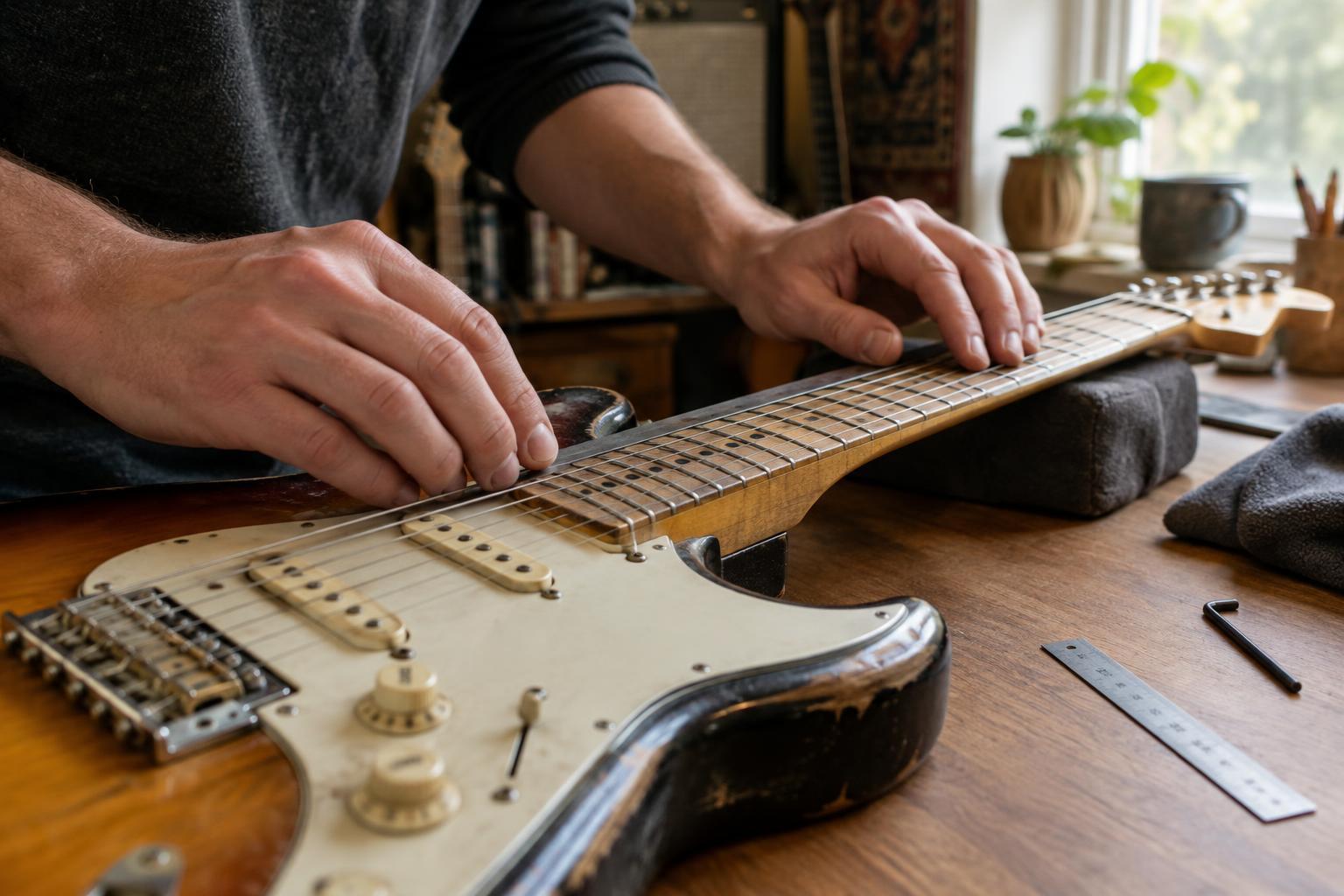
You can begin on a guitar you already own. If the strings sit very close to the frets, a heavy slide or firm touch may cause buzzing, so try a lighter touch before changing the instrument. Some players prefer slightly higher string action for dedicated slide playing, but that can make ordinary fretting less comfortable. There is no need to change your setup immediately to learn the basic motion.
Standard tuning is a sensible starting point because familiar chord shapes and note locations remain available. Open tunings can later make it easier to sound full chords with a straight slide, but they are an option rather than a requirement. For now, keep sessions short: sustain a note, glide to another, stop unwanted strings, and listen to where each phrase settles. Those small exercises build the control that makes a slide expressive rather than merely slippery.