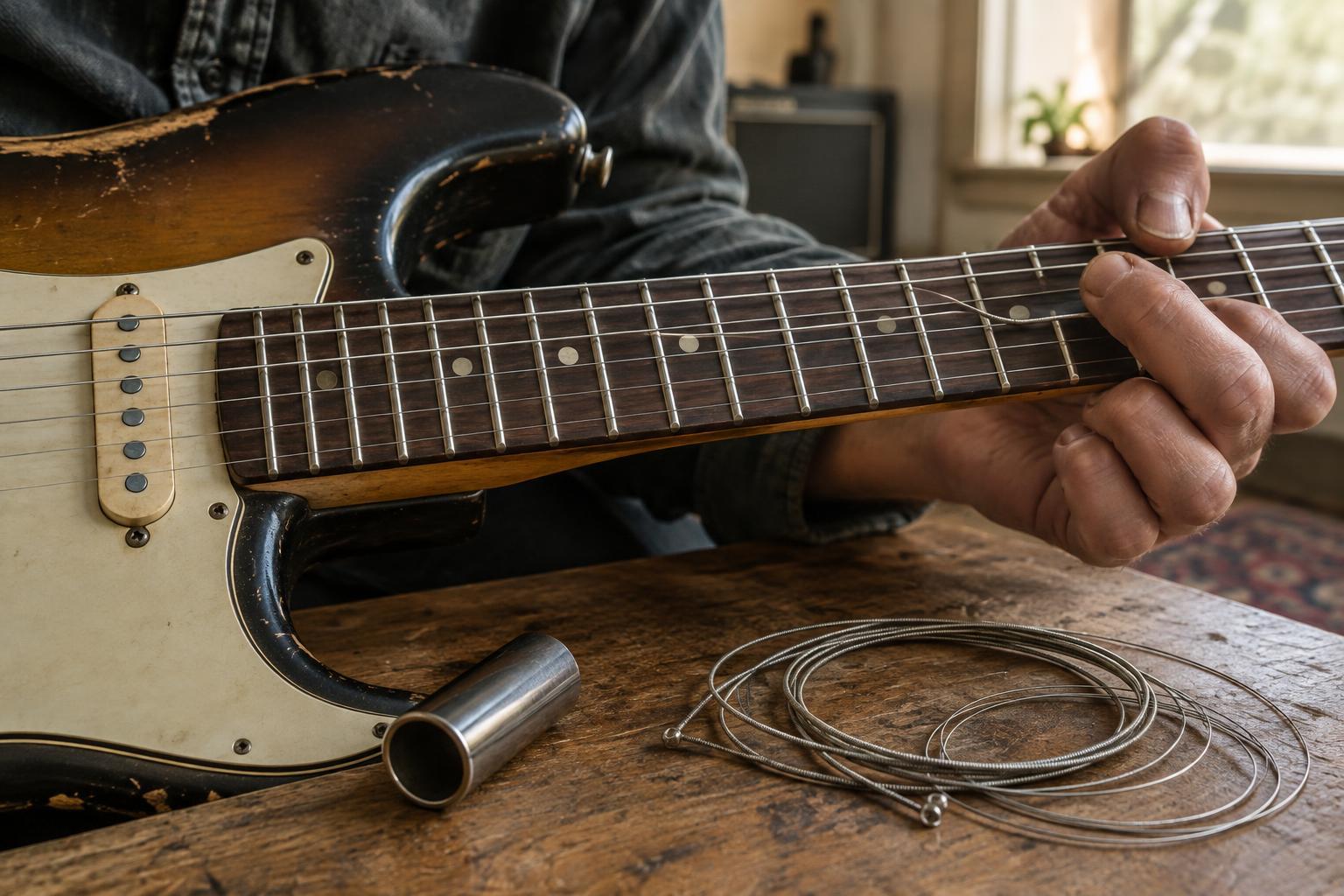
Start with the feel you want
Blues guitar often asks a lot of the strings: a slow, expressive bend, a firm rhythmic attack, a soft fingerpicked phrase and perhaps a slide passage in the same set. String choice can make those moves feel easier or harder, but there is no single blues gauge or material. The right set depends on the guitar, its tuning and setup, and how your hands approach the music.
It helps to separate two questions. Gauge is the thickness of a string and has a strong effect on how it resists your fingers. Material and construction influence the surface under your fingertips and the way the string sounds. Pickups, amplification and playing technique also shape the result, so treat string descriptions as starting points rather than promises.
Gauge changes the work your fingers do
A lighter-gauge set generally makes fretting and bending easier at a given tuning and scale length. That can suit a player who uses wide bends, quick vibrato or a gentle touch. The trade-off is that light strings may feel less resistant under a heavy pick attack. If you press hard, you may also pull notes sharp more easily.
Heavier strings usually push back more. Some players like that firm response for strong rhythm playing, slide or lower tunings. They are not automatically louder or better for blues, though: if the extra resistance makes your bends hesitant, the change may work against your phrasing. A heavier set can also call for adjustments to the guitar’s setup.
The number printed on a packet tells only part of the story. Two sets with the same thinnest string can have different bass-string gauges. Scale length and tuning matter too: the same set can feel tighter on one guitar than another, while tuning down will usually make it feel looser. When comparing sets, change one variable at a time and judge them on the guitar you actually play.
Material and winding shape tone and texture
On electric guitar, many wound strings use a steel core with a nickel-plated steel wrap. This common construction offers a useful middle ground: it can give clear attack without feeling as bright as some stainless-steel sets. Pure-nickel wraps are often chosen for a warmer or softer-edged sound. Stainless-steel wraps may sound brighter and feel different under a pick or sliding finger. These are tendencies, not fixed outcomes; the guitar and amp can make the differences more or less noticeable.
Acoustic steel-string guitars use different sets, commonly labeled 80/20 bronze or phosphor bronze. Players often describe 80/20 bronze as bright when fresh and phosphor bronze as having a more rounded character. Neither label tells you exactly how a set will sound after hours of playing. Coated strings add another choice: their coating can change the feel slightly and may help them retain a fresh sound longer, depending on your playing and care.
Winding style matters as well. Roundwound strings have a textured surface that many guitarists expect and that can produce audible finger noise. Flatter windings tend to feel smoother and may have a more subdued top end. Check that any set is intended for your type of guitar; electric, steel-string acoustic and classical guitars are not interchangeable string platforms.
Match the set to bends, slide and rhythm
For bend-heavy playing, start by asking whether you can reach the intended pitch smoothly and hold it without straining. A lighter set may help, but a well-adjusted guitar can matter just as much. String height, fret condition and tuning stability all affect whether bends feel inviting. If your picking hand is forceful, you might prefer a firmer bass side while keeping the treble strings comfortable for bends.
Slide playing often benefits from enough resistance and string height to keep the slide from knocking against the frets. That does not mean every slide player needs a very heavy set. A lighter touch, a suitable slide and a thoughtful setup can make moderate gauges workable. For acoustic rhythm and fingerpicking, listen for a balance between clear bass notes and treble strings you can control without fighting them.
Choose by making a small, repeatable test
Begin with the type and gauge already on your guitar, if you know them. Notice what you want to change: difficult bends, floppy bass strings, a rough surface or a sound that seems too bright. Choose a neighboring gauge or a different wrap material to address that one concern. Keep the tuning, pick and amp settings the same while you compare.
Play a few familiar phrases rather than judging only open strings: a full-step bend, a slow vibrato, a muted rhythm figure and a quiet passage will reveal different aspects of feel. Give yourself time to adjust before deciding. If a gauge change causes buzzing, poor intonation or tuning trouble, the guitar may need a setup rather than another packet of strings. The best choice is the one that lets your phrasing sound deliberate and feel comfortable.