Three scenes, not three fixed sounds
Regional blues labels are useful starting points, but they are not musical borders. Players traveled, records circulated, and songs changed as performers adapted them for new rooms and audiences. Memphis, Texas and St. Louis are best understood as overlapping historical scenes: places where particular ways of working, performing and listening helped blues musicians develop their craft.
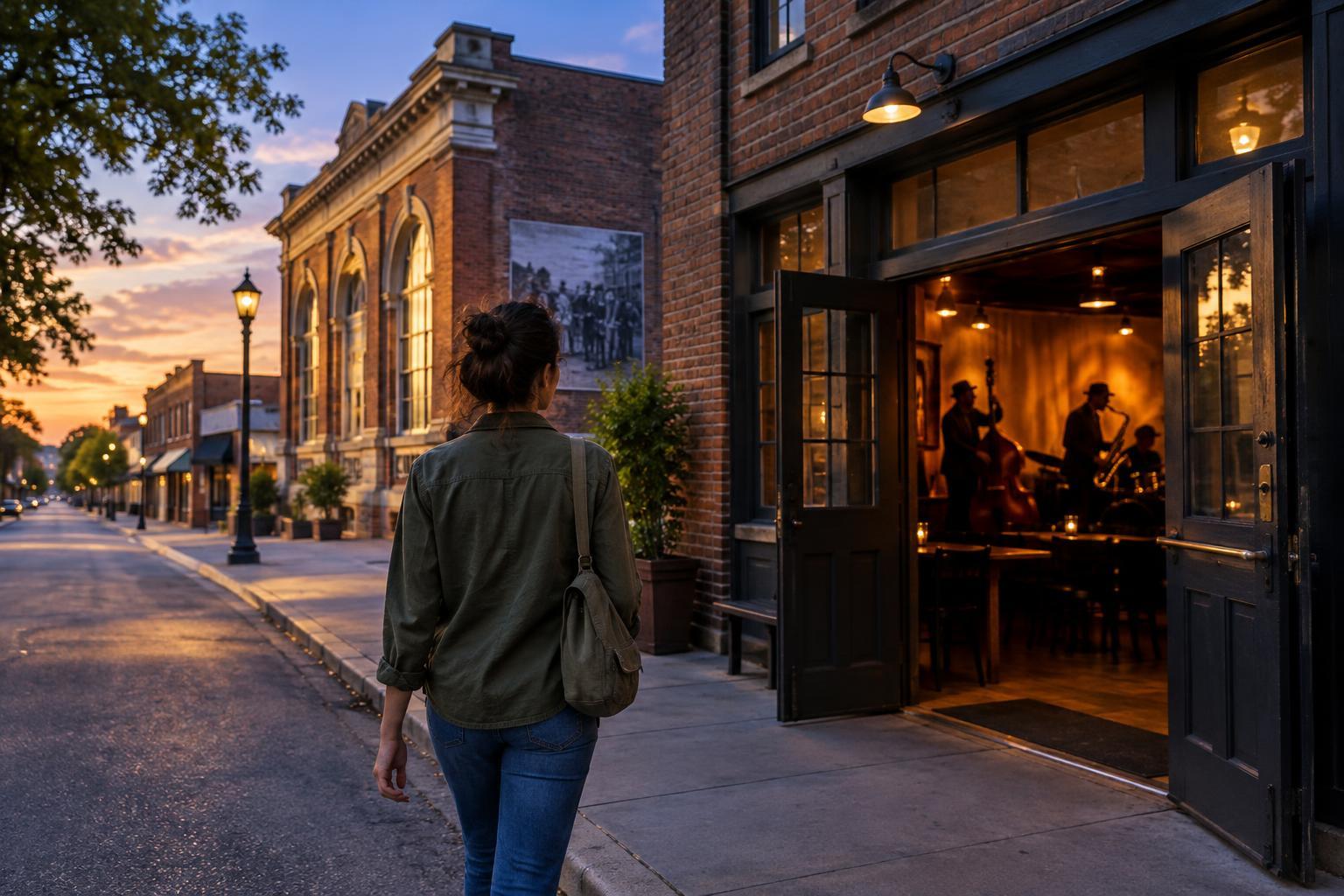
The differences are easier to hear when you ask more than whether a track has a guitar or piano. What kind of space might it have suited: a street corner, a dance floor or a crowded club? Does the singer leave room for an instrumental reply? Does the rhythm invite dancing, or does it follow the shape of a story? Those questions reveal local influences while leaving space for each artist’s choices.
Memphis: street music, entertainment and exchange
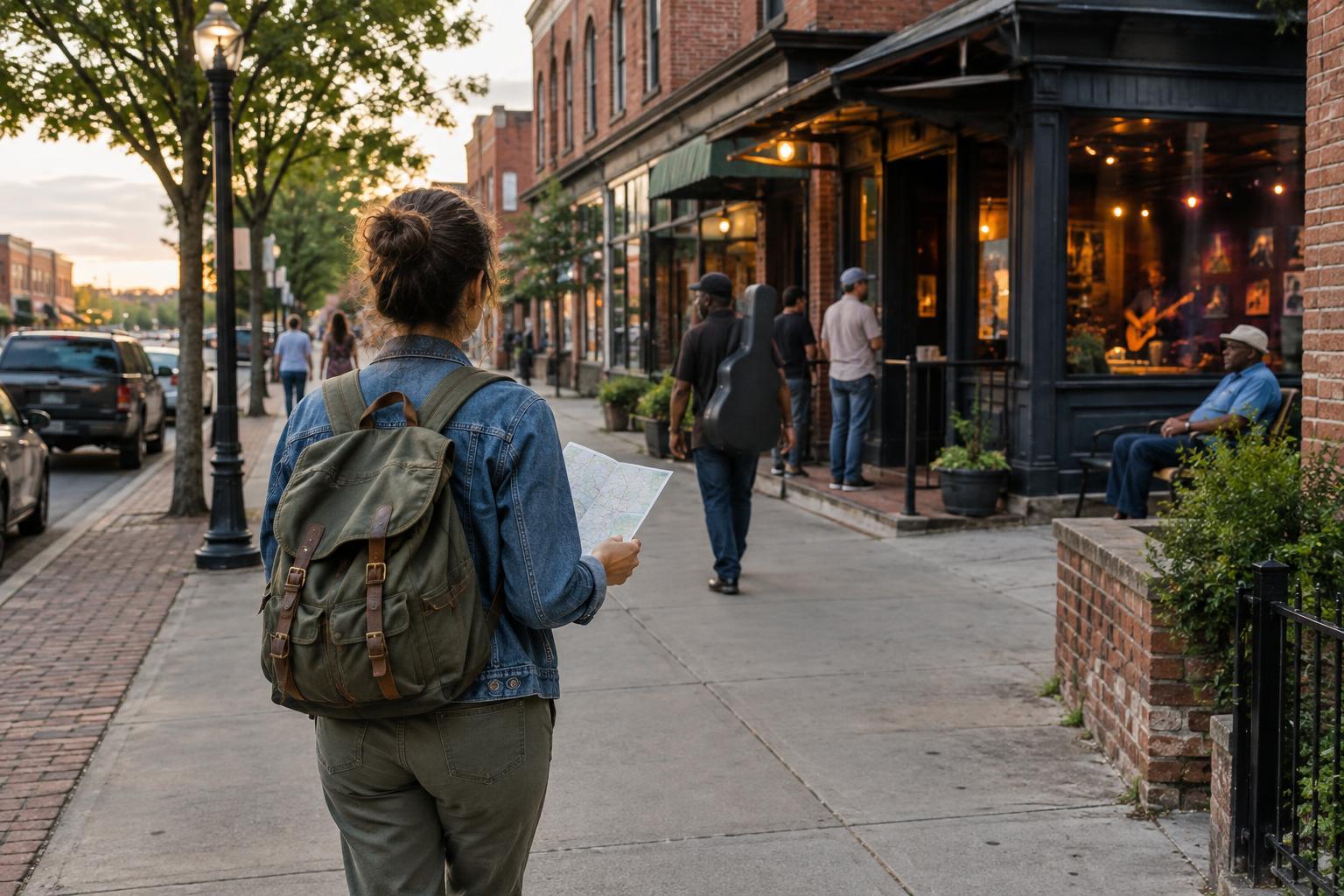
Memphis brought musicians into contact with audiences moving through a busy river city. Beale Street became a prominent center of Black entertainment, where performers could encounter other players, compete for attention and draw on a wide range of popular sounds. The city’s blues history includes solo performers, small groups, jug bands and musicians whose work crossed into early jazz and popular song.
That variety matters when listening. A Memphis-associated recording might lean on a memorable vocal refrain, a loose ensemble groove or the contrasting sounds of plucked strings, harmonica and improvised percussion. Some performances feel built to catch the ear quickly; others give a singer room to stretch a phrase. There is no single Memphis beat. The connecting thread is a scene in which musicians could borrow ideas from one another and reshape them for different settings.
Memphis also became an important place for later electric blues and rhythm-and-blues activity. Rather than treating that change as a clean break, listen for what carried forward: a strong vocal presence, rhythmic conversation among instruments and songs that could work for an audience in the room.
Texas: guitar voices across a wide landscape
“Texas blues” covers more ground than one city or guitar technique. Its history includes rural and urban performers, acoustic and electric instruments, and musicians who worked well beyond Texas. Guitar is often central to discussions of the region, but even guitar-led performances vary widely. A player may use single-note runs to answer a vocal line, build a steady accompaniment beneath a story or make the instrument sound almost like a second singer.
To listen closely, follow the exchange between voice and guitar rather than looking for a prescribed shuffle or tone. Notice whether the guitar fills gaps in the singing, keeps the pulse moving or steps forward for a longer statement. The feel can be spare and reflective or lively and suited to dancing. Later amplified approaches added new volume and sustain, but they did not erase the earlier emphasis on touch, timing and individual phrasing.
Texas musicians helped blues sounds travel through performance and recording. That movement is a reminder that a regional label can describe an artist’s roots or an important part of their career without capturing everything they played.
St. Louis: piano traditions and an urban crossroads
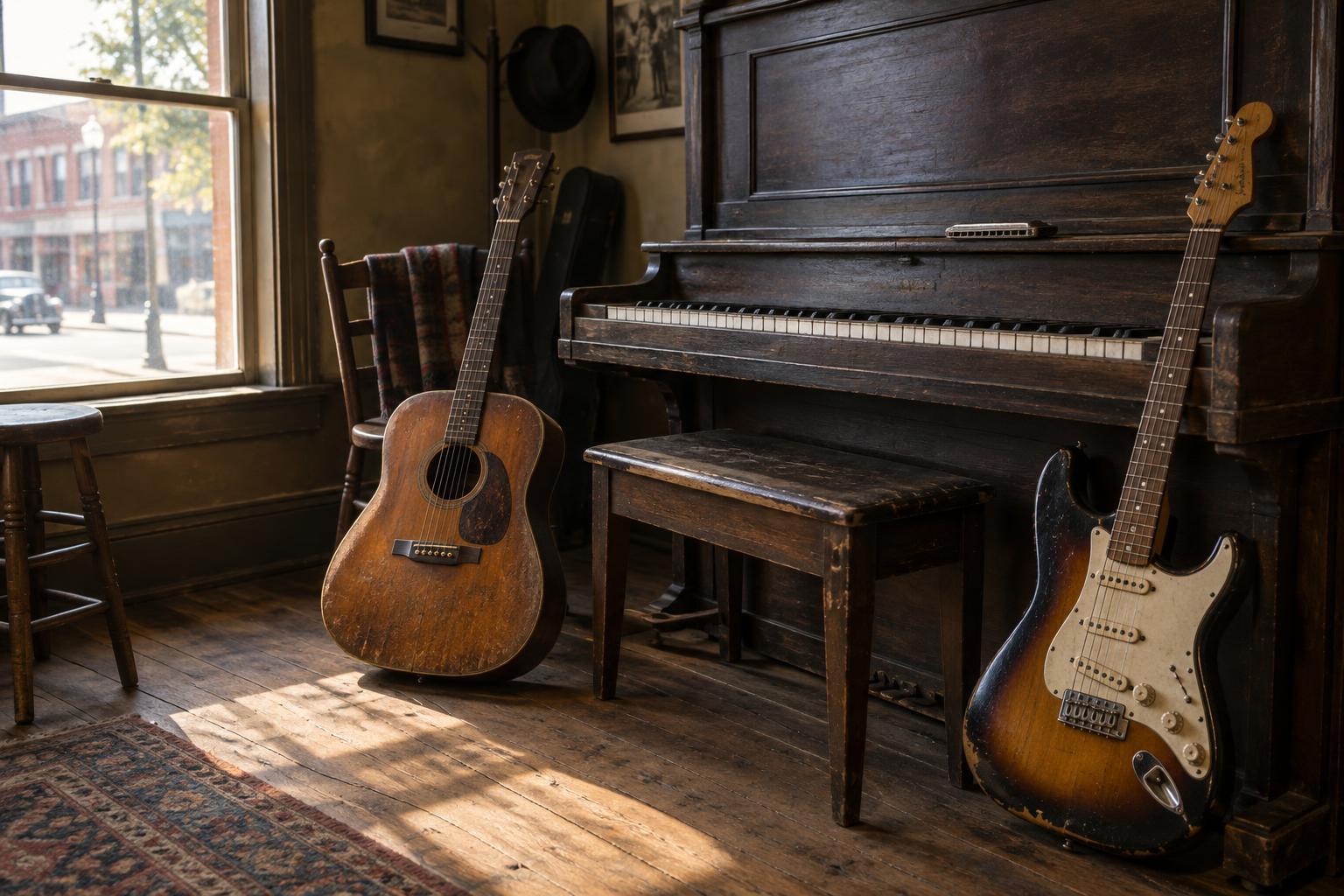
St. Louis offers another way into blues history. Its position as a river and rail crossroads brought performers and audiences together, while its entertainment culture made room for blues alongside ragtime, jazz and other popular forms. Piano is especially useful to listen for here. The instrument could supply bass notes, rhythm and melody at once, giving a performer many ways to support a singer or drive an instrumental piece.
St. Louis blues should not be reduced to piano alone. Guitarists, singers and bands were also part of the scene, and musicians did not keep blues separate from neighboring styles. In a piano-led performance, try following the left hand’s recurring pulse, then listen to how the right hand decorates or challenges it. A change in rhythm or a playful melodic turn may show how blues could share a stage with other forms of entertainment without losing its expressive force.
How to compare the scenes without flattening them
For a practical listening session, choose a small group of recordings associated with each place and compare performances rather than searching for one definitive example. Listen first for the setting suggested by the arrangement: an intimate solo performance, a flexible small group or a fuller dance sound. On a second pass, focus on one relationship, such as voice and guitar, voice and piano, or rhythm and ensemble.
Keep notes on what surprises you. A Memphis performance may be quieter than expected; a Texas recording may put the singer ahead of any flashy guitar work; a St. Louis piece may depend on much more than its piano. Those exceptions are not obstacles to understanding the scenes. They show why the blues grew through movement and exchange, with local traditions giving musicians possibilities rather than rules.