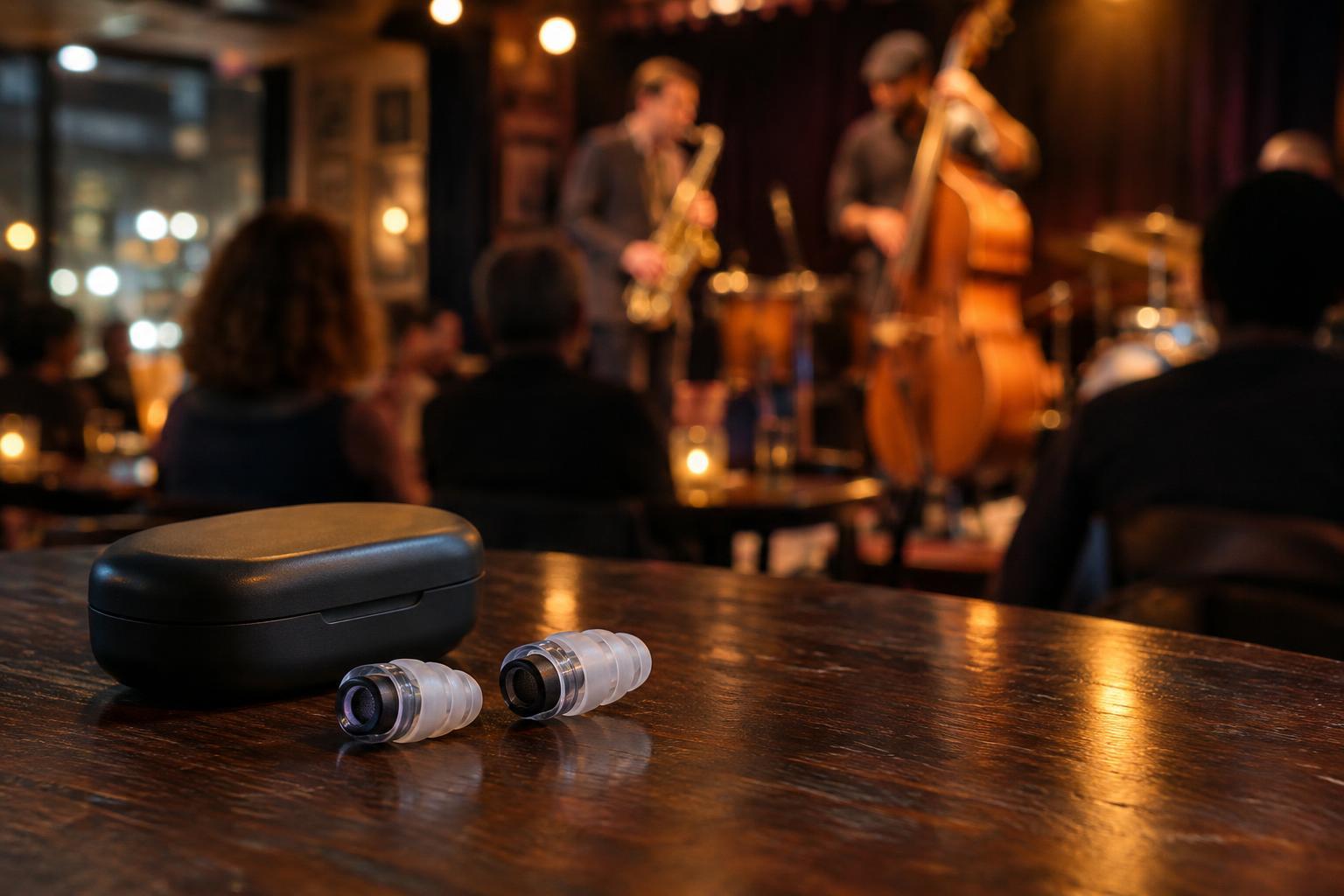
Start with the kind of show you attend
A small acoustic set and a loud club performance ask different things of your ears. Before shopping, think about where you usually stand, how long you stay and whether you want to follow individual instruments closely. If you move between quiet listening rooms and amplified venues, you may value an earplug that is easy to carry and comfortable enough to wear throughout a set.
No earplug preserves the sound of a venue exactly. Its job is to reduce what reaches your ears, and some designs change the balance of frequencies more than others. The useful question is not whether a pair is perfectly transparent, but whether it lets you enjoy the parts of the music you care about—vocals, rhythm, bass lines or the conversation between players—at a more comfortable level.
Understand the main types
Foam earplugs are widely available and can provide substantial reduction when inserted correctly. They are a practical backup for unexpectedly loud rooms. Their drawback for attentive listening is that music may sound dull or uneven, particularly if the plugs are not seated consistently. Because fit matters so much, a poorly inserted foam plug should not be assumed to offer the same reduction as a properly fitted one.
Reusable filtered earplugs are designed to reduce sound while retaining more of its overall balance. They often appeal to people who want to hear a singer’s phrasing or a guitarist’s tone without feeling cut off from the performance. Designs vary, though, and “filtered” does not guarantee that every pair will sound natural to you. Some offer interchangeable filters or sizes; check what is included rather than assuming either feature is standard.
Custom-fit plugs are made for an individual ear shape and may be worth considering if you attend shows often or struggle to find a comfortable seal with ready-made options. They usually involve more expense and a fitting process. Even a custom pair needs care and may need reassessment if its fit changes. For occasional gigs, a well-fitting reusable or foam option may be entirely sufficient.
Treat fit as part of sound quality
An earplug that leaks around the edges may let in more sound than you expect, while one that presses painfully can distract you from the show. With reusable plugs, try the supplied sizes according to the maker’s directions. They should sit securely without requiring force. If one ear feels different from the other, you may need a different size or more practice inserting that side.
Test new plugs somewhere you can listen carefully before relying on them at a gig. Play familiar music at a comfortable volume, then compare how the bass, vocals and percussion come through. You can also wear the plugs for a while to see whether they remain comfortable when you talk or move your jaw. A home test cannot reproduce a live room, but it can reveal obvious fit problems.
At a show, give your ears a moment to adjust before deciding that the music has lost its detail. Lower overall loudness can make a mix feel unfamiliar at first. If the sound remains muffled, check that both plugs are seated as intended; do not repeatedly pull them out in a loud room just to compare. Moving farther from a speaker may improve the experience more than switching plugs mid-song.
Choose for the whole evening, not one song
The best pair is one you will actually bring and wear. A small case attached to your keys or kept with your ticket can make earplugs easier to remember. Look for a design you can handle in dim light and store cleanly between uses. Follow the maker’s cleaning instructions, and replace disposable plugs rather than treating them as permanent equipment.
Think about communication, too. Earplugs can make a friend’s voice harder to follow in a noisy crowd, even when the band sounds clear. Step away from the performance area for a conversation instead of removing your plugs beside the speakers. If you are responsible for someone else at the venue, choose a setup that still lets you stay aware of your surroundings.
Make the venue part of your listening plan
Earplugs are one tool, not a promise that every position in a room will sound good or feel comfortable. Speaker placement, reflections and the crowd can all affect what you hear. If the mix seems harsh or overpowering, try another spot when it is safe and courteous to move. Breaks outside the loudest area can also make a long night more enjoyable.
For a first purchase, start with your usual venue and your biggest frustration: discomfort, muffled vocals or plugs that will not stay put. Then choose a pair you can fit reliably and test it across a few different performances. Your preference may change as you learn how rooms and bands sound through it. Protecting your listening experience should help you pay more attention to the music, not less.