The scale changes what you notice
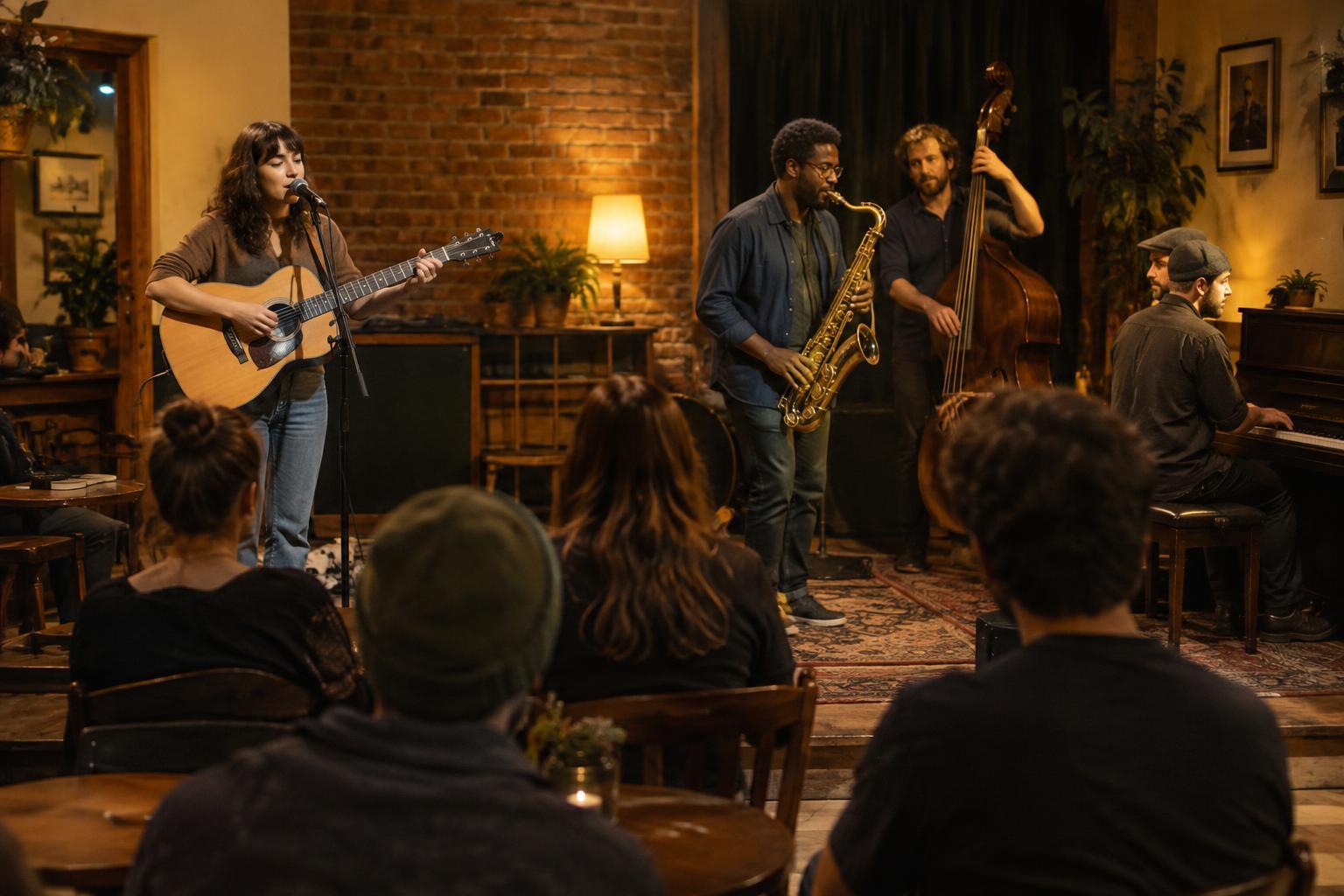
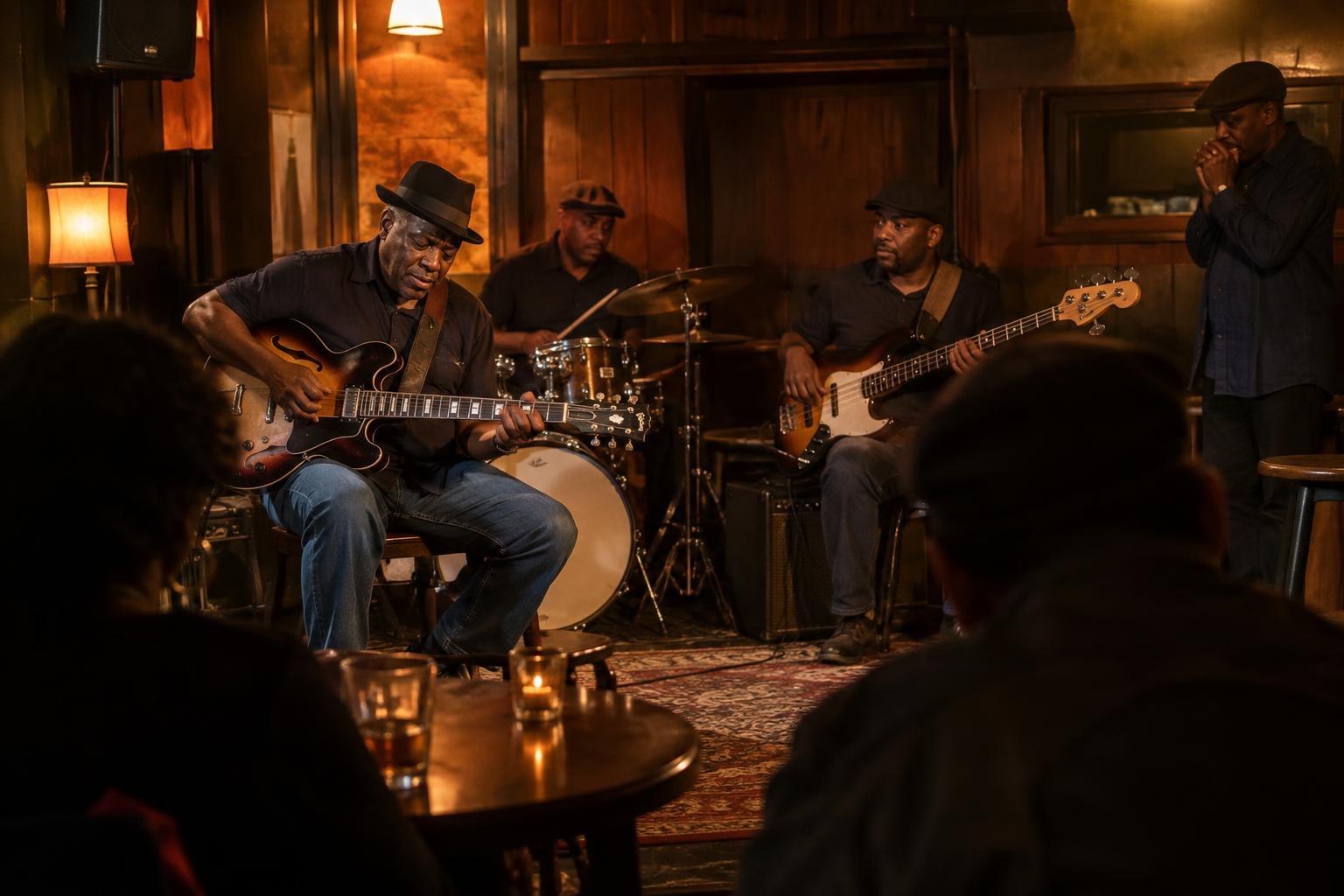
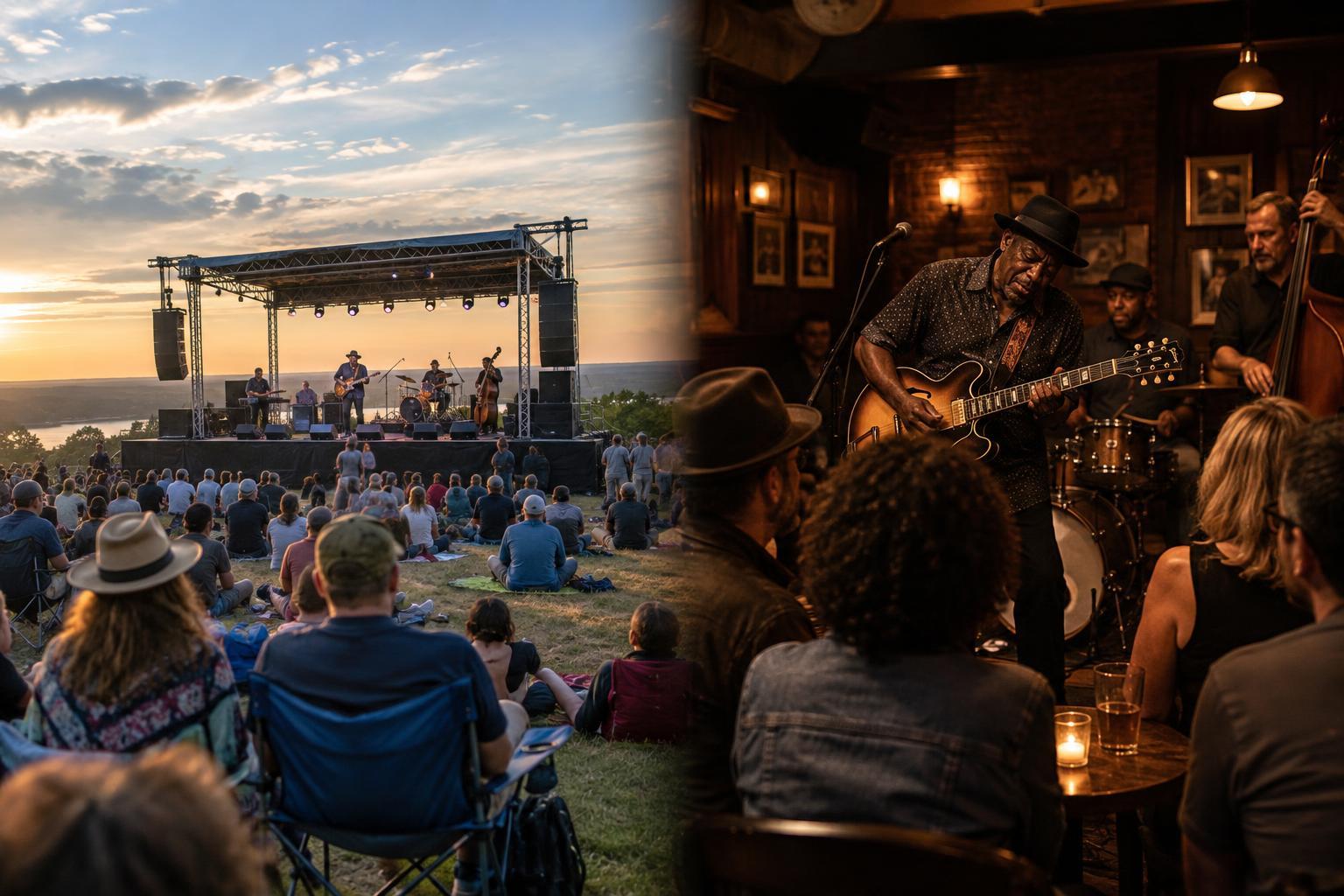
At an intimate club, a blues band may be close enough for you to see a guitarist shift their hand before a solo or catch a quick glance between the drummer and bassist. Small gestures become part of the performance. The room can feel like a conversation: musicians play to the crowd, and the crowd’s attention helps shape the mood.
A festival stage offers a different kind of connection. The audience can share a song across a broad space, and a chorus that feels personal in a club may become communal outdoors. You may not see every expression from the back of the crowd, but you can watch how the whole band holds a larger stage. Neither setting is automatically more authentic. Each brings a different part of the music into focus.
Sound travels differently
In a small room, the sound reaching you may be a blend of the speakers, instrument amplifiers, drums and the room itself. A piano note might linger against the walls; a singer’s quiet phrase might draw everyone forward. That closeness can be exciting, though it also means your seat matters. A spot beside a loud speaker or directly in front of an amplifier may offer a less balanced mix than a position farther back.
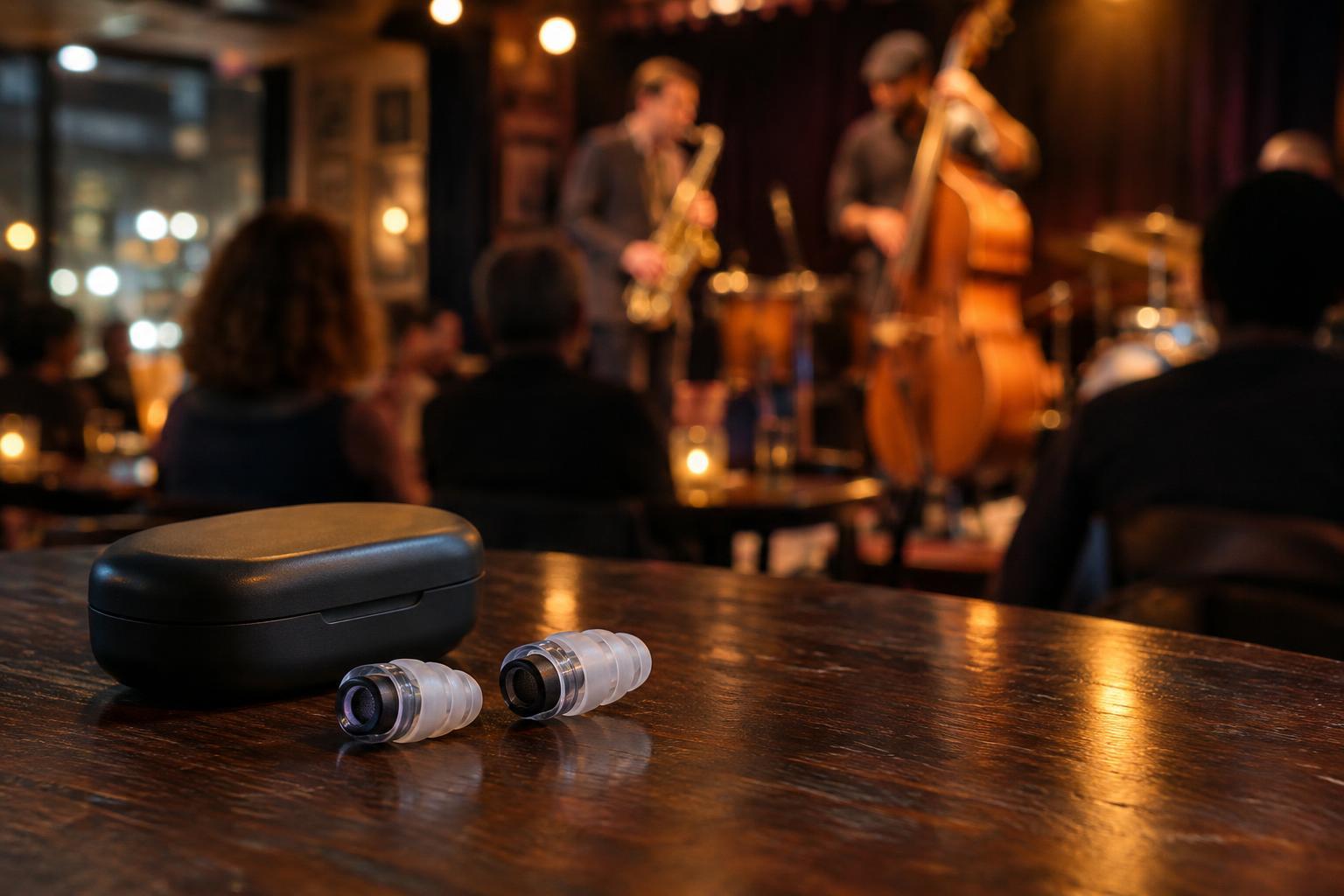
On a festival site, the sound is usually carried across a much wider area by a larger system. Where you stand can still make a difference, and open air, surrounding noise and distance may affect how clearly you hear subtle parts. If a set sounds muddy, try moving a little rather than assuming that is how the band intends to sound. At either venue, consider hearing protection that lets you stay comfortable through a full performance.
Attention and crowd energy take different forms
A club set often rewards sustained attention. You may hear the shape of a long improvisation, the pause before a vocal line or the way a band changes pace between songs. Conversation and phone screens are more noticeable when the room is small, especially during quieter passages. If you want to talk with friends, a break between sets is usually a better moment.
A festival audience may be more fluid. People arrive for different artists, move between stages or listen while taking a rest. That movement can make it easier to sample an unfamiliar act without committing to an entire evening. It can also make a delicate song harder to follow if you are near a busy walkway. For a more focused listen, choose a place away from the main flow of foot traffic; for a more social experience, leave space for others to pass.
Plan for the space, not just the lineup
The practical details can change your enjoyment as much as the music. In a club, check whether the show is seated, standing or a mix of both, and whether you need to arrive early for the view you want. In a festival setting, think about walking distances, weather, places to rest and the time it takes to reach a stage. Policies on bags, water, seating and re-entry vary, so consult the venue or organizer before you go.
Accessibility is worth checking in advance rather than guessing from the size of the event. A small club may have limited space to move around; a large site may involve long routes between stages. If you need step-free access, seating or a particular sightline, look for the event’s access information and contact the organizer when details are unclear.
Choose the experience you want to have
Pick a club when you want to settle into one band’s set and notice the details of how they play together. Choose a festival when you want to discover several artists, share in a bigger crowd’s energy or compare different approaches to the music in one outing. Those are tendencies, not rules: a packed club can feel exuberant, and a festival performance can become remarkably quiet and attentive.
Whichever you choose, give yourself a moment to listen before deciding where to stand. Notice what you can hear, what you can see and how your presence affects the people nearby. A little flexibility can turn a difficult spot into a good one—and help you appreciate what that particular space brings to the blues.