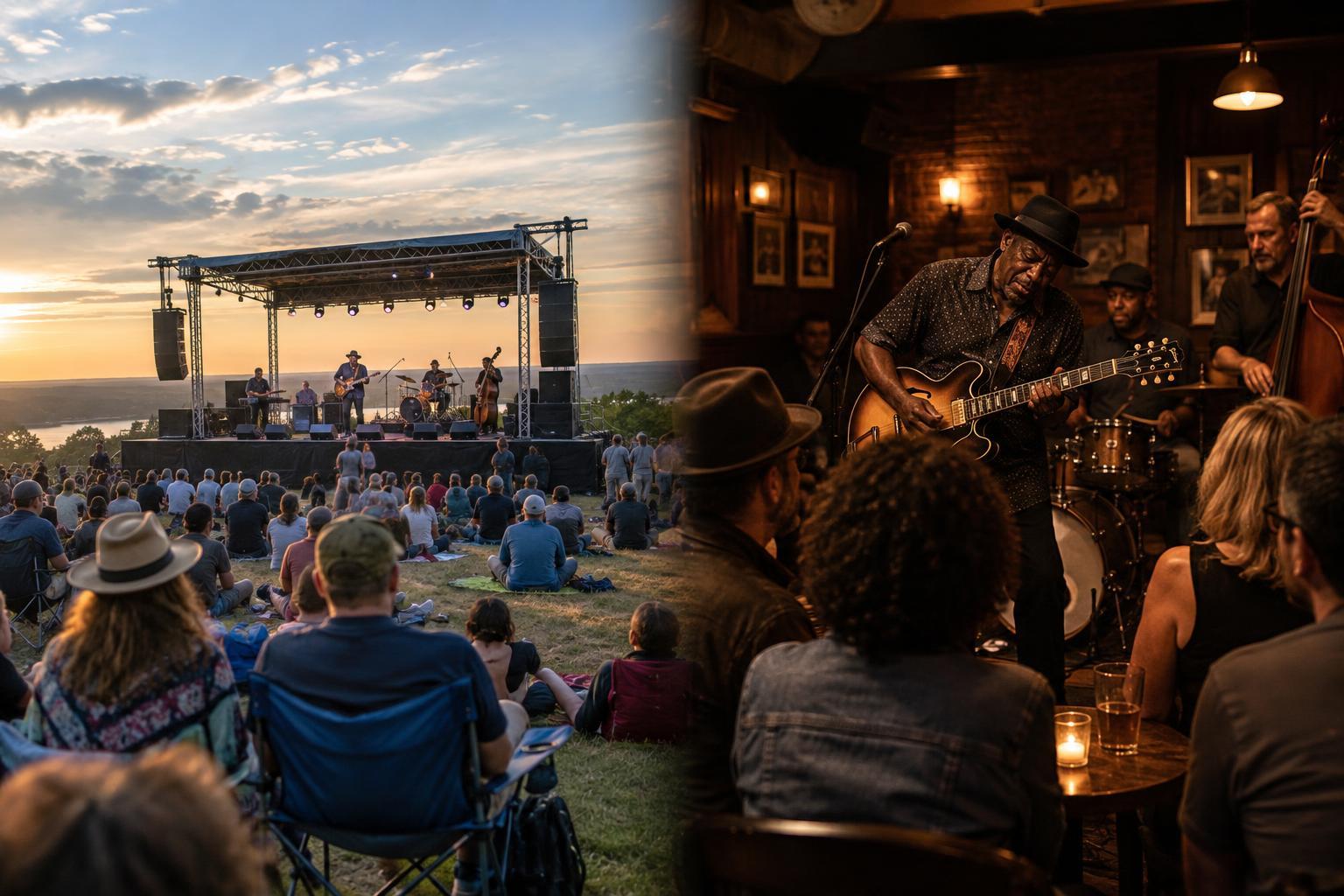
A jam is a gathering, not a fixed concert
At a blues jam, musicians take turns playing together, often without rehearsing as a group beforehand. Some arrive as regulars; others may be visiting for the first time. For a spectator, that means the lineup, songs and energy can change throughout the night. One set might feel tightly coordinated, while the next leaves more room for players to find their way together. That variety is part of the appeal.
A jam differs from a concert with a set band and a planned running order. It also differs from some open-mic nights, where performers may each present their own short act. Formats vary by venue, so treat any description of a “typical” blues jam as a guide rather than a promise. You do not need to know the players or the songs to enjoy listening.
What happens when you arrive
If the venue posts a start time, arriving near it gives you a chance to settle in and hear how the night opens. A host or house band may begin with a short set before inviting other musicians up. During that opening, you can get a feel for the room: whether people sit close to the stage, talk between songs, or move around for drinks and food. Check any posted door charge or seating guidance rather than assuming every jam works the same way.
Musicians who hope to play may speak to the host or add their names to a signup list. As a spectator, you can simply find a place where you can hear comfortably without blocking a doorway, stage access or someone else’s view. If you are unsure where to sit, venue staff can often point you toward a suitable spot. There is no need to announce that you are new to jams.
How players and songs rotate
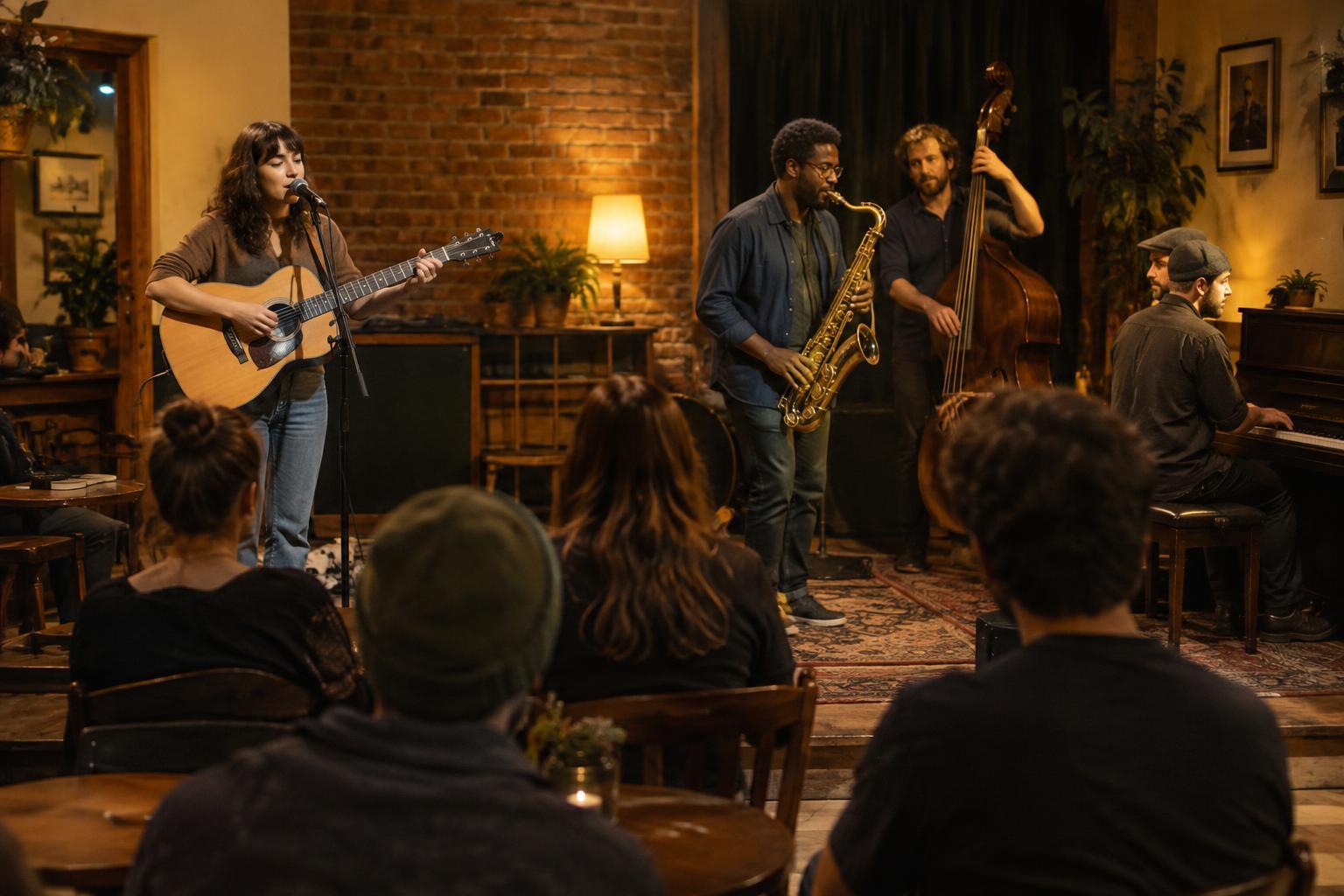
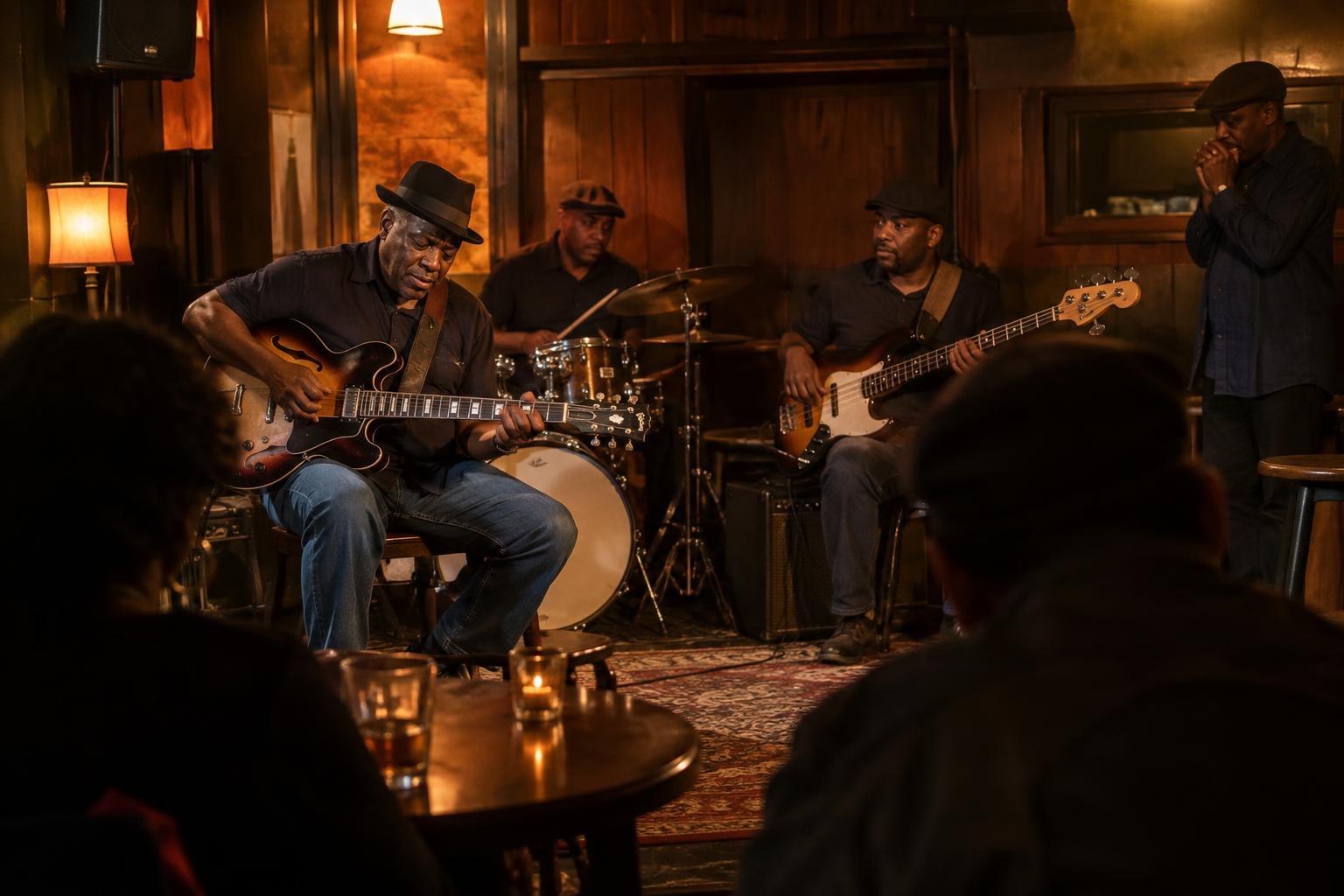
Once the jam gets going, the host usually helps decide who comes onstage and when. A singer might step up with a guitarist, bassist and drummer already in place; later, one or several players may switch. The host may also help settle on a song, key or tempo before the music starts. Those brief conversations are part of the process, not necessarily a sign that anything has gone wrong.
You may hear familiar blues patterns return in different forms. A steady groove can support a vocal verse, a guitar solo and then a turn for another instrument. Listen for how players pass the lead to one another and respond to changes in volume or rhythm. Not every combination will sound polished, and not every solo will be long. A good spectator’s mindset is curiosity: the interest lies as much in the exchange between musicians as in any single performance.
How to be a welcome part of the audience
A blues jam is social, but the musicians still need to hear one another. Keep conversation at a level that suits the room, especially during quieter songs or when someone is speaking from the stage. Applause after a song is always a straightforward way to show appreciation; a brief cheer after a solo may fit the mood in a lively room. Follow the audience’s lead if you are unsure.
Keep phones and cameras from distracting performers or blocking other people’s view. If you want to record or photograph someone closely, ask about the venue’s policy and respect a refusal. Avoid calling out song requests or trying to direct who plays next unless the host has invited that kind of participation. Musicians may be waiting a while for a turn, and the host is balancing the available time, players and instruments.
Leaving with a better ear for the music
You can stay for one set or make an evening of it. If you leave between songs or during a changeover, you are less likely to distract the players. If the venue offers table service, settle any bill before heading out. Where a cover charge, tip jar or other way to support the night is offered, follow the venue’s guidance and your own circumstances.
As you listen, notice how the room changes when a new singer or rhythm player arrives. Which choices make a familiar progression feel different? When does a band pull back to give a voice space? A jam offers a close view of musicians making those decisions together. You do not need a technical vocabulary to appreciate it—just a willingness to listen to the conversation happening onstage.