Start with the store, not a shopping list
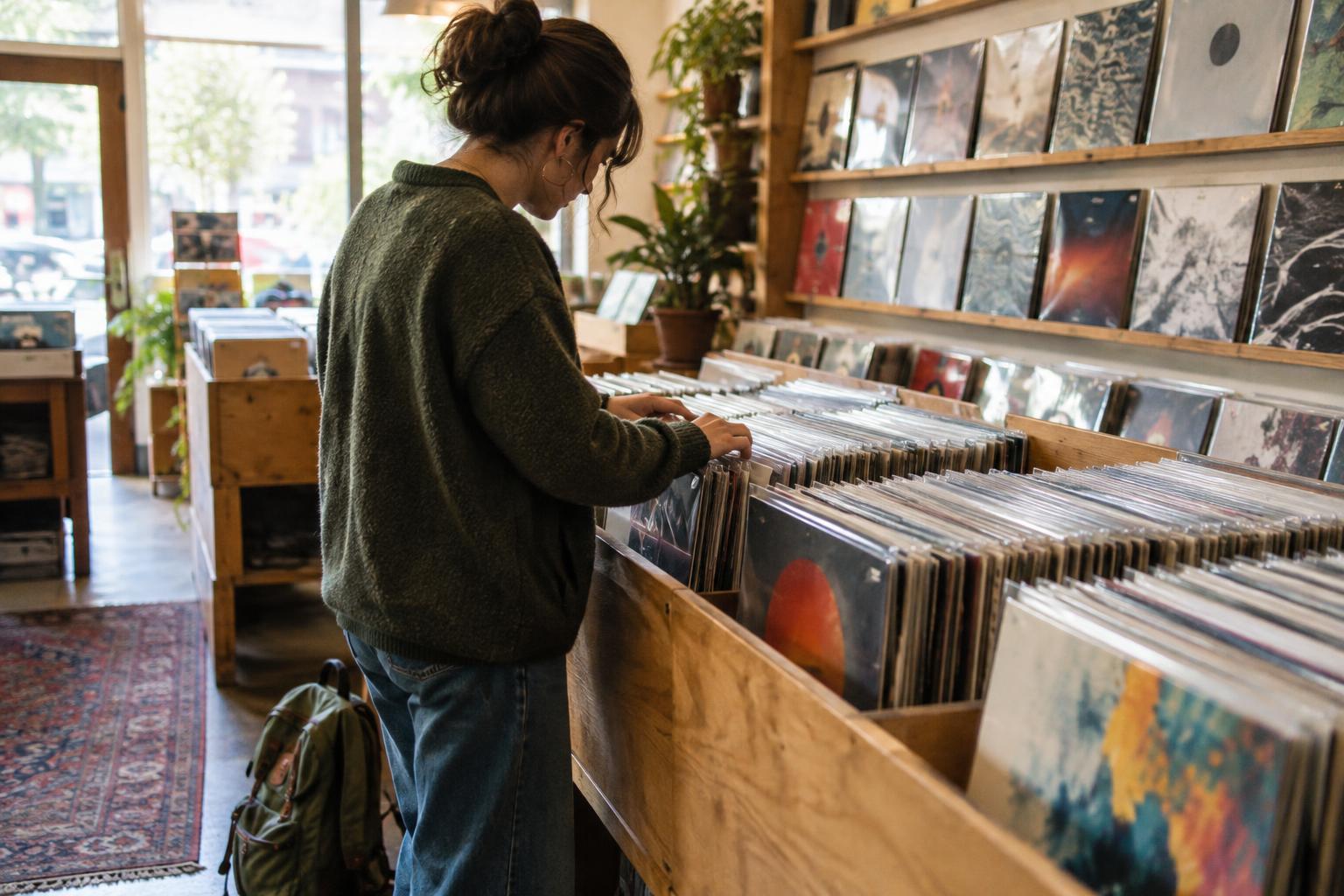
A record store can be one of the most rewarding stops on a music-focused trip. Its shelves may place familiar blues and jazz records beside artists, labels and styles you have never encountered. You do not need to arrive as a collector or leave with a rare find. Give yourself time to browse, notice what the store emphasizes and let one unfamiliar sleeve lead you to another.
Before heading in, check any posted hours and house rules. Once inside, look for listening stations, staff recommendations and sections devoted to music from the surrounding area. Some shops specialize in used vinyl; others focus on new releases, CDs, cassettes or particular genres. Understanding that focus helps you ask useful questions without expecting every store to carry the same things.
Look for local connections without making assumptions
A store’s local section is a good starting point, but the connection between a record and a place is not always simple. An artist might have been born nearby, recorded there, played regularly in its venues or released music through a local label. Sleeve notes and staff suggestions can help you understand which connection matters. If you are curious about a scene, ask an open question such as, “What would you suggest for someone who wants to hear music connected to this area?”
Be wary of treating one record as the definitive sound of a city. Blues and jazz traditions have moved with musicians, audiences and recordings; a place can hold several musical histories at once. Browse beyond a single genre label when it makes sense. A gospel, soul, folk or contemporary release may help you hear connections that a narrowly labeled shelf would miss.
Read the details before you buy
If a record catches your eye, check the format and edition rather than relying on the cover alone. A reissue can be an accessible way to hear an album, while an earlier pressing may interest a collector for different reasons. Look at the label, track list, recording notes and any available information about the musicians. For an unfamiliar artist, one track you can listen to may tell you more than a sleeve full of praise.
For used vinyl, inspect the disc and sleeve under good light if the shop permits it. Visible scratches, warping, damaged edges and missing inserts are worth considering; a clean-looking disc is not a guarantee of quiet playback. Check the store’s grading descriptions and return policy, and ask whether you can hear a used copy before purchasing. For any format, make sure you can play it at home and that the price fits what you intended to spend.
Make conversation part of the visit
Staff knowledge can be especially helpful when you can describe what you enjoy. Instead of requesting “the best local blues record,” mention a sound, instrument or mood you like, then ask for a starting point. You might say that you enjoy small-group jazz, expressive guitar playing or live recordings. A specific, flexible question gives someone room to recommend music you would not have found on your own.
Remember that a shop is a workplace, not a private guided tour. Choose a quieter moment for a longer conversation, handle stock as requested and ask before photographing people or displays. If you use a listening station, follow its rules and leave it available for others. Buying something is one way to support a shop, but a courteous visit also means respecting the staff’s time and the space other customers share.
Plan for the journey home
A good discovery is less satisfying if it arrives bent or cracked. Record sleeves can crease in an overfilled bag, and vinyl should not be left in prolonged heat. If you are traveling with limited space, consider whether a smaller-format purchase would be easier to carry. A sturdy, appropriately sized mailer or protective sleeve can help, but avoid placing heavy items against the record in transit.
Keep a brief note of what drew you to each find: a staff suggestion, a label you want to explore or a musician whose name appears on several sleeves. Those details can turn a purchase into a path for future listening. Even if you buy nothing, the visit can sharpen your sense of what to seek out next—at another store, in a listening session or at a live performance.