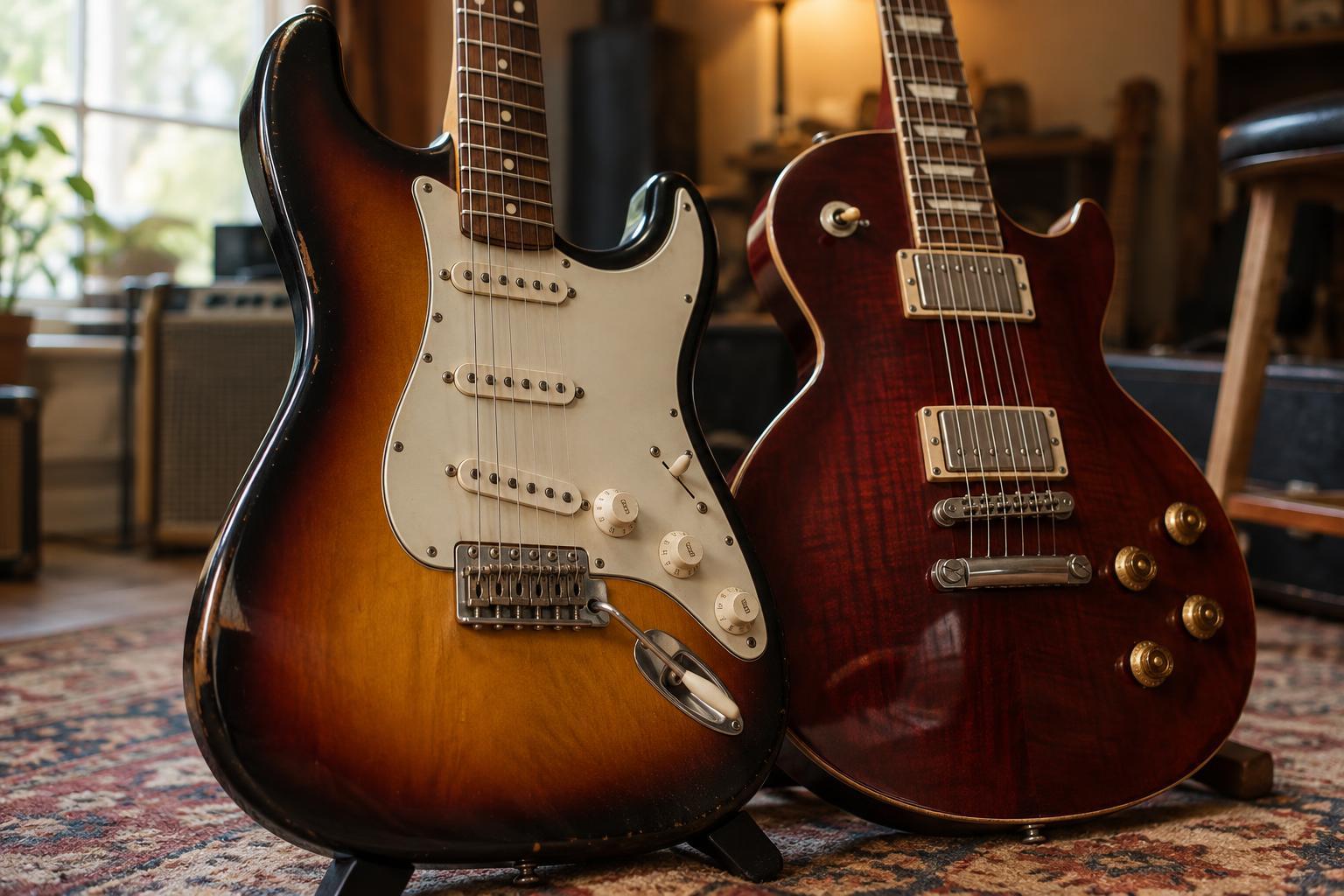
What a pickup changes—and what it does not
An electric guitar pickup senses the movement of metal strings and sends a signal to an amplifier. Its design and position help shape which parts of your playing stand out: a sharp pick attack, the body of a sustained note or the texture of a lightly strummed chord. Pickups matter, but they do not work alone. Your strings, picking hand, amplifier settings and playing volume all affect the result.
It is tempting to ask which pickup makes the best blues sound. A more useful question is what you want to hear more clearly. If you play quiet fills between vocal lines, you may value a sound that keeps each note distinct. If you lean into sustained bends, you may prefer a fuller sound that feels less sharp. Neither goal belongs exclusively to one pickup type.
Single-coils: clarity with a trade-off
Traditional single-coil pickups often sound clear and responsive. On a clean or gently driven amplifier, they can make light picking and small changes in touch easy to hear. A neck-position single-coil may give a rounded lead sound, while a bridge-position one can bring more bite to short phrases and rhythmic accents. The exact result depends on the guitar and the rest of your setup.
A conventional single-coil may also pick up electrical hum, particularly around some lights or other equipment. That does not mean it is faulty. Noise-reducing designs are available, though they may sound or feel different from the pickup they replace. Before changing anything, try moving away from nearby equipment, checking your cables and adjusting your position in the room. Those simple tests can help you understand where the noise is coming from.
Humbuckers: fullness and control
Humbuckers use two coils arranged to reduce the hum associated with conventional single-coils. They often have a fuller sound, which can suit sustained notes, strong bends and a warm accompaniment part. That fullness can be useful when a small band leaves space for the guitar, but it is not automatically better. With some settings, thick chords may lose the separation you want.
If a humbucker sounds too heavy, begin with adjustments rather than a replacement. Try the bridge pickup for a firmer edge, lower the guitar’s volume slightly or reduce the amplifier’s bass and gain. If it sounds too bright, the neck pickup or a modest turn of the tone control may help. Pickup output and design vary, so two humbucker-equipped guitars can behave quite differently.
Make the most of the positions and controls you have
A pickup selector is a quick way to change character during a song. The neck position can soften an exposed phrase; the bridge can help an answer line cut through; a combined position may offer a useful balance for chords. These are starting points, not rules. Spend a few minutes playing the same short passage in every position, then listen for how clearly the notes begin and how they fade.
The volume and tone knobs can be just as useful as the selector. On many setups, turning the guitar volume down reduces drive as well as loudness, giving you a cleaner rhythm sound without touching the amplifier. The tone control can tame a sharp edge, but turning it too far may hide the detail you need. Make small changes while playing at the volume you normally use; a setting that sounds pleasing alone may feel different alongside other instruments.
How to compare pickups without getting lost in labels
If you are trying guitars, use the same familiar riff, chord pattern and bent note on each one. Keep the amplifier and its settings consistent where possible, and compare at roughly similar loudness. A louder sound can seem more exciting even when it is not more useful for your music. Try clean and mildly driven settings, then check whether your softer notes still speak clearly.
Notice comfort as well as tone. A guitar you can hold easily and control confidently may serve you better than one with a pickup specification that looks ideal on paper. If you already own a playable instrument, learn its selector and controls before shopping for replacements. The most useful blues sound is often not a single perfect setting, but a few dependable sounds you can reach without interrupting the music.