Start with what stays steady
Walking into a blues show without knowing the songs can feel like arriving halfway through a conversation. You may not catch every reference, but you can still hear how the musicians speak to one another. Start with the groove: the recurring pulse that makes a song feel relaxed, driving, heavy or light. Try following the bass or drums for a few moments before concentrating on the singer or lead instrument.
Notice what your body picks up naturally. Does the beat invite a slow sway, a shuffle or a firmer step? You do not have to count beats or identify a style to hear when the band settles into a shared rhythm. If you lose your place, return to that pulse. It gives you a familiar thread to follow, even when the melody changes.
Notice how a song takes shape
Many blues performances use repeating musical patterns, but there is no single template for every song. Listen for a phrase that comes back: perhaps a vocal line, a guitar figure or a short response from the whole band. Once you recognize it, the next repetition may sound different. The singer might stretch a word, the drummer might add an accent, or the guitarist might leave more space.
Those small changes are part of the pleasure of hearing music live. Rather than trying to predict exactly what comes next, compare what you hear now with what you heard a moment ago. A quiet verse may make a louder passage feel more forceful; a pause may give the next note extra weight. Following these contrasts can be more rewarding than trying to name the song.
Follow the conversation between musicians
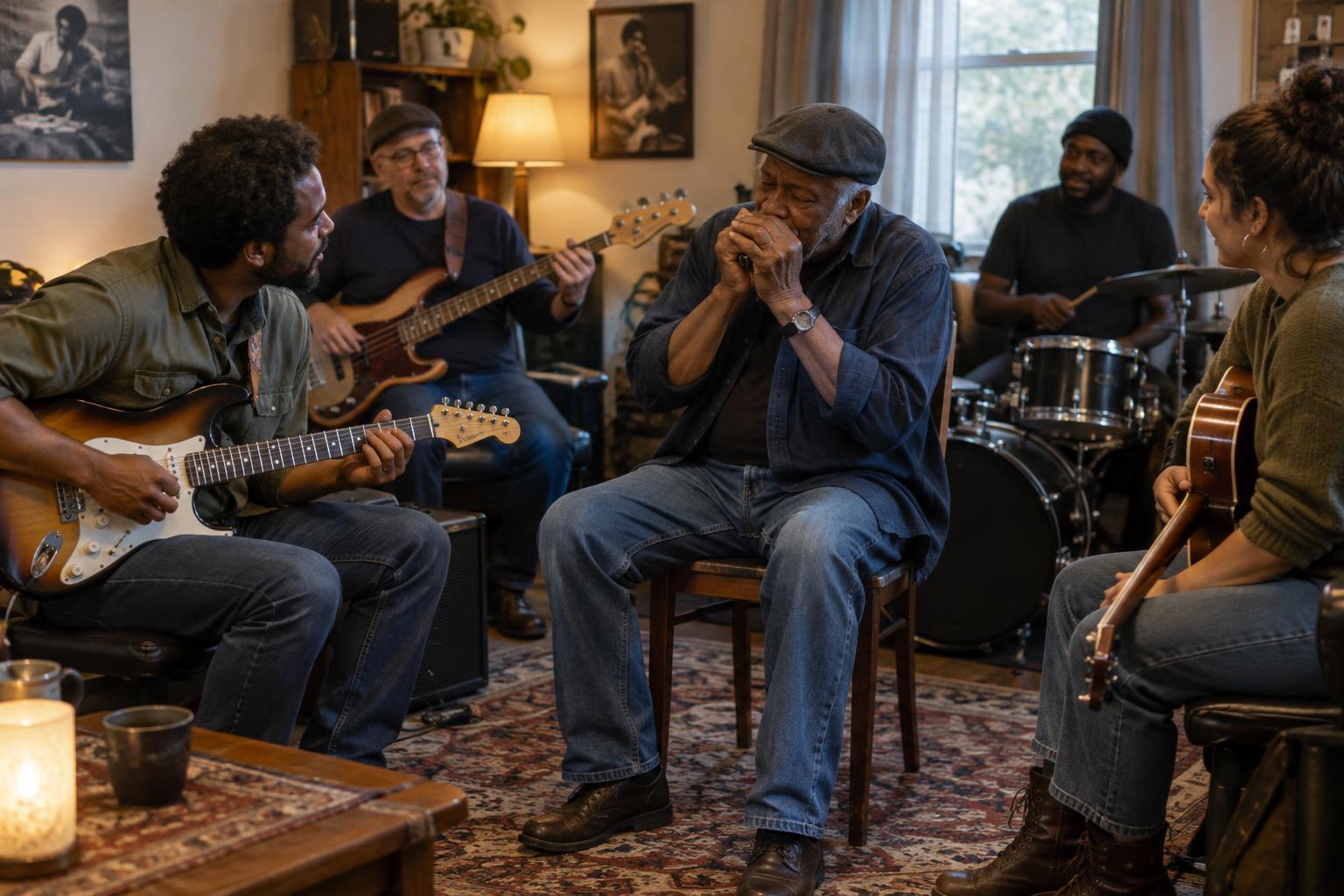
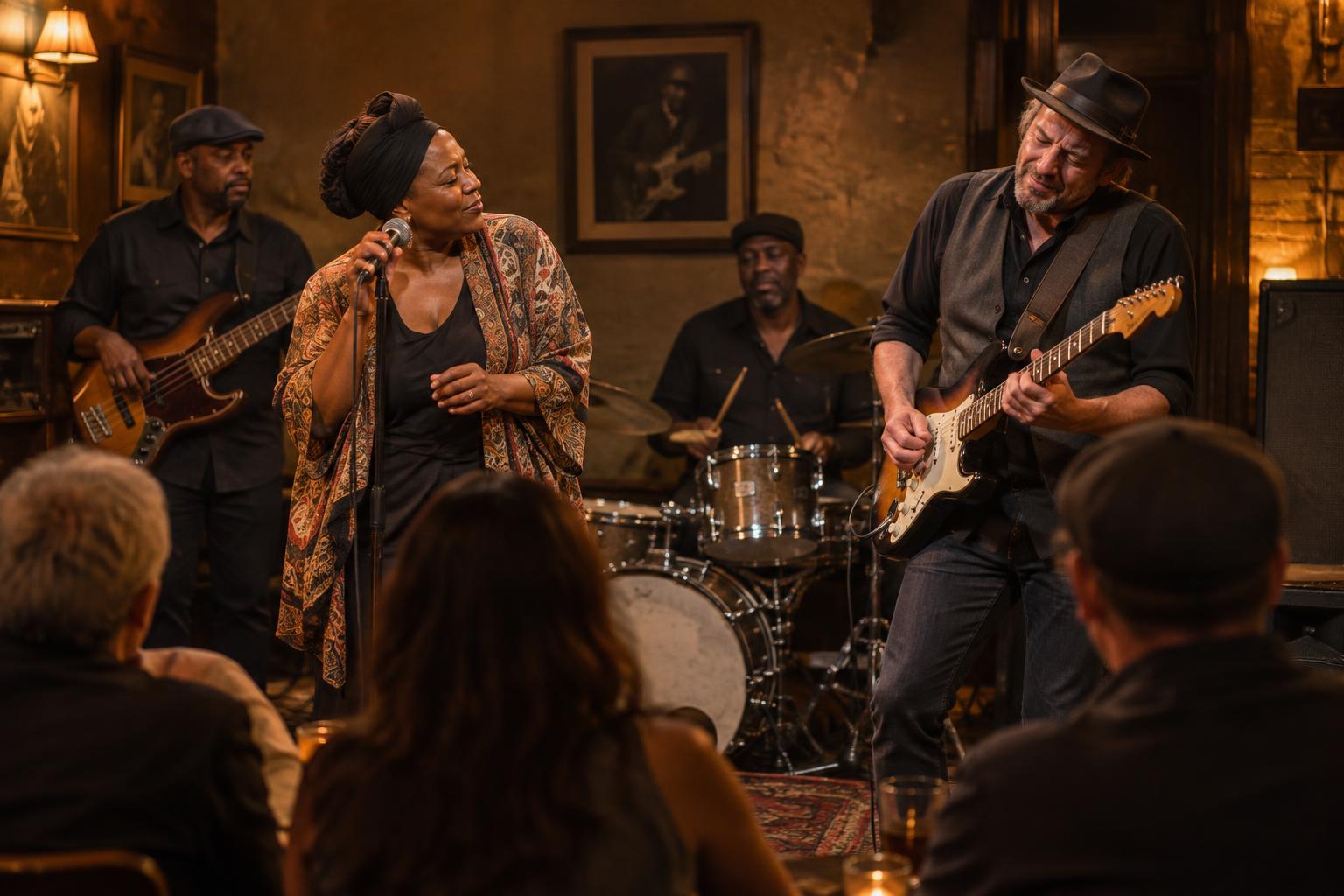
A live band gives you visual clues as well as sound. Watch for a singer turning toward a guitarist, a drummer looking up before a change, or a player stepping forward for a solo. These gestures do not always signal something dramatic. Often, they simply help musicians stay connected. Pair what you see with what you hear: who begins an idea, and who answers it?
Call-and-response can be easy to catch. A voice may sing a phrase that an instrument echoes; a guitar may play a short line that the keyboards answer differently. Sometimes the response is silence, leaving room for the next phrase. You can listen for this exchange without knowing any musical terminology. Think of it as a conversation in which each player chooses when to speak and when to make space.
Hear the band around a solo
When one musician takes a solo, it is tempting to focus only on the fastest or loudest notes. Try listening to the rest of the band as well. Does the rhythm section keep the same feel, grow quieter, or push a little harder? Does the soloist repeat a small idea and change it each time? These choices can make a solo feel playful, tense or reflective without requiring a dazzling display of technique.
A solo may also build gradually rather than announce itself. If you are unsure where it starts, that is fine. Follow the instrument that has come to the foreground and notice when attention shifts back to the singer or another player. Live music does not demand perfect tracking; part of the experience is discovering where your ear wants to go.
Give yourself one thing to listen for
Trying to hear every detail at once can turn a relaxed night out into homework. For one song, follow the drummer’s accents. For the next, listen to how the singer places words against the beat. Later, pay attention to the spaces between phrases. Changing your focus lets familiar sounds reveal new details without requiring you to study the music in advance.
It is also fine to stop analyzing and enjoy the room. The sound of a band performing together, the way a quiet passage draws your attention, and the release when a song ends are all part of a live show. Knowing the repertoire may deepen a future visit, but curiosity is enough for this one. Listen for a thread, follow it for a while, and let the next song offer a new one.