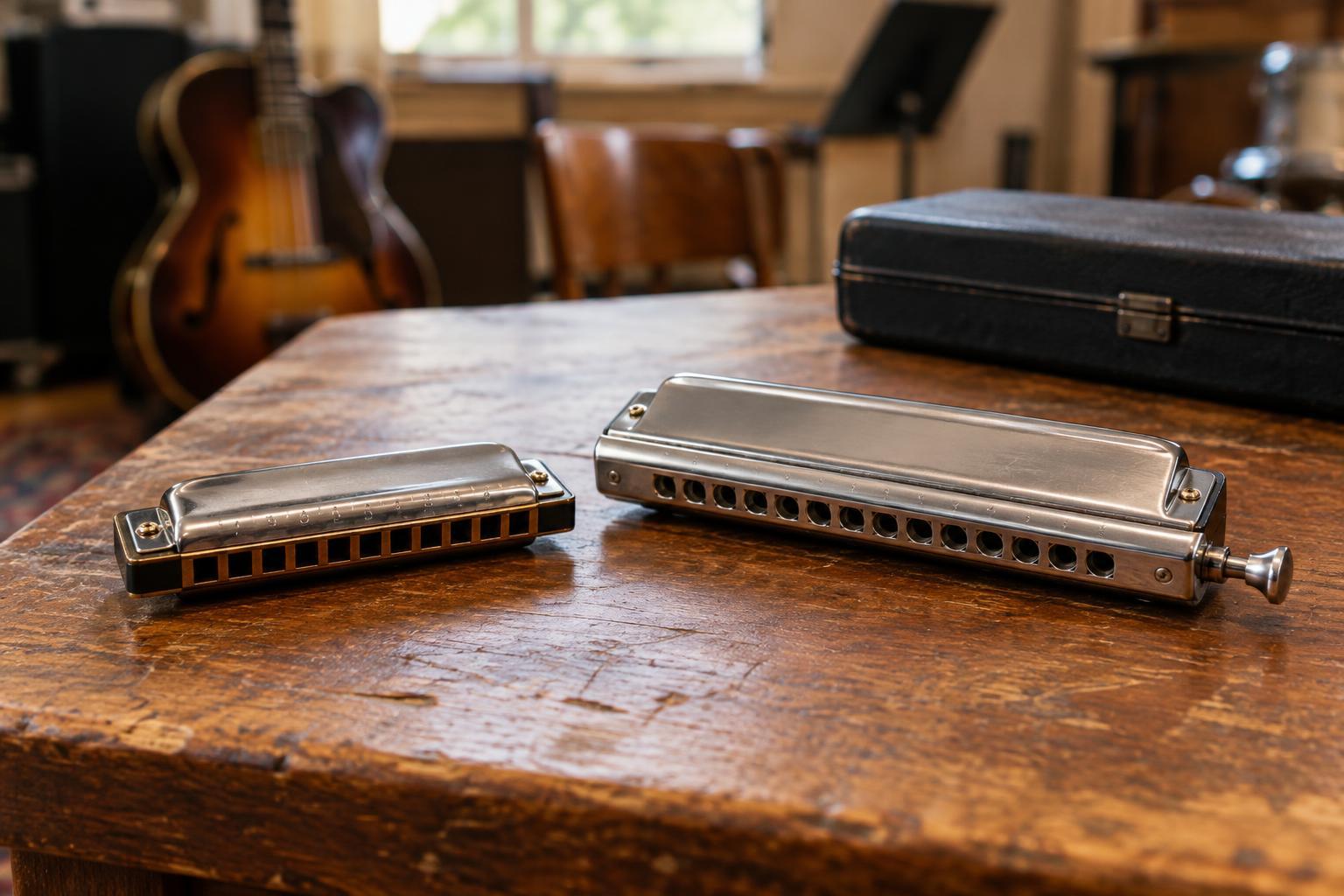
Start with a ten-hole diatonic
For most people learning blues harmonica, a ten-hole diatonic is the simplest place to begin. It is compact, widely used in blues, and built around a particular major key. Its layout gives you useful chords and expressive draw notes without requiring a large instrument or a complicated setup. Look for a standard Richter-tuned model, since many beginner lessons and tablature examples assume that layout.
Other types serve different purposes. A chromatic harmonica has a button-operated slide that makes additional notes available; it can be a good choice for some jazz and melodic playing, but it is not the easiest route into typical blues-harp techniques. Tremolo and octave harmonicas produce distinctive, fuller textures, yet beginner blues lessons may not match their layouts. Choose one of those sounds if it is the sound you want—not because the instrument looks more elaborate.
Choose a key that matches your first goal
The letter on a diatonic harmonica tells you its labeled key. If you will practice on your own with beginner exercises, a harmonica in C is a practical first purchase: instructional material often uses it, making examples easier to follow. If you already have a teacher, a book or a specific set of backing tracks, check which key they use before buying.
Blues players also commonly use a technique called second position, or cross harp. In this approach, the harmonica’s labeled key differs from the key of the song. For example, an A harmonica is commonly used for blues in E, while a C harmonica is commonly used for blues in G. This position puts important blues phrases on draw notes, where bends can add expression. You do not need to master the key relationships on day one, but knowing why an A harp might appear in an E blues will make lesson descriptions less puzzling.
What to check before you buy
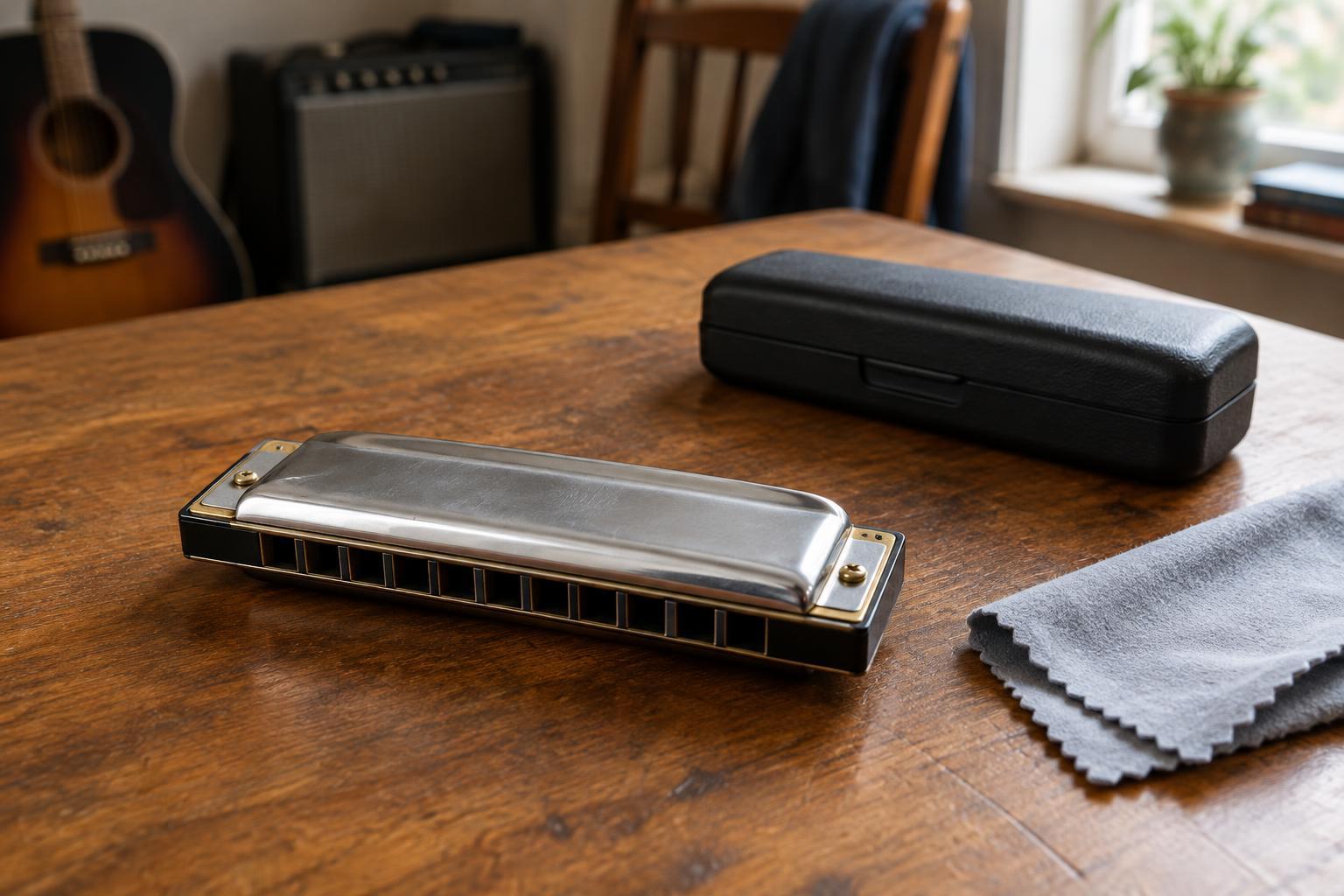
A playable first harmonica matters more than a large collection of keys. Choose an instrument from a maker with a clear model name and replacement availability, and confirm that it is a standard ten-hole diatonic in the key you want. A comfortable mouthpiece, securely fitted cover plates and notes that respond without excessive force will make early practice more pleasant. If possible, ask a music shop about its return policy before purchasing; shops may restrict returns on mouth-played instruments.
Be cautious about very cheap multi-harmonica bundles. Several keys are useful later, but a poorly responding instrument can make it hard to tell whether a difficult note is a technique problem or an instrument problem. Likewise, a professional model is not required to learn basic breath control, single notes and simple riffs. Begin with one dependable harp, then add another key when the music you want to play calls for it.
Build a small, useful starter kit
You need little beyond the harmonica to get started. Keep it in a protective case so dust and loose objects do not reach the reeds. A clean, dry cloth is useful for wiping the outside after playing; gently tap out excess moisture before putting the instrument away. Follow the maker’s care guidance rather than soaking the harp or taking it apart as a routine cleaning method.
A tuner or simple keyboard app can help you hear how notes relate, while slow backing tracks give your practice a musical setting. Headphones may help if you are playing along quietly. An amplifier and microphone can wait: acoustic practice makes it easier to hear whether your tone and note choices are clear. Treat the harmonica as a personal instrument rather than sharing it casually, and store it somewhere dry when you finish.
Let your playing guide the next purchase
At first, focus on relaxed breathing, clean single notes and short phrases. A harmonica works on both blowing and drawing, so learn to notice which direction produces each note. Bends can be central to a blues sound, but they usually take patient experimentation; forcing more air is not a shortcut. If a note resists, try changing your mouth shape and breath pressure gently before assuming you need a different instrument.
Once you can play a few tunes or riffs, your next key choice will be clearer. You might add an A harmonica for E blues, or another key that suits the songs and players you practice with. A growing set of harps is convenient, not a prerequisite for musical expression. One responsive diatonic, used regularly, gives you plenty of room to develop phrasing, rhythm and tone.