Start with the sound in your hands
A pedal can change your guitar’s sound, but it cannot supply the phrasing that makes a blues line speak. Before switching anything on, play a short phrase through a clean amp setting. Try picking lightly, then firmly. Let one note ring; cut another short. These small choices reveal how much expression is already available from the guitar, your hands and the amplifier.
Pedals are most useful when they help a musical idea come through. Overdrive can add grit and sustain to a lead phrase. Reverb can give notes a sense of space. Neither is required for every blues style or every room. If you can hear what you want to change in your clean sound, you will have an easier time deciding whether a pedal helps.
What overdrive adds
Overdrive gently distorts the signal, adding roughness to the edges of notes. Many overdrive pedals also make it easier to hold a note as it fades. Used lightly, the effect can respond to your picking: softer notes remain relatively clear, while harder ones sound more urgent. That response suits blues playing built around bends, pauses and changes in intensity.
For a starting point, set the drive low and adjust the pedal’s output level so switching it on does not cause a startling jump in volume. Set its tone control near the middle, then move it by ear. If the guitar sounds harsh, try less tone or drive; if it disappears among other instruments, a little more presence may help. The labels and behavior vary between pedals, so treat these as listening steps rather than universal settings.
Try using overdrive for a solo, a repeated riff or a louder passage, then turn it off for a quieter verse. You can also leave a mild overdrive on and use your picking strength or the guitar’s volume control to vary the sound. Compare both approaches. The goal is to make the change in intensity serve the song, not merely to hear the pedal working.
What reverb adds
Reverb creates a trail of reflections after each note, suggesting that the guitar is sounding in a space. Some amplifiers have built-in reverb, so you may not need a separate pedal. A modest amount can make a single-note line feel less bare, particularly when practicing alone at a restrained volume.
Begin with a short, subtle setting if your pedal offers several types. Play a phrase with pauses and listen to what happens after you stop picking. You should be able to hear the end of each phrase clearly. If the reflections blur a quick run or fill every silence, reduce the reverb level or shorten its decay. The spaces between notes are part of blues phrasing; an effect that covers them can weaken the contrast you worked to create.
A room with natural reflections may already supply plenty of ambience, while a dry practice space may make a touch of reverb appealing. When playing with a band, listen from within the whole sound rather than judging your guitar in isolation. Settings that feel rich alone can make it harder to distinguish your notes alongside drums, bass and other instruments.
Build a simple, usable signal chain
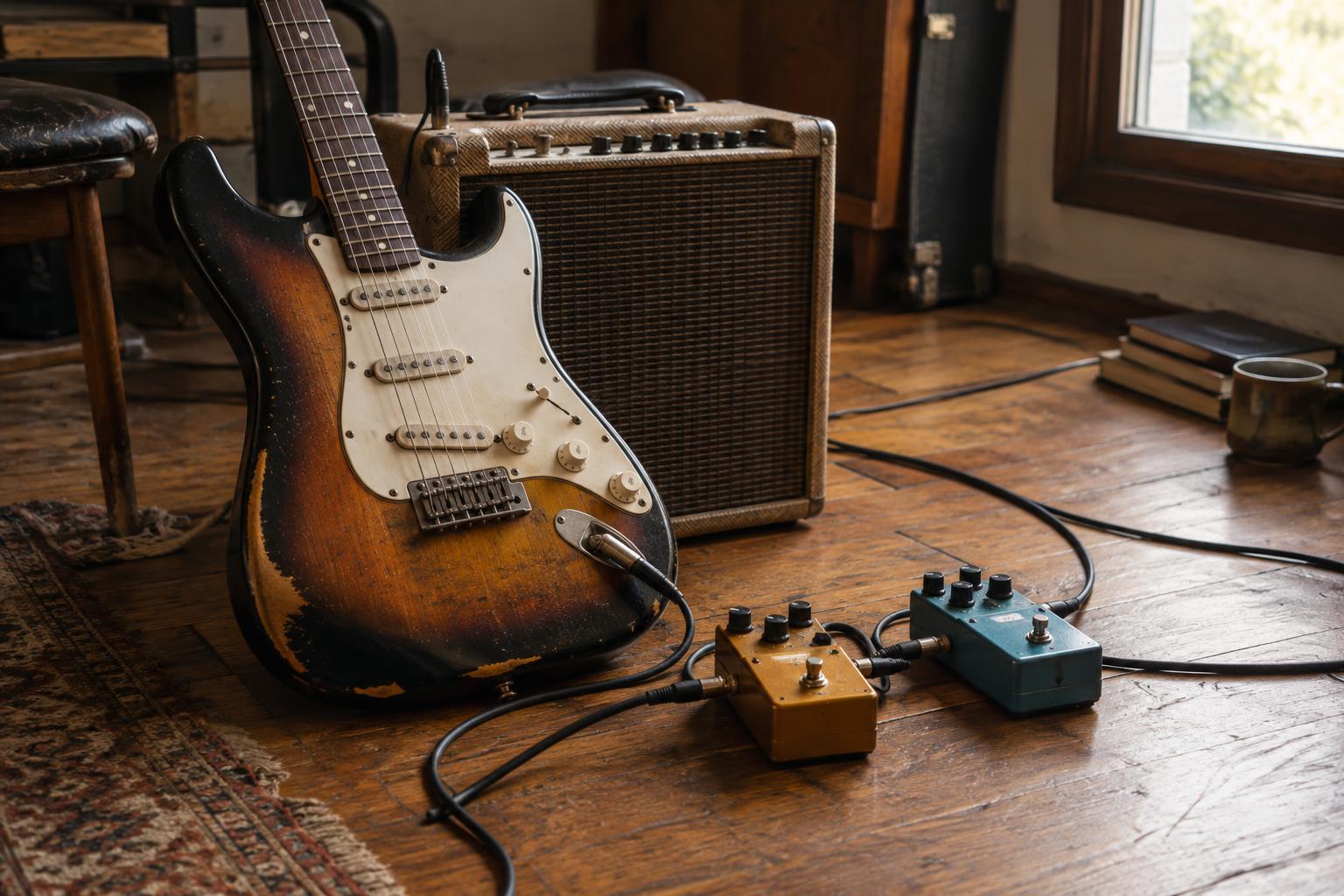
If you use both pedals, a practical starting order is guitar to overdrive to reverb to amplifier. This lets the reverb follow the driven guitar sound, much as room reflections follow a sound in a physical space. It is not a rule: changing the order produces a different effect, and experimenting is safe at ordinary playing levels. Start with the familiar arrangement so you can learn what each control does before adding variations.
Keep the setup easy to troubleshoot. Try one pedal at a time, using the same short phrase with the effect on and off. Check that cables are seated and that each pedal has a suitable power supply or battery. Match levels before judging tone: a louder setting can seem more exciting even when its character is not what you want. If your amplifier has strong built-in drive or reverb, test that first rather than assuming you need another box.
Let the song decide
Make three short recordings of the same phrase: clean, with mild overdrive, and with a little reverb added. Listen back at a comfortable volume. Can you still hear the attack of each note? Do bends and pauses carry the feeling you intended? A setting that flatters slow, sustained notes may not suit a clipped rhythm part.
There is no single pedal sound that defines blues guitar. A restrained effect can support an intimate performance; a stronger one may suit a more forceful passage. Learn the difference by playing familiar phrases at different dynamics, and change only one control at a time. When the pedal helps listeners follow your musical choices rather than drawing attention away from them, it is doing its job.