Treating a string change as a repair emergency
A dull-sounding or hard-to-tune guitar does not always need a major adjustment. Strings collect skin oils and dirt, lose brightness, and eventually wear out. Beginners sometimes keep playing a worn set while turning tuners and bridge parts in search of a fix. Before changing the setup, consider when the strings were last replaced and whether they are the same type and gauge you normally use.
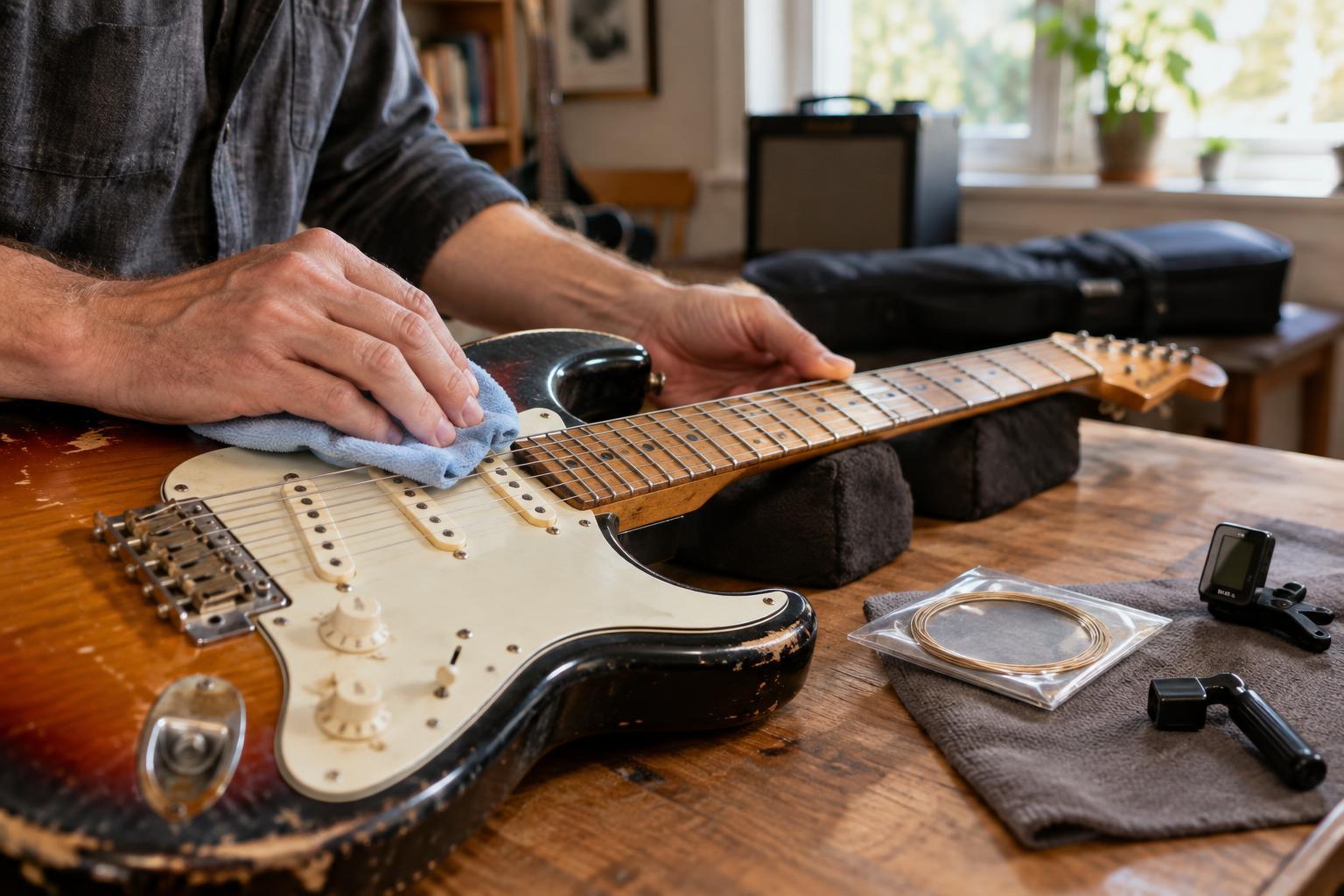
When fitting new strings, change them one at a time if you want to keep the guitar under fairly steady tension. Use the appropriate string for each position, leave enough length for secure wraps at the tuning post, and avoid piling on excessive wraps. Tune up gradually, then gently settle the strings and retune. A new set may need a little playing and retuning before it holds pitch consistently. Dispose of cut ends promptly; they are sharp and easy to lose on a floor or in a case.
Cleaning with whatever is close at hand
After a long practice session, it is tempting to reach for household spray, furniture polish or a soaked cloth. Those products may leave residue or be unsuitable for a guitar’s finish, hardware or electronics. A clean, dry microfiber cloth is a safer starting point for wiping strings, the body and areas where your hands rest. For stubborn grime, use a product intended for guitars only after checking that it suits your instrument’s materials and finish.
Pay particular attention when cleaning the fretboard. Some fretboards have a finished surface, while others are unfinished wood; they do not necessarily need the same treatment. More oil is not automatically better, and oil should not be applied to a finished fretboard unless the instrument maker recommends it. Keep liquids away from pickups, controls and openings. Simple, frequent wiping usually does more for day-to-day care than an occasional heavy cleaning.
Using the truss rod to solve every playing problem
If notes buzz or the strings feel high, a beginner may assume the neck needs an immediate truss-rod turn. But playing comfort depends on several things, including string condition, tuning, neck relief, bridge height, nut slots and technique. A truss rod adjusts neck relief; it is not a general-purpose action control. Turning it without understanding the problem can make the guitar harder to play and, if forced, may damage it.
Start with observations rather than tools. Is the buzz on one string or many? Does it happen only on open strings, at particular frets or during a strong picking attack? Has the problem appeared after a string-gauge change or a move to a different environment? Write down what you notice. If a basic string change and careful tuning do not help, a repair professional can assess the setup. Stop immediately if any adjustment meets strong resistance.
Ignoring the places where the guitar waits
Maintenance continues when the guitar is not being played. Leaving it beside a heater, in direct sun or in a vehicle can expose it to temperature changes; very dry or damp conditions may also affect wood and metal parts. A case or stable stand in a moderate indoor spot is a sensible default. If your home has large seasonal swings in humidity, monitor the room and follow guidance appropriate to your guitar rather than guessing with a damp sponge or an open container of water.
Small handling habits matter at rehearsals and open jams, too. Use a reliable stand, keep the instrument clear of foot traffic, and avoid leaning it against an amplifier where it could slide. Before closing a case, check that a cable, capo or loose accessory will not press against the guitar. These steps will not prevent every mishap, but they address common risks without requiring specialized equipment.
Mistaking normal wear for neglect
Blues playing can involve firm bends, expressive vibrato and repeated time on favorite parts of the neck. Some pick marks, string wear and gradual fret wear are expected signs of use, not evidence that you have failed to care for the instrument. The useful distinction is between cosmetic change and a problem that affects sound, tuning or comfort.
Make a brief check part of your playing routine: wipe the guitar after use, notice whether the tuners turn smoothly, listen for new rattles, and look for a fraying string or a loose strap button. Do not tighten hardware blindly; a screw turning in damaged wood needs a different approach from one that has simply loosened. Keeping track of changes gives you a clearer description if you seek help, and leaves more of your practice time for the music itself.