Start with the music you want to play
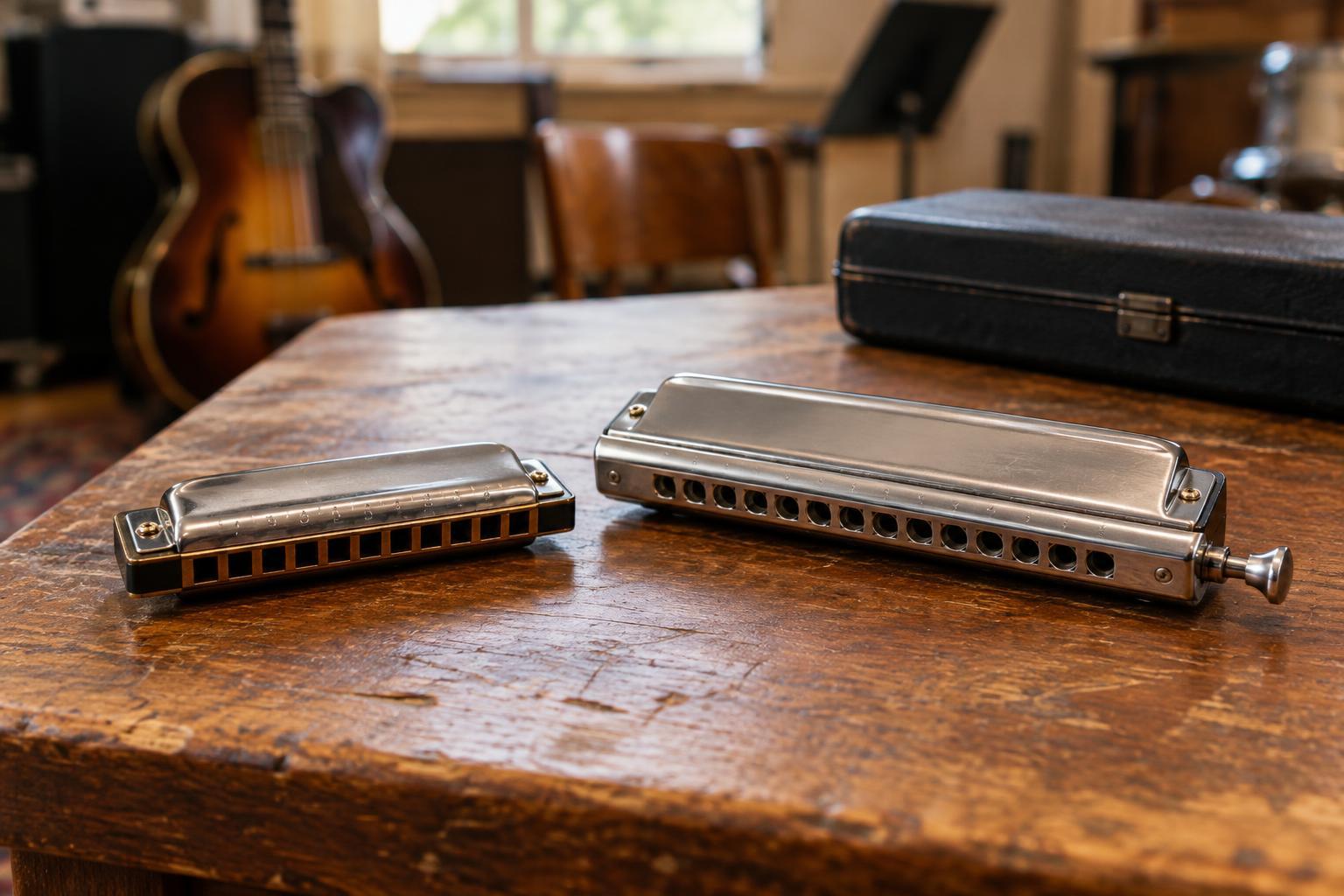
The diatonic and chromatic harmonica share a simple appeal: you can carry one in a pocket and make music without an amplifier or a large setup. Their layouts, however, lead players toward different habits. A common ten-hole diatonic is built around one named key. A chromatic, usually played with a button-operated slide, gives you access to every note of the chromatic scale. Neither is a universal upgrade over the other.
If the sound in your head is a raw blues phrase that scoops into a note, a diatonic is a natural starting point. If you want to follow melodies containing frequent sharps and flats, or explore jazz tunes with changing chords, a chromatic may make those notes more straightforward to find. Both instruments can cross those stylistic lines. Your choice is less about permission to play a genre than about which set of techniques you want to learn first.
What the layouts mean in practice
Most beginner diatonics have ten holes and use Richter tuning. Blowing and drawing on a hole produce different notes, arranged to make certain chords and melodies convenient in the harmonica’s labeled key. Some notes outside that basic layout are available through bending, while others call for more advanced techniques such as overblows. For a tune in a different key, players often pick up a differently keyed harmonica rather than force every melody onto one instrument.
A typical chromatic harmonica has a slide that raises the available notes by a semitone when pressed. Used alongside breath direction and hole choice, the slide makes all twelve notes of an octave accessible without relying on advanced bends. That does not make it effortless: moving cleanly between holes, breaths and slide positions takes coordination. Layouts also vary between models, so a fingering or note chart should match the instrument you own.
Tone and technique: two kinds of expression
Diatonic harmonica is closely associated with the bends, rhythmic chords and vocal-like inflections heard in many blues performances. In cross harp, a common blues approach, a player uses a diatonic labeled for a different key from the song and centers phrases around draw notes. That setup makes familiar blues patterns feel comfortable under the breath. Producing a controlled bend still takes practice; simply pulling in more air is not the answer.
Chromatic harmonica lends itself to fluid melodies that move through half steps and key changes. It can sound warm and expressive, particularly when a player shapes notes with breath, articulation and timing. It is not incapable of blues, and a diatonic is not confined to rough-edged playing. The difference is where each instrument places the work: a chromatic offers direct access to more pitches, while a diatonic encourages you to develop pitch-changing techniques as part of its characteristic voice.
Choose a practical first setup
For a first diatonic, a standard ten-hole instrument in C is often a practical choice because many introductory lessons use that key. If your main aim is to play along with recordings or other musicians, check the key of the music and the approach your learning material uses before buying additional harmonicas. A song in one key does not always call for a harmonica with the same letter on its case.
For a first chromatic, look for a model with a clear note chart and a slide that moves comfortably. Chromatics come in different sizes and tunings; a common starting layout is the C solo-tuned chromatic. Compared with a basic diatonic, a chromatic generally asks you to manage more moving parts and pay attention to slide care. Whichever you choose, a comfortable, responsive instrument will help you practice gentle breathing rather than fight leaks or stiff parts.
Make the decision with a short listening and practice test
Listen for what draws you in: bent, percussive blues lines or melodies that travel freely between major and minor colors. Then try a few simple phrases on each type if you can. On a diatonic, play single notes and a steady draw-blow rhythm before worrying about bends. On a chromatic, try a short scale while coordinating the slide without rushing. Notice which challenge feels engaging, not which instrument seems instantly easier.
You can change direction later. Many players keep both types because they solve different musical problems and suggest different phrases. For now, choose the one that supports the songs you are most likely to practice. Regular, attentive playing will teach you more about your preferences than a long search for the theoretically perfect first harmonica.