A conversation, not a fixed pattern
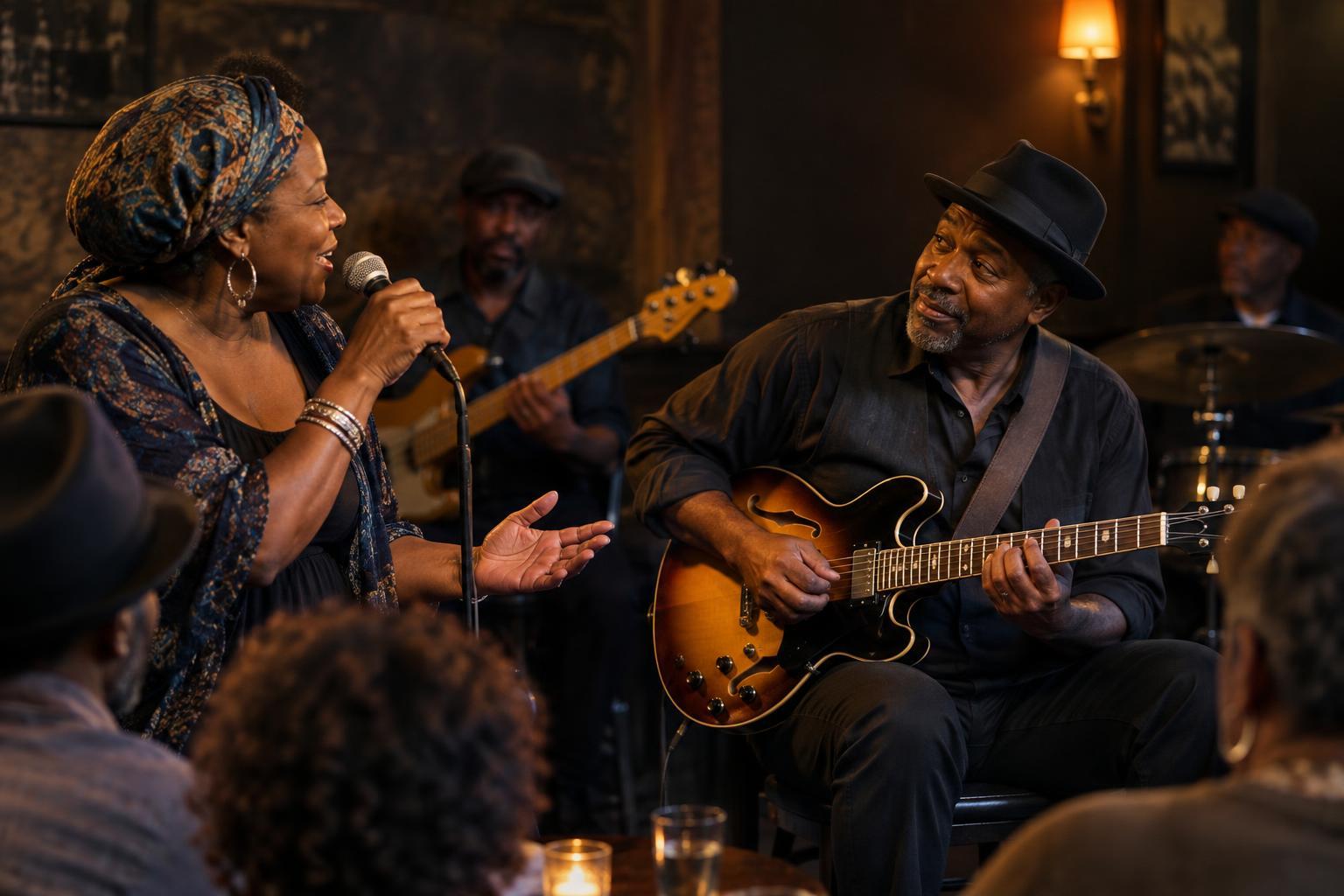
Call and response happens when one musical phrase invites an answer from another voice, instrument or group. A singer may deliver a line and leave room for a guitar to reply. A band may echo a short vocal phrase, or an audience may answer a performer’s invitation. The response can repeat the call, alter it or offer a contrasting idea.
The practice is important in blues, but it is not a rule that every song follows. It also belongs to a much wider world of musical exchange. In blues, its meaning depends on who is participating, what they are playing and how much space they give one another. Hearing it as conversation is more useful than searching for the same call-and-answer pattern in every recording.
Listen for the space between phrases
One familiar blues exchange pairs a sung line with a brief instrumental phrase. Listen first to the end of the vocal line. Does the singer pause completely, hold a note or carry a sound into the instrumental reply? Then notice whether the instrument copies the melody, follows its rhythm or takes the music somewhere unexpected. A small change in timing can make an answer feel patient, playful or insistent.
Calls and responses need not be equal in length. A harmonica might answer a long verse with a few notes; a pianist might fill only the final gap before the next line. Sometimes the band leaves the opening empty. That silence can matter as much as a flourish, giving the singer’s words time to settle and making the next phrase feel deliberate.
To hear these details, try following one part through an entire song rather than treating every instrumental sound as a reply. Notice when a phrase seems directed toward another musician and when it serves a different purpose, such as keeping the rhythm moving. The distinction is not always clear, and attentive listening is more rewarding than forcing a label onto every note.
Beyond the singer and soloist
Musical exchange can involve a whole ensemble. A drummer may answer a singer with an accent, while a bass player adjusts the feel beneath a guitarist’s phrase. A repeated band figure can also set up a vocal entrance: the instruments make the call, and the voice supplies the response. These interactions may be subtle, especially when the musicians leave one another room rather than trading conspicuous solos.
Listeners can be participants, too. In some performance settings, a singer invites a spoken or sung answer; in others, an audience responds through clapping or movement without a formal cue. Such moments depend on the room and the expectations of the people in it. A response that feels welcome at one performance may interrupt another, so watching and listening before joining in is part of participating respectfully.
Why context changes what you hear
Call and response is often discussed as an element of African American musical traditions, including blues. That connection matters, but the phrase alone cannot explain the full history of any song or performance. Musicians have worked within particular communities, venues and musical relationships, and their choices cannot be reduced to a single inherited technique.
It is also easy to mistake an improvised-sounding exchange for an unplanned one. Musicians may know a song’s shape well enough to leave space for a fresh answer, or they may use a familiar reply because it fits the moment. Either way, the interest lies partly in judgment: when to enter, when to hold back and how to make a phrase belong to the performance around it.
A simple way to practice listening
Choose a blues performance and listen once without trying to identify its structure. On a second pass, follow the singer’s phrasing and notice what happens immediately afterward. On a third, focus on a single instrument or the band as a whole. Ask who seems to start each exchange, whether the answer changes over the course of the song and what happens when no one answers at all.
Then try another performance with a different arrangement. Rather than deciding which one uses call and response “correctly,” notice how each group makes room for musical ideas. The habit can sharpen your ear for timing and expression while keeping the people making the music at the center of what you hear.