Shared roots, not a single family tree
Blues and jazz grew from overlapping African American musical worlds. Singing, instrumental expression, dance, church music, work songs and popular entertainment all contributed to the ways musicians made and heard both traditions. Performers borrowed ideas from one another, and audiences did not necessarily divide what they heard into the tidy genres we use today. It is useful to think of blues and jazz as related practices shaped by people and places, rather than to draw a simple line from one genre to the other.
Both traditions make room for personal expression within familiar material. A singer can bend a note, delay a phrase or repeat a line until it carries a different feeling. An instrumentalist can answer that line, vary a melody or change its rhythmic emphasis. These choices matter in blues and jazz alike, though the setting and the expectations around them may differ.
What the blues offers—and what it does not limit
Many listeners first encounter the blues through the twelve-bar form: a recurring sequence that gives singers and instrumentalists a structure to work within. It is a helpful listening landmark, not a definition of every blues performance. Blues can use other forms, and its character is not contained in a chord pattern alone. Vocal delivery, repetition, tension, release and the exchange between a lead voice and an answering instrument can be just as important.
Jazz musicians have long used blues forms and expressive devices as material for improvisation. A jazz group might play a blues with a swinging pulse, altered harmonies and solos that move far from the opening melody. A blues performer might improvise just as boldly while staying close to a lyric or groove. Neither approach is automatically more complex or more authentic. Listen for what each musician chooses to change, what they keep steady and how the other players respond.
Different ways of playing together
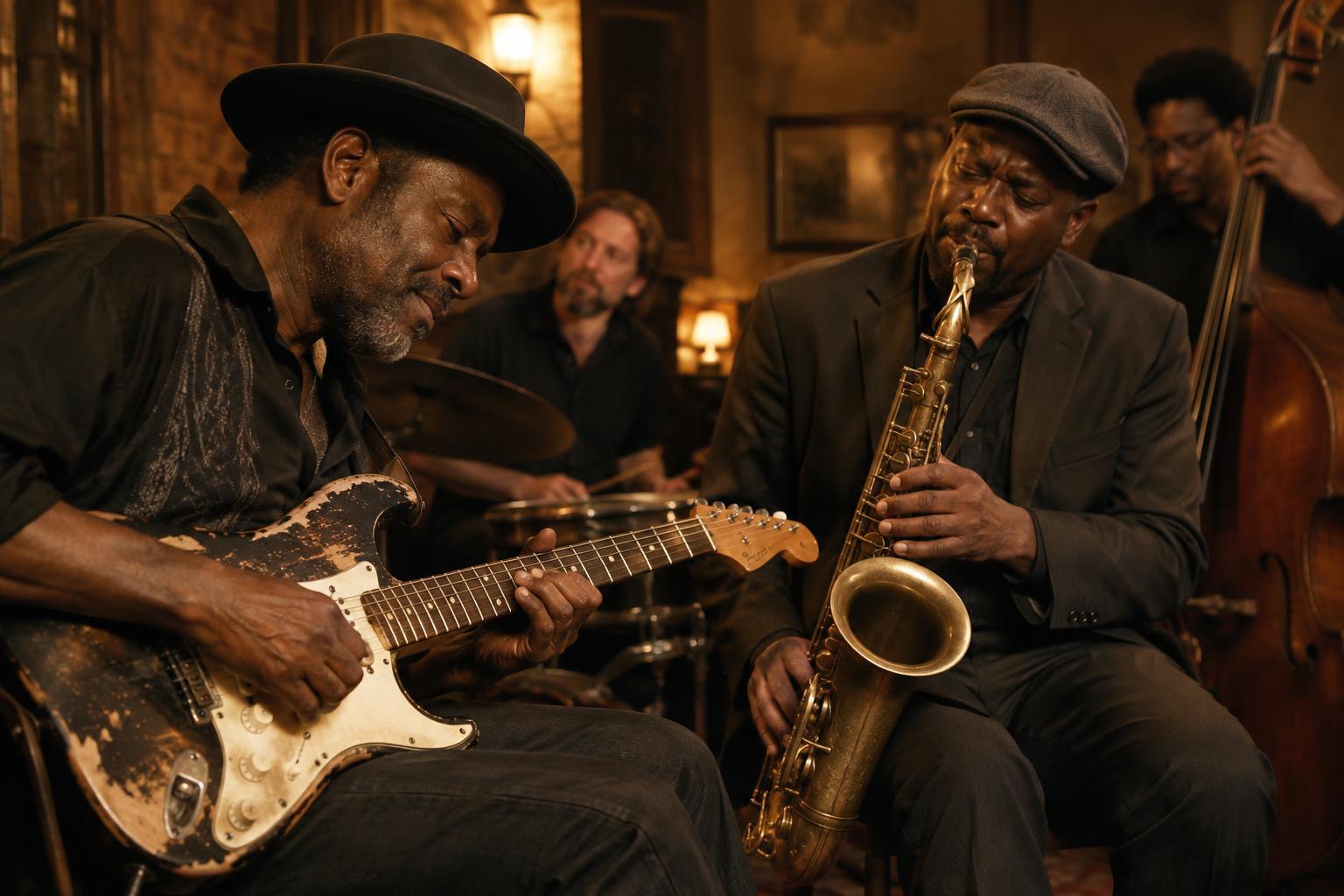
Jazz is often associated with an ensemble treating a tune as a starting point: a melody is stated, players take space to improvise, and the group returns to shared material. That pattern is common, but jazz also includes arrangements, collective improvisation and performances built around a singer. Blues can likewise be solo or communal, carefully arranged or open-ended. A repeated guitar figure, a piano accompaniment or a steady rhythm section may give a blues performance its center while the lead voice reshapes each verse.
The distinction becomes easier to hear when you follow the conversation instead of counting solos. Does an instrument answer the singer between lines? Does the drummer shift the feel behind a soloist? Does the band leave space for a phrase to land? These interactions connect blues and jazz, even when one performance is built around a story in song and another around an instrumental theme.
Scenes are more than sounds
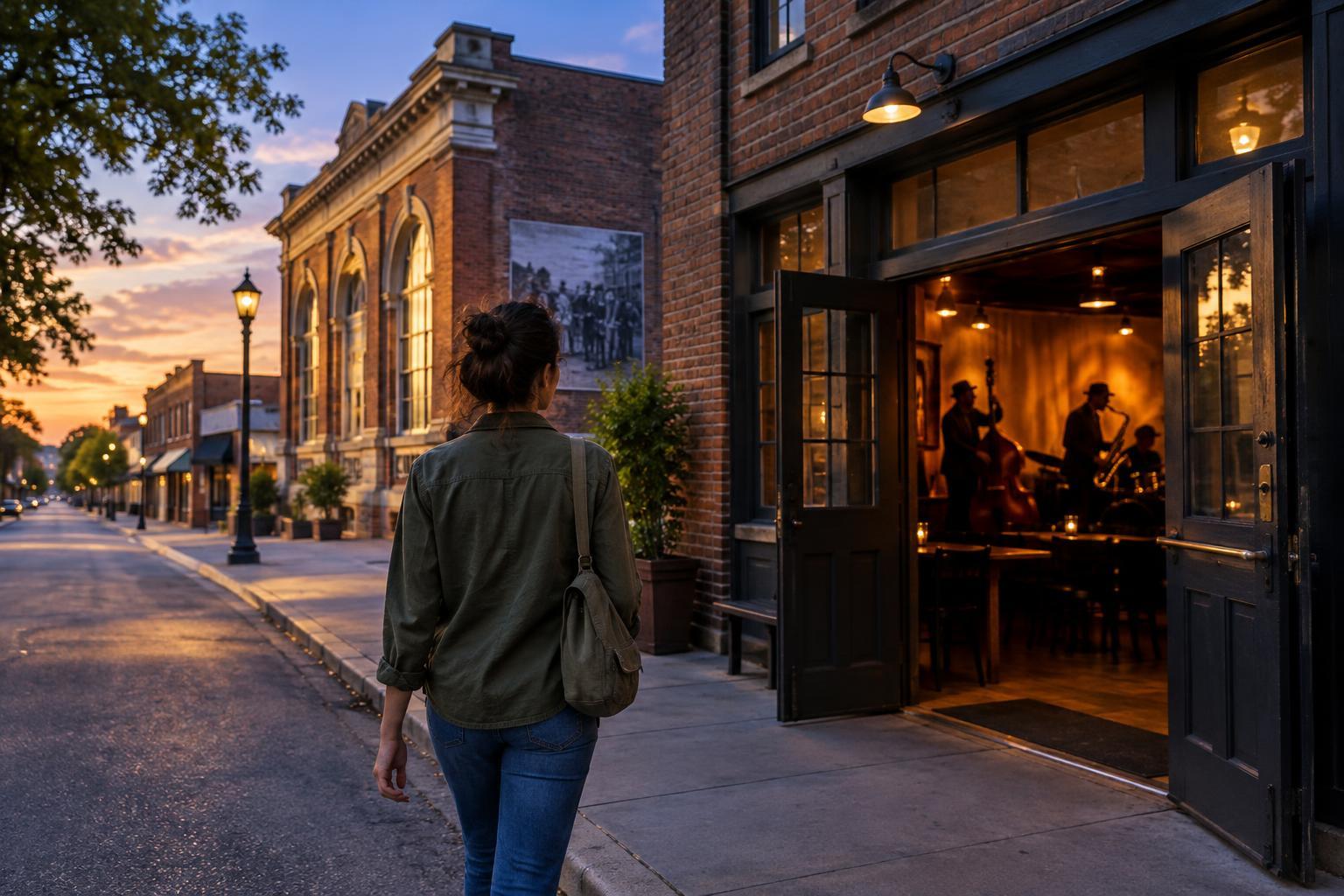
Genres also take shape through the communities that sustain them. Blues has lived in informal gatherings, clubs, touring shows and local bands, among other settings. Jazz has developed through dance venues, small groups, big bands, jam sessions and concert stages. Those spaces affect what musicians can try, how long they play and how audiences take part. A dance floor may call for a different kind of momentum than a seated room where listeners follow every quiet exchange.
There is no single blues community or jazz community. Musicians may move between scenes, share bandmates and play for audiences with varied expectations. At the same time, local relationships and opportunities shape who gets heard and how a style is passed on. When learning about a tradition, notice the players around a featured soloist, the role of the venue and the people who return to listen. The music is made within those relationships, not apart from them.
A listening path across the overlap
To hear the connection, start with two performances built on a blues form: one led by a singer and one led by a jazz ensemble. Rather than asking which one sounds more like “real blues,” listen for the recurring structure, the placement of phrases and the moments when a player stretches an expected pattern. Then try a performance from each tradition that does not fit your first impression. The comparison can reveal how much variety each name holds.
If you hear this music live, let the room help you listen. Pay attention to how the musicians signal changes and how the audience responds, while following the venue’s cues about talking, dancing and applause. Blues and jazz share resources without being the same tradition. Hearing their overlap is rewarding; hearing the different communities and purposes behind each performance makes the picture richer.