What a bass setup is meant to do
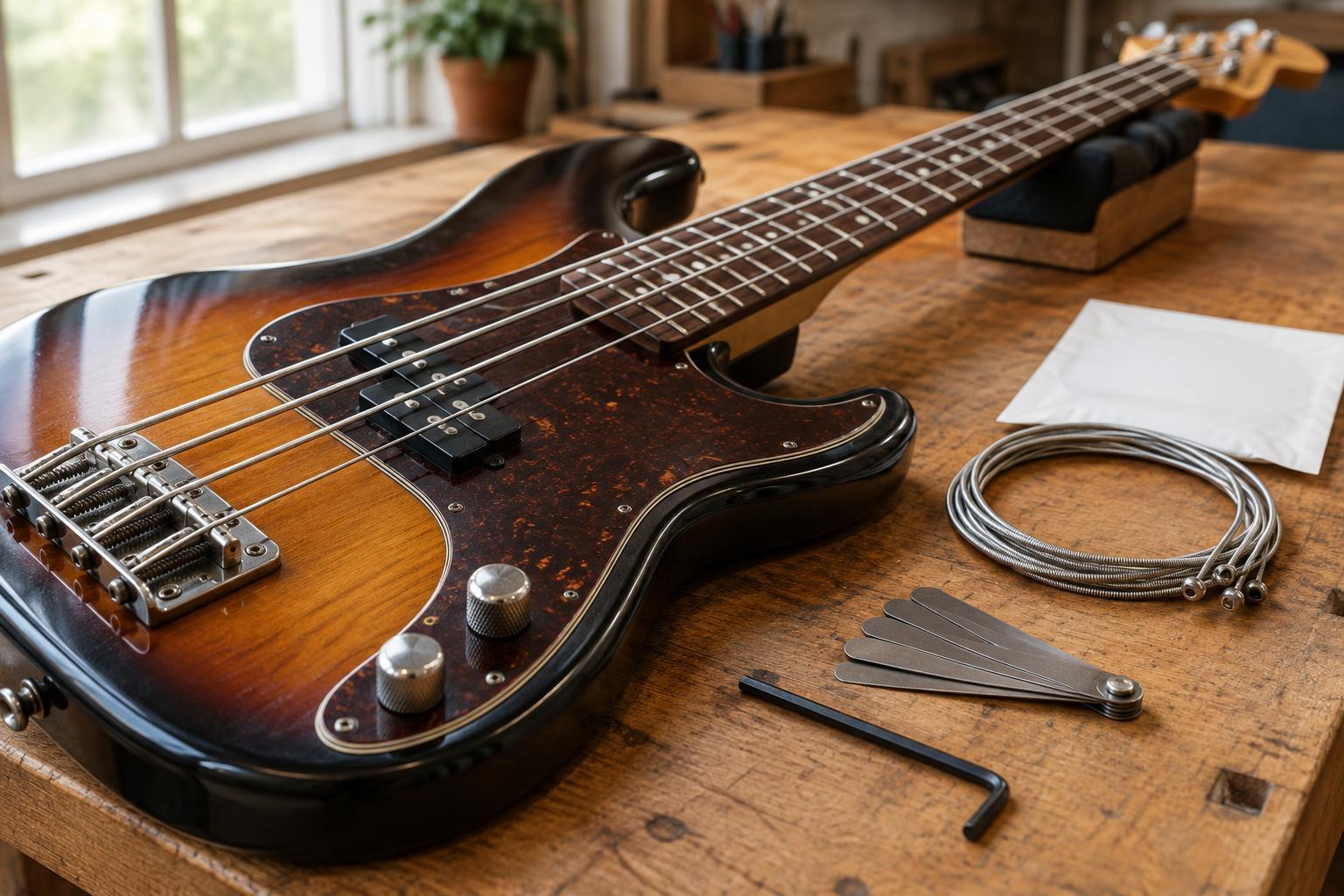
A bass setup is a set of adjustments that helps the instrument feel comfortable and play in tune. String choice, neck relief, action and intonation are connected: changing one can affect the others. There is no single setup that suits every bass or player. A light touch may allow lower strings, while a forceful picking hand may need more room for the strings to move.
Before adjusting anything, decide what problem you are trying to solve. Is the bass hard to fret? Does it buzz in one area of the neck? Do fretted notes sound out of tune even after you tune the open strings? Listen through an amplifier as well as acoustically; a little unplugged string noise may not be noticeable in the sound you actually use. Make one change at a time so you can tell whether it helped.
Choose strings before making adjustments
Strings affect both feel and sound. Lighter gauges can feel easier to fret and bend, while heavier gauges may feel firmer, particularly in a lower tuning. Gauge alone does not determine tension or tone: scale length, construction, material and tuning matter too. Roundwound strings often have a brighter attack and more finger noise; flatwounds generally feel smoother and tend toward a more subdued top end. Neither type belongs exclusively to any genre.
Choose a set that fits your bass’s scale length and the tuning you plan to use. If you change gauge or string type, expect to recheck the setup rather than assuming the old adjustments will still work. Install each string neatly, tune it to pitch and let it settle before judging the result. Replace a worn or damaged string before trying to correct its pitch with the bridge: a string that sounds uneven along its length can make intonation difficult to assess.
Check neck relief before action
Neck relief is the slight forward curve that gives a vibrating string space over the middle frets. A neck that is too straight for your playing style may buzz around that area; too much relief can make the bass feel harder to fret. One simple check is to fret a string near the first fret and again near the end of the neck, then look at the gap between the string and the middle frets. The gap helps you judge the curve, but a visual check is not a universal measurement.
The truss rod changes neck relief, not the overall height of the strings at the bridge. If you know how your instrument’s rod operates, follow its maker’s guidance and make only small adjustments, retuning and rechecking after each one. Never force a rod that resists turning. If you are unsure which way to adjust it, or the neck still seems uneven, a repair technician can inspect it before you risk damage.
Set action for your playing touch
Action is the height of the strings above the frets. On many basses, you adjust it at the bridge saddles after checking neck relief. Lower action can make fast or light playing feel easier, but lowering it too far may cause notes to buzz or lose sustain. Higher action gives the string more room to vibrate but can require more effort from the fretting hand. The useful setting is the one that balances comfort and a clear sound when you play normally.
Retune after each saddle adjustment, then play every string across the neck rather than testing only open notes. Pay attention to where a problem occurs. Buzz concentrated in one small area, or a note that dies unexpectedly, may point to a high fret or another issue that saddle height alone will not solve. If the first few frets feel unusually stiff even when the rest of the bass feels comfortable, the nut may need attention; cutting nut slots is best left to someone with the right tools and experience.
Finish by checking intonation
Intonation describes how accurately fretted notes line up with their intended pitches. Once your strings, relief and action are where you want them, tune an open string and compare its pitch at the 12th fret with the octave you expect. Use a tuner and fret with your normal pressure: pressing unusually hard can pull a note sharp. If the fretted octave is sharp, the string generally needs a longer speaking length; if it is flat, it generally needs a shorter one. Move the relevant bridge saddle a little, retune the open string and check again.
Repeat for each string, then play familiar lines in different positions. A fretted instrument cannot make every note perfectly in tune under every touch, so aim for a result that works in ordinary playing rather than endless tiny adjustments. Revisit the setup when you change strings, tuning or playing style. A good setup is not a fixed specification: it is a practical starting point that lets you focus on the music instead of fighting the instrument.