Read the room before you make a rule
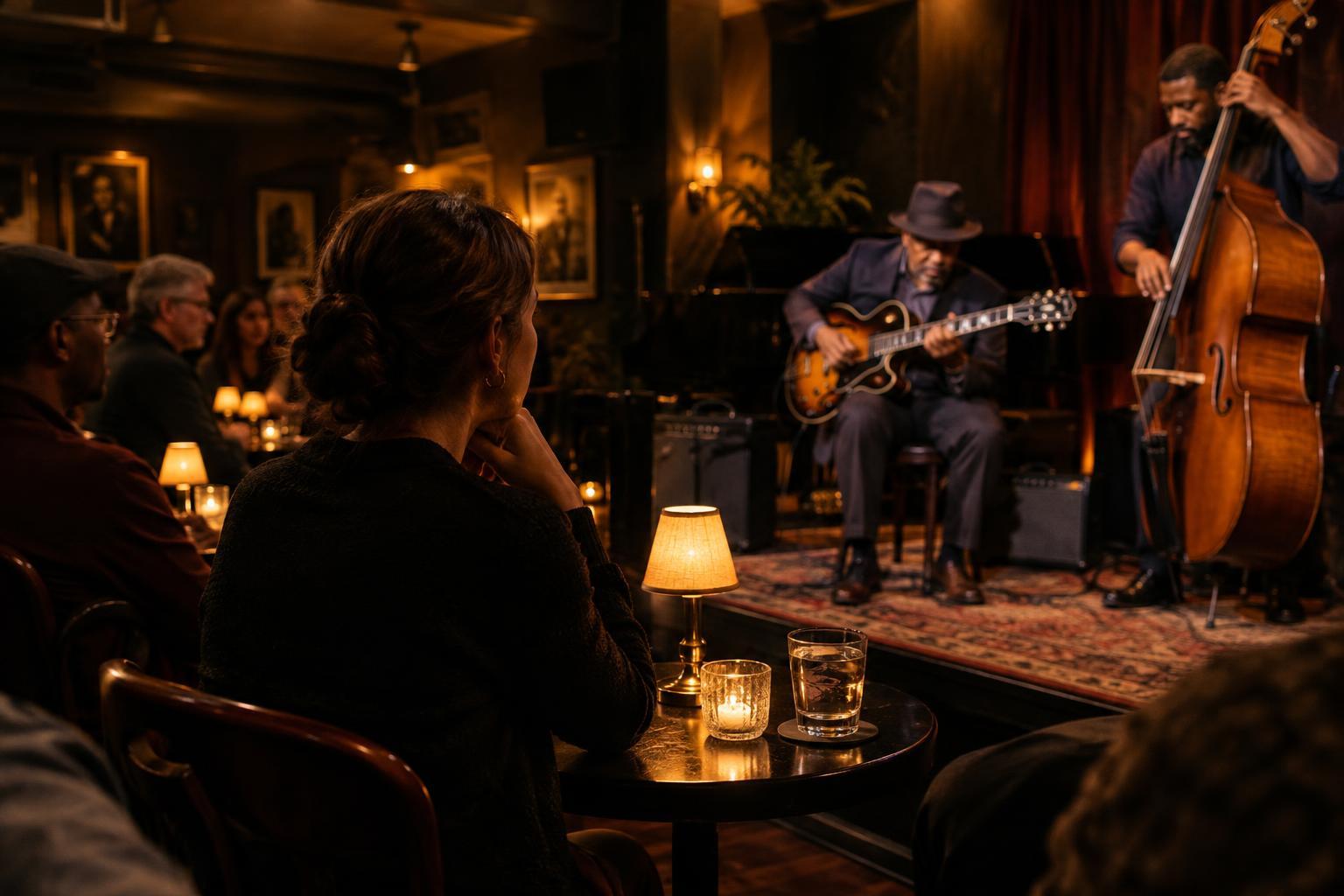
There is no single audience code for blues and jazz. A small seated club may feel almost silent during a ballad, while a bar band may play over the sound of conversation and glasses. An outdoor set might welcome dancing and call-and-response. Before deciding how to behave, notice the room: Are people seated facing a stage, or moving between the music and the bar? Can you hear the quieter instruments clearly? The answers offer better guidance than a blanket rule to be quiet or loud.
The musicians can offer clues, too. A singer who pauses before a soft verse is asking for a different kind of attention than a bandleader inviting the crowd to sing a refrain. Following those cues does not mean suppressing your enjoyment. It means responding in a way that lets others enjoy the performance as well.
Know when conversation belongs
Conversation is easiest during breaks, between sets, or away from the listening area. If you need to speak while music is playing, keep it brief and close to the person you are addressing. In a quiet room, even a whisper can carry across a piano solo or an unamplified vocal. Save longer stories, introductions and debates about the band for a pause.
A livelier venue may leave more room for talking, but volume still matters. If someone has to raise their voice to compete with you, you may be competing with the music, too. Move toward the back or into another space if the venue has one. This is especially helpful during openings and endings, when the band may be establishing a mood or bringing a song to a close.
Sometimes you need to ask a question, order a drink or step out. You do not have to remain frozen until the set ends. Choose a natural transition when possible, keep the interruption small, and return without drawing attention. Courtesy works better as a series of considerate choices than as a test of perfect silence.
Clap with the music, not over it
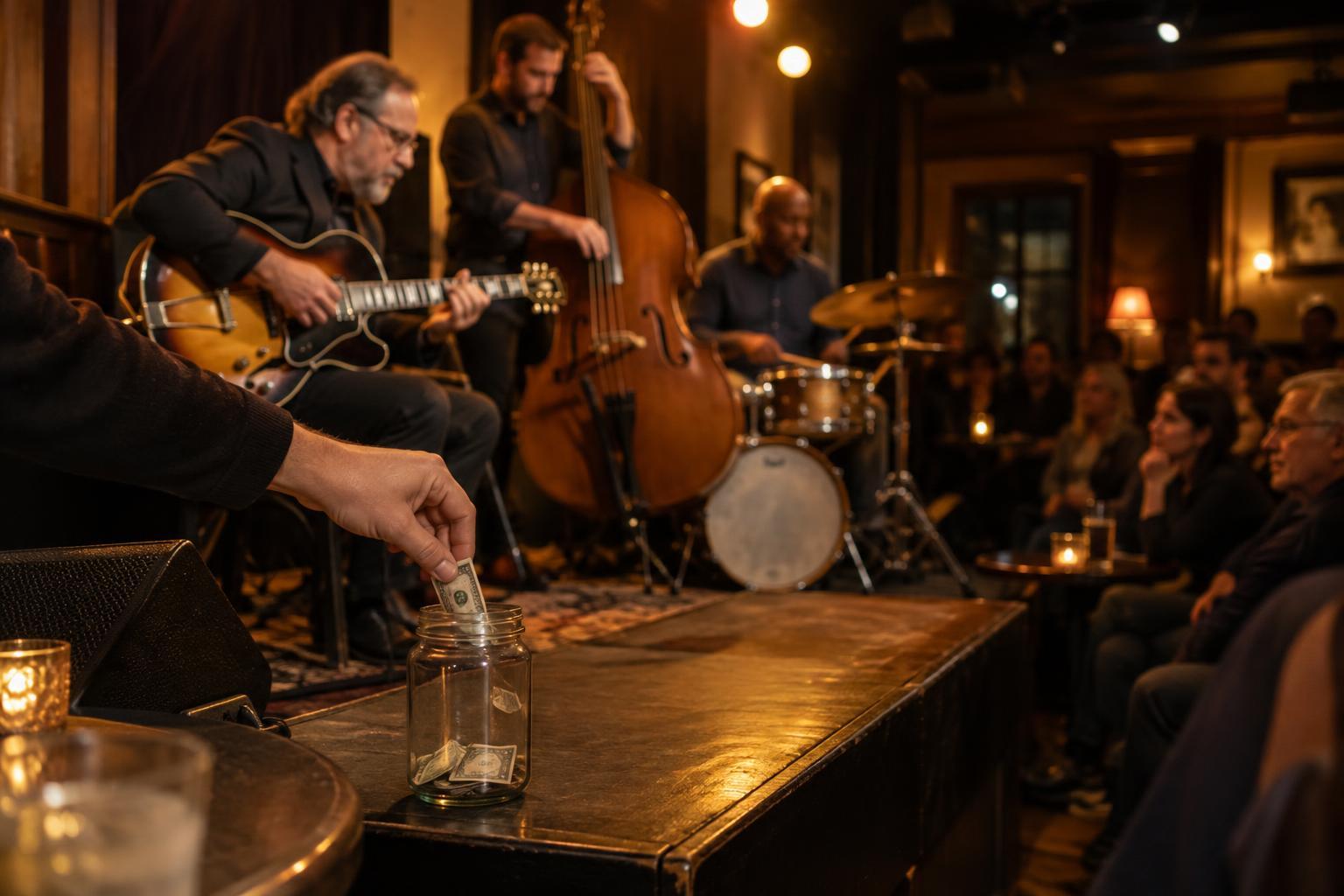
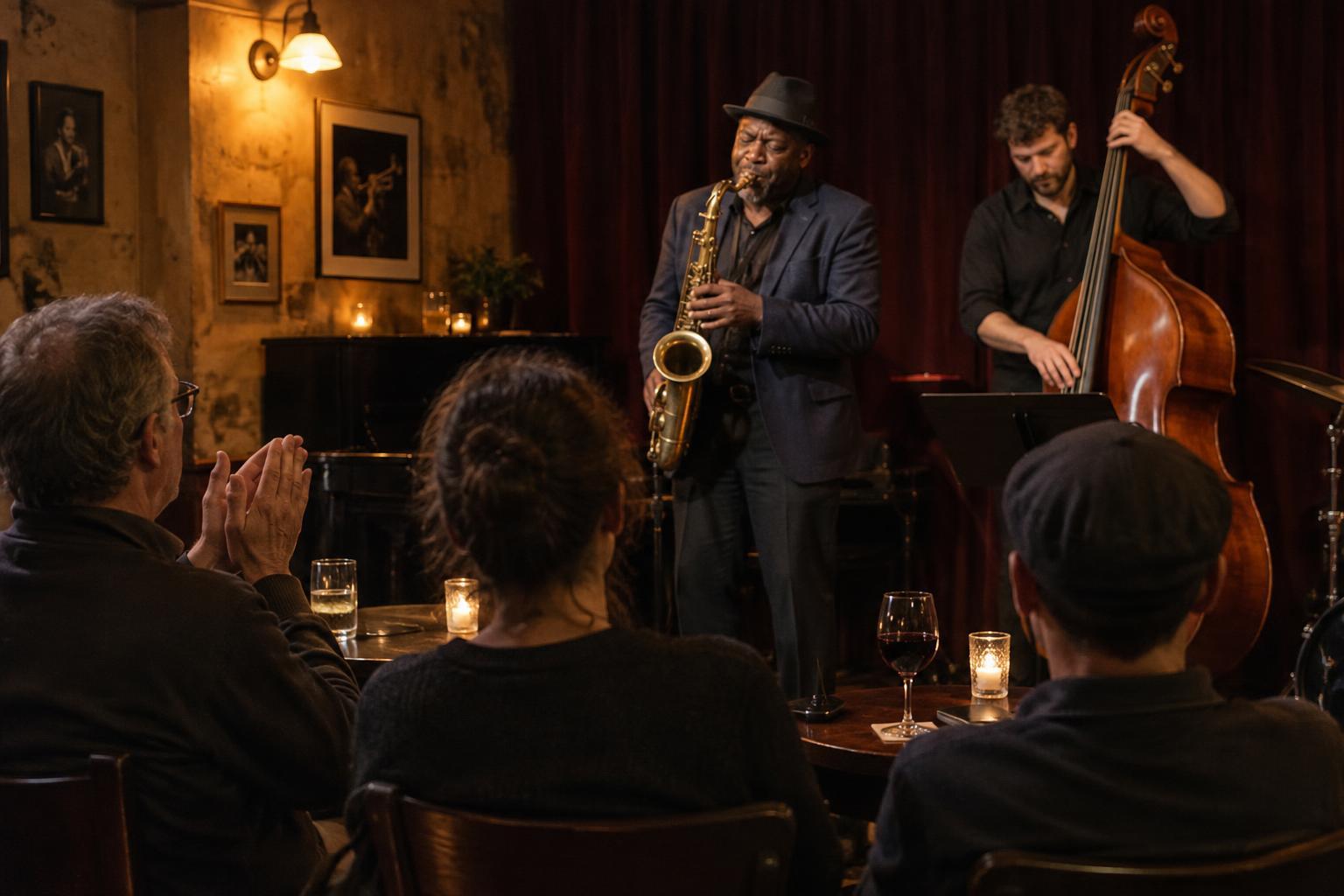
Applause at the end of a song is nearly always welcome. Jazz audiences also often applaud a soloist after a featured improvisation, even though the tune is still going. If you are unsure whether a solo has ended, listen for the next player to take the lead or follow the room. You do not need to be first to clap. A short burst of appreciation can acknowledge the musician without covering the next entrance.
Blues performances may invite a different response: a cheer after a vocal line, a whoop during a strong solo, or an answer when the singer addresses the crowd. These reactions can give the band energy. The useful distinction is between joining a moment the performers have opened up and repeatedly calling out during passages that need space. At an intimate show, a sustained note or a quiet final chord may be worth letting settle before you applaud.
Do not worry about decoding every musical cue. If you clap at an unexpected point, you have not ruined the night. Watch how the band responds, adjust, and keep listening. Sincere appreciation is more valuable than performing expertise for the people around you.
Make room for other listeners
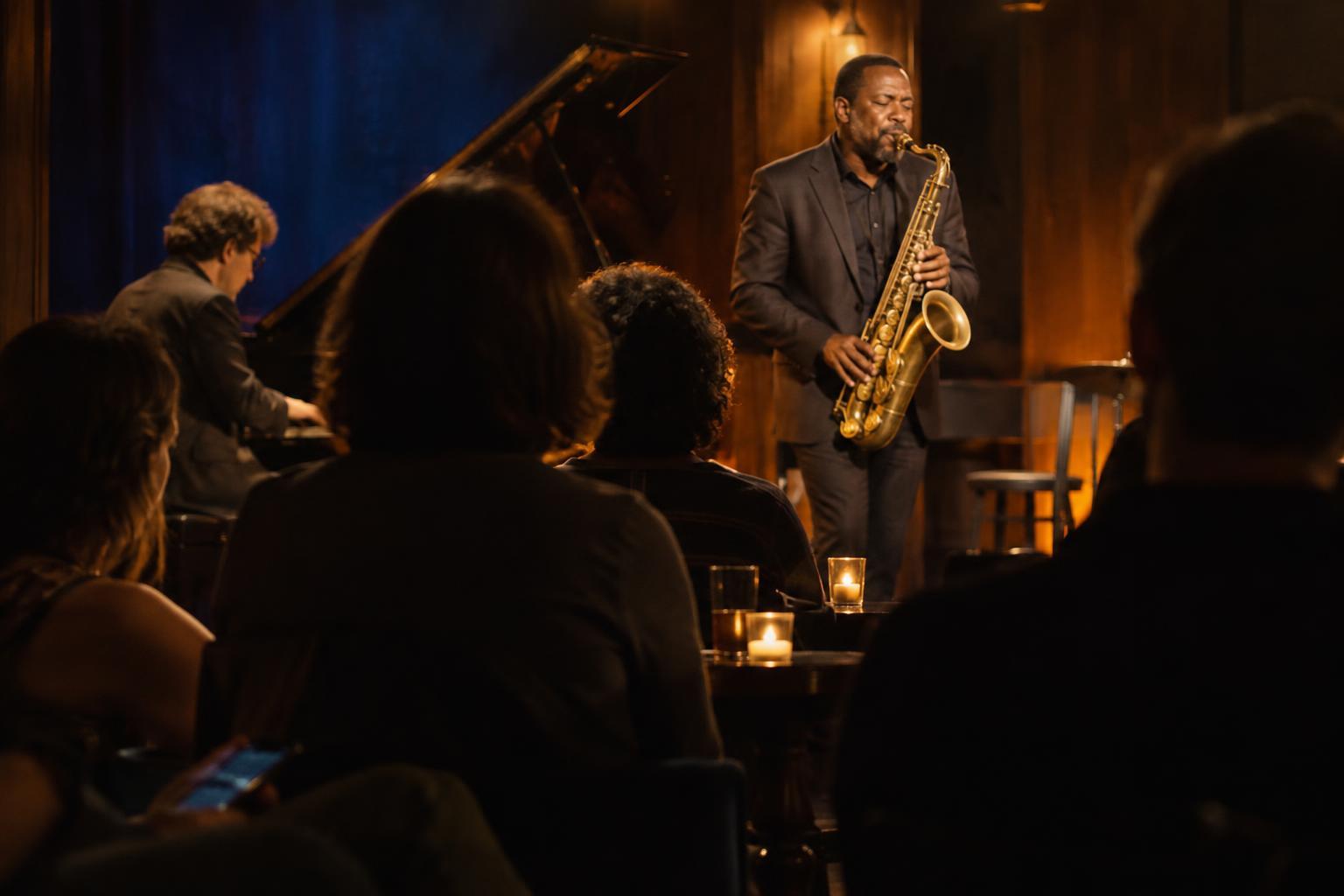
A bright phone screen can pull attention from a dim stage, even when its owner is silent. Dim it, silence alerts and check messages away from the performance when you can. Follow the venue’s guidance on photos and recording; permission to take a picture does not mean holding a phone above other people’s heads for an entire song. If you want a memory of the evening, a quick, unobtrusive moment may be kinder than filming the whole set.
The same principle applies to movement. Leave sightlines open when possible, avoid blocking a seated listener for long, and be mindful of people who need space to move or sit comfortably. Dancing may be part of the show’s atmosphere, but where you dance matters. Give people an easy way to pass, and do not assume everyone wants to join in.
If someone else is distracting you, a polite request during a pause is usually more useful than a confrontation over the music. Venue staff can help when a problem persists. The aim is not to police enthusiasm; it is to protect a shared experience.
Let attention be your starting point
Good etiquette does not require knowing the names of the songs, the structure of a solo or the history of every style onstage. Start by paying attention. Notice when the band builds toward a lively exchange and when it draws the room into a quieter passage. Let your response fit what is happening rather than what you think a blues or jazz audience is supposed to do.
That approach travels well between venues. It leaves room for conversation in a social bar, concentration in a listening room and excitement when the performers welcome it. Talk when it will not drown out the music, clap when you want to show appreciation, and allow quiet moments to stay quiet. Everyone gets more from the show when the audience listens to one another as well as to the band.