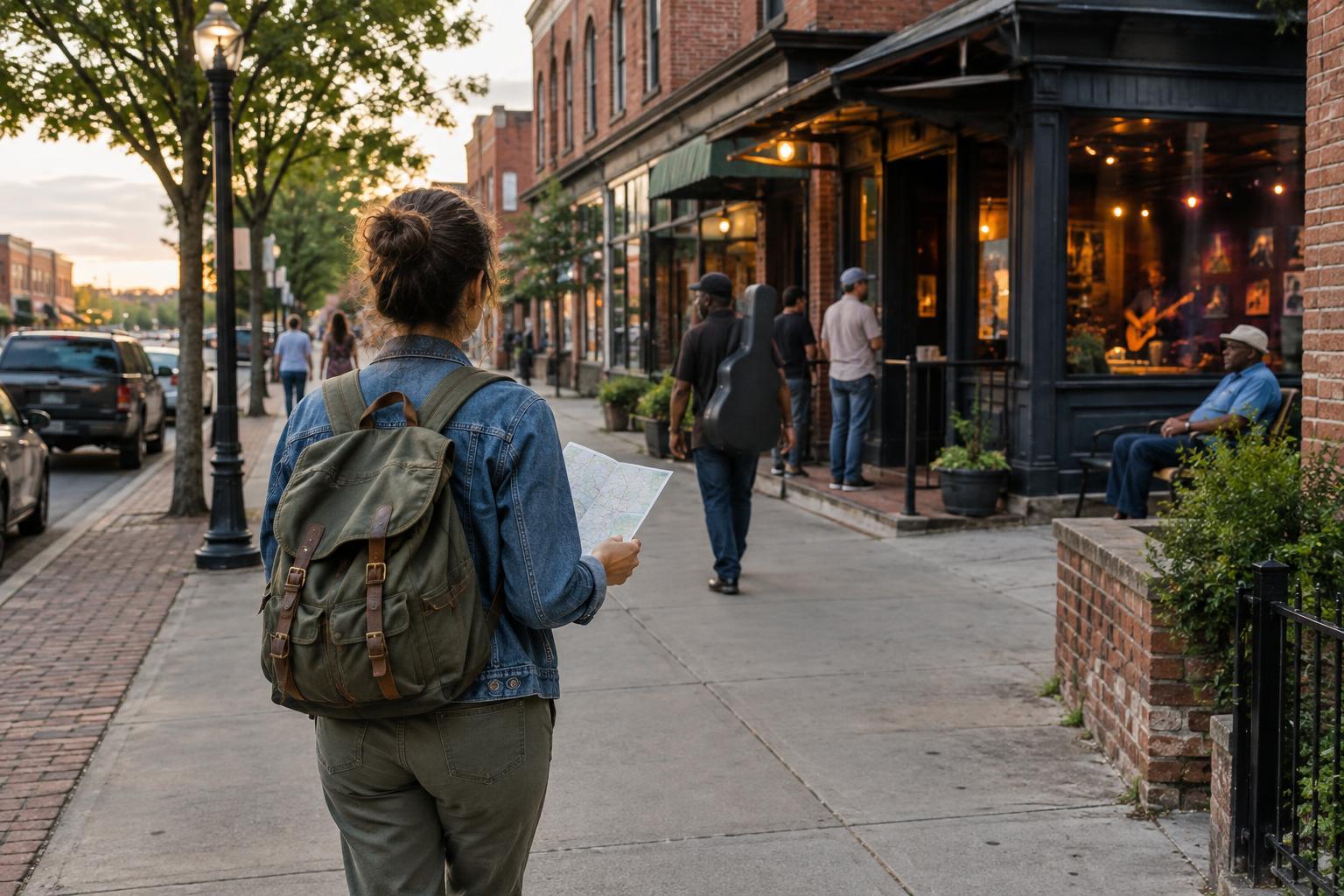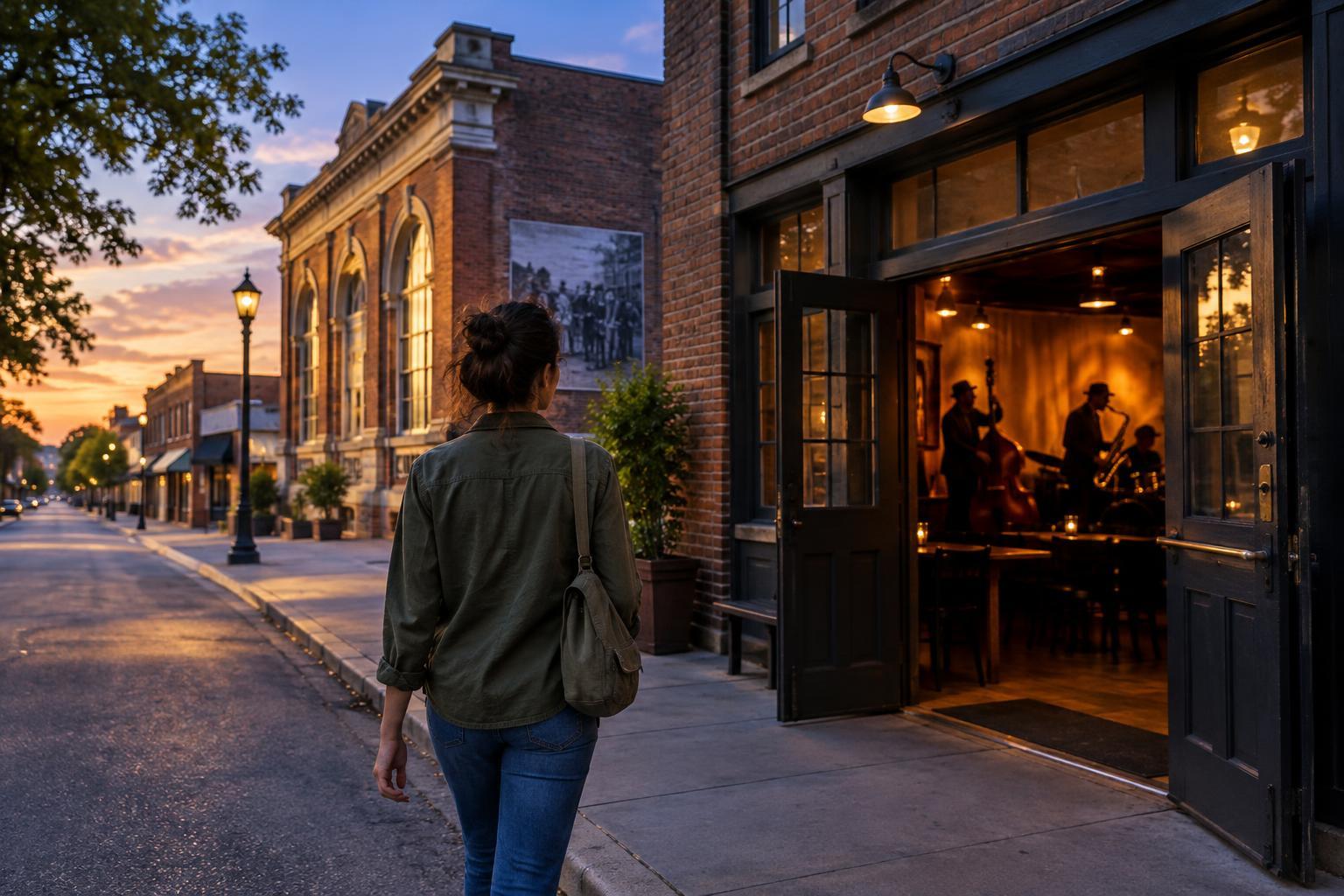
The blues grew from a community, not a single moment
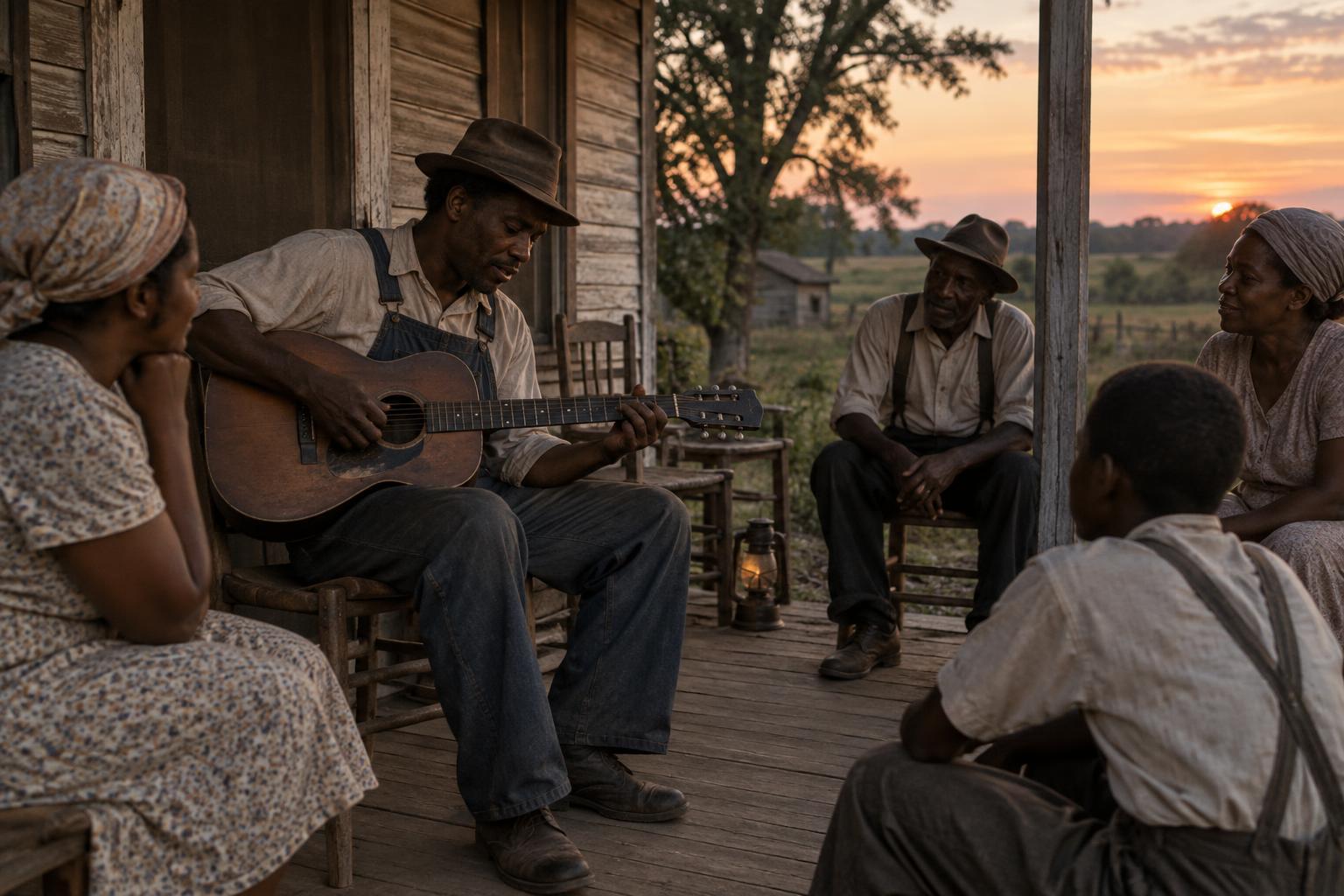
The blues emerged within African American communities in the United States around the turn of the twentieth century. It did not begin with one performer, one song, or one place. People developed and shared ways of singing and playing that spoke to their lives, then adapted those sounds as they moved between homes, workplaces, churches, streets, and entertainment venues. Much of that early music circulated without being written down or recorded, so its history cannot be traced as a tidy sequence of firsts.
To understand those roots, it helps to start with the conditions in which African Americans made music. Enslavement and its aftermath shaped work, family life, travel, and access to public space. Emancipation did not end racial violence or discrimination. Within those constraints, musicians could use a song to tell a story, make a joke, voice frustration, or invite others to respond. The blues belongs to that broader history of African American creativity; it is not simply music about suffering.
Earlier sounds and shared practices
Several older musical practices help explain how the blues took shape. Work songs could coordinate effort or offer room for improvised lines. Field hollers often featured a single voice stretching notes, bending pitch, and shaping a phrase freely. Spirituals and other forms of Black sacred music offered distinct ways to use repetition, call and response, and expressive singing. These traditions were not interchangeable, and the blues was not a direct copy of any one of them.
Early blues musicians also lived amid dance tunes, ballads, popular songs, and instrumental music. They drew on what they heard and gave it new uses. A singer might repeat a line while changing its ending; a guitarist might answer a sung phrase with a short figure on the strings. Listeners still recognize these exchanges in blues performances. They are better understood as flexible habits of making music together than as a fixed recipe.
What listeners hear in a blues performance
Many blues songs use verses in which an opening thought is repeated and then answered or completed by a third line. Some follow a twelve-bar pattern that gives performers a familiar framework for chords and solos. Neither feature defines every blues song. Earlier performances could vary in length and timing, and musicians have continued to stretch familiar patterns to fit a lyric or a feeling.
Listen, too, for expression that cannot be captured by a chord chart. A singer may slide between pitches, hold a word a little longer than expected, or leave a pause for an instrument to speak. These choices help turn an everyday observation into a personal statement. Although blues lyrics often address loss or hardship, they can also be witty, defiant, flirtatious, or celebratory. The word “blues” names a musical tradition, not one required mood.
Travel, stages, and recordings changed the music
As African American performers traveled, the blues reached new audiences through local gatherings, traveling shows, theaters, and eventually records. Women were central to its early public life: singers on professional stages brought blues material to large audiences and helped establish it as a form of popular entertainment. Recording preserved some performances and spread them farther, but what survived on record represents only part of what people played and heard.
Place also mattered, though regional labels are useful only as starting points. Acoustic guitar styles associated with the Mississippi Delta may sound different from the intricate fingerpicking often associated with the Piedmont region. Musicians borrowed across such boundaries, and no region had a single sound. During the Great Migration, many African Americans moved from the South to cities elsewhere, carrying musical knowledge with them. In urban settings, blues performers worked with bands, new audiences, and, later, amplified instruments. The music changed without leaving its earlier forms behind.
A respectful way to begin listening
A beginner can hear this history by comparing performances rather than searching for the one song that supposedly started it all. Try a stage singer with an ensemble, a solo acoustic guitarist, and an electric band. Notice who leads each exchange, how the rhythm supports the words, and whether the performer stays within or bends a repeating pattern. Differences between performances reveal how adaptable the blues has always been.
It is also worth asking whose work is being heard and credited. The blues has influenced musicians across genres and borders, sometimes while the African American artists who developed it received less recognition than those who followed. Keeping its creators and social setting in view does not make listening less enjoyable. It gives the humor, skill, and invention in the music their proper weight.