Before you reach the door
Blues clubs vary widely. One might be a small room where every chair faces the stage; another might be a bar with music at one end and conversation at the other. Check the venue’s own information before you go for details such as opening time, seating, admission, age restrictions and accessibility. If anything important is unclear, ask the venue directly rather than assuming that arrangements will be the same as at a previous show.
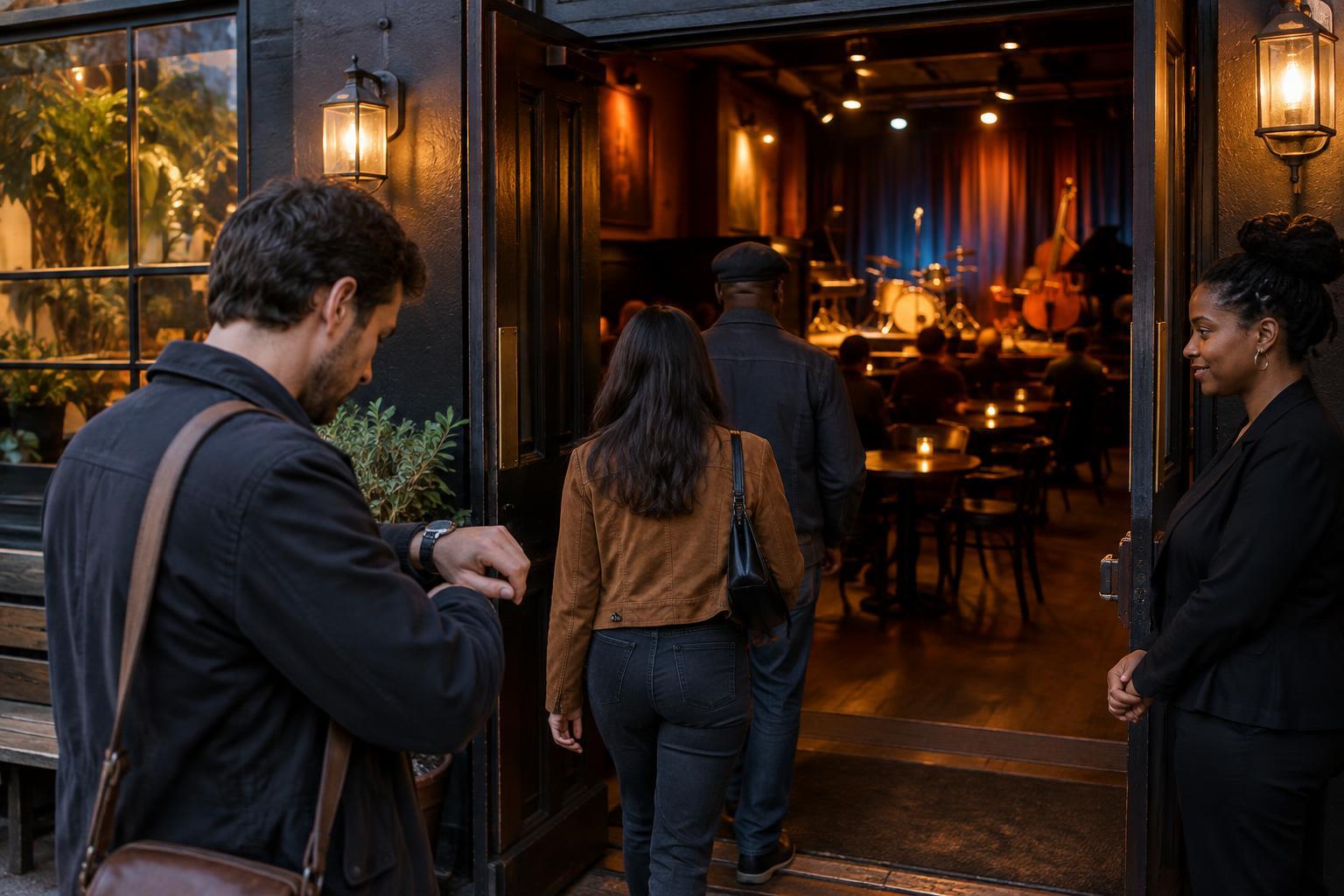
Consider arriving before the advertised music time. That gives you room to find the entrance, handle any admission or seating arrangements and order a drink without rushing through the first song. Bring a payment method the venue accepts and keep your ticket or booking confirmation handy if you have one. You do not need to know an artist’s entire catalog to enjoy the night; curiosity and a willingness to listen are enough.
Finding your place in the room
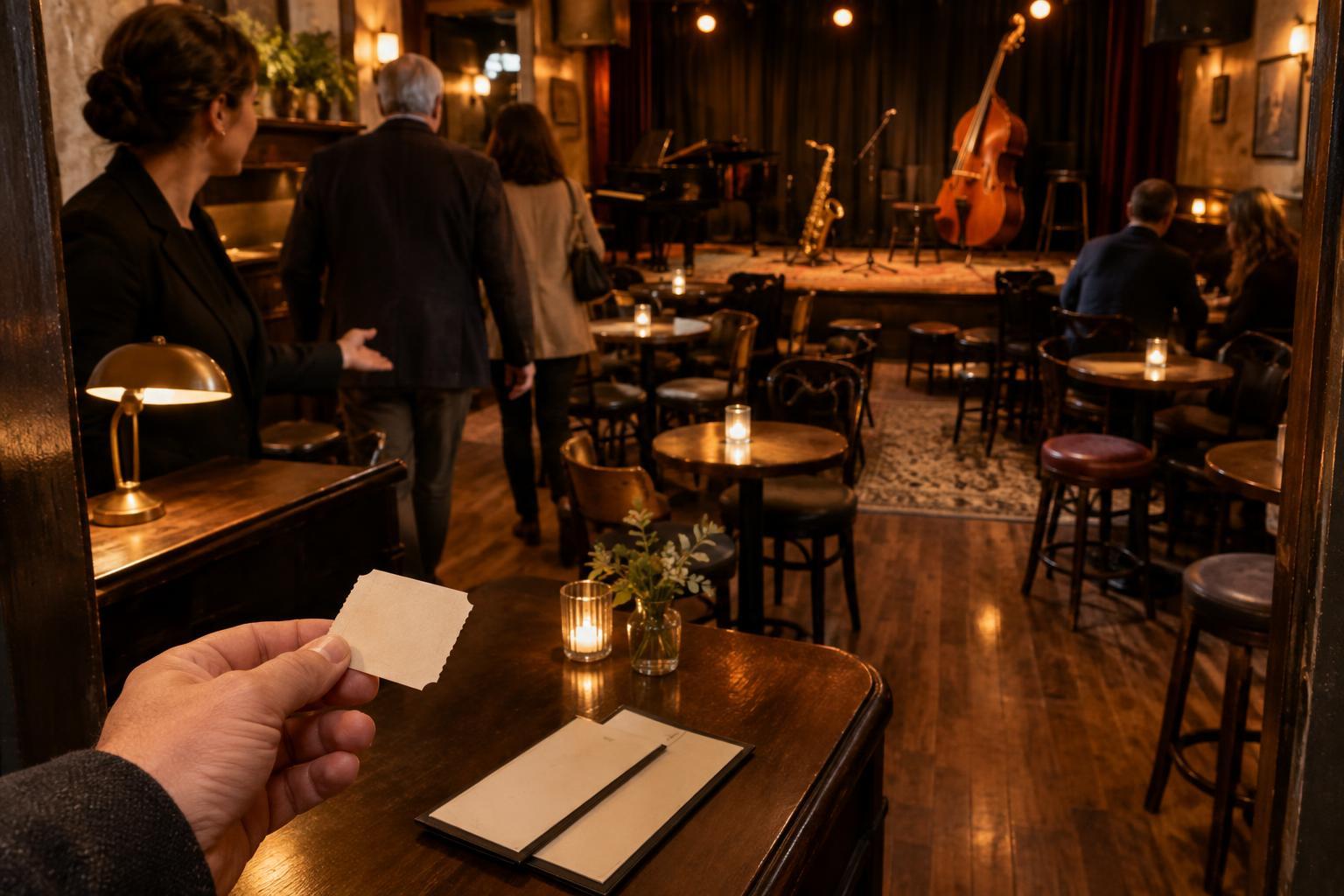
At the door, staff may check tickets, collect a cover charge or direct guests to seats. Some clubs offer reserved tables, while others seat people as space allows. Follow the host’s lead, and ask before moving a chair or taking a place that looks unoccupied. If you would prefer to stand or need a particular kind of seating, say so politely. Staff can explain what is possible in that room.
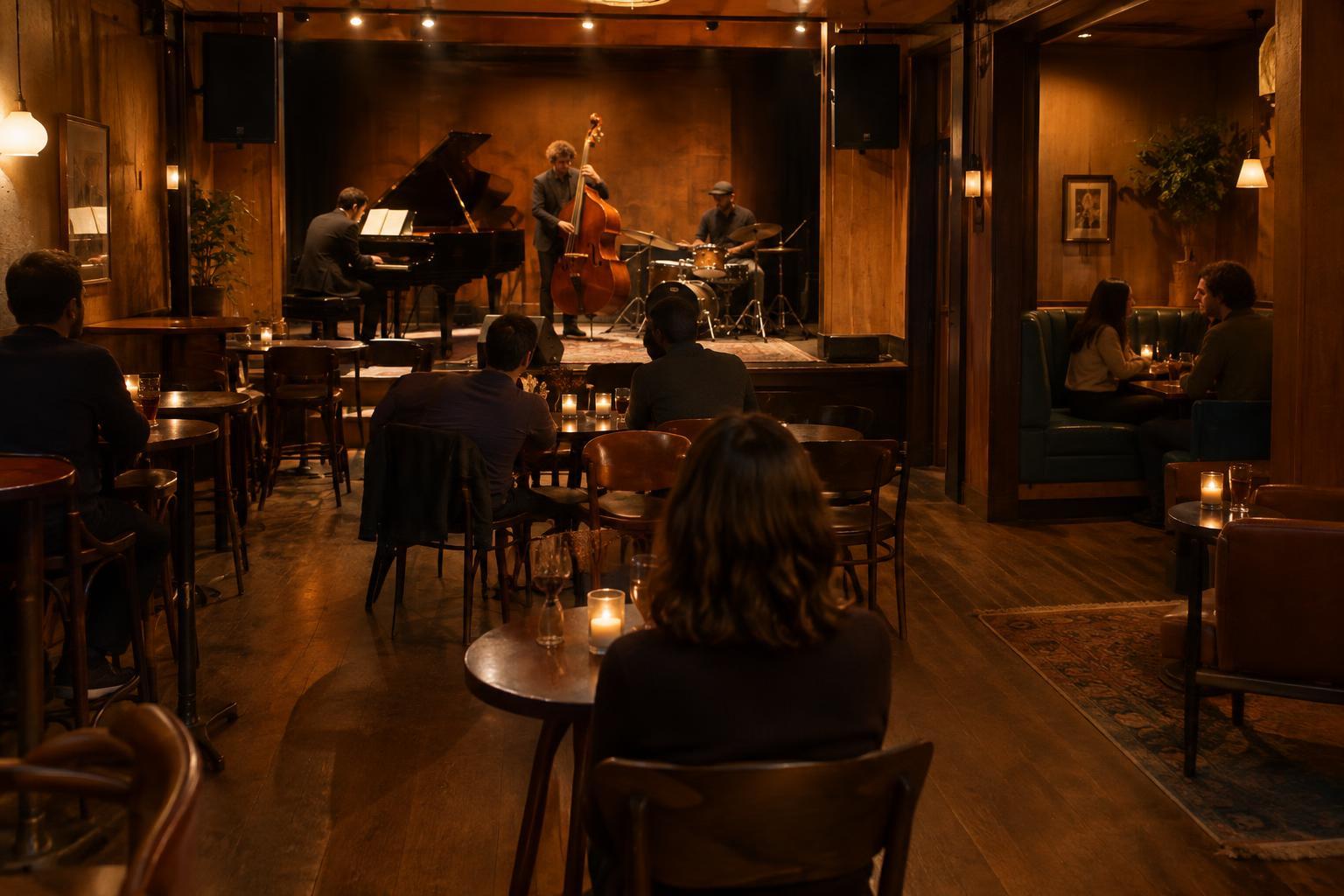
Once inside, notice how close the audience is to the players. In an intimate club, a voice may carry from your table to the stage even when you think you are speaking quietly. Take a moment to put your phone on silent, settle your belongings where they will not block a walkway and look for a convenient time to order. If service continues during the set, a brief order is usually less disruptive than a long conversation across the table.
Listening when the set begins
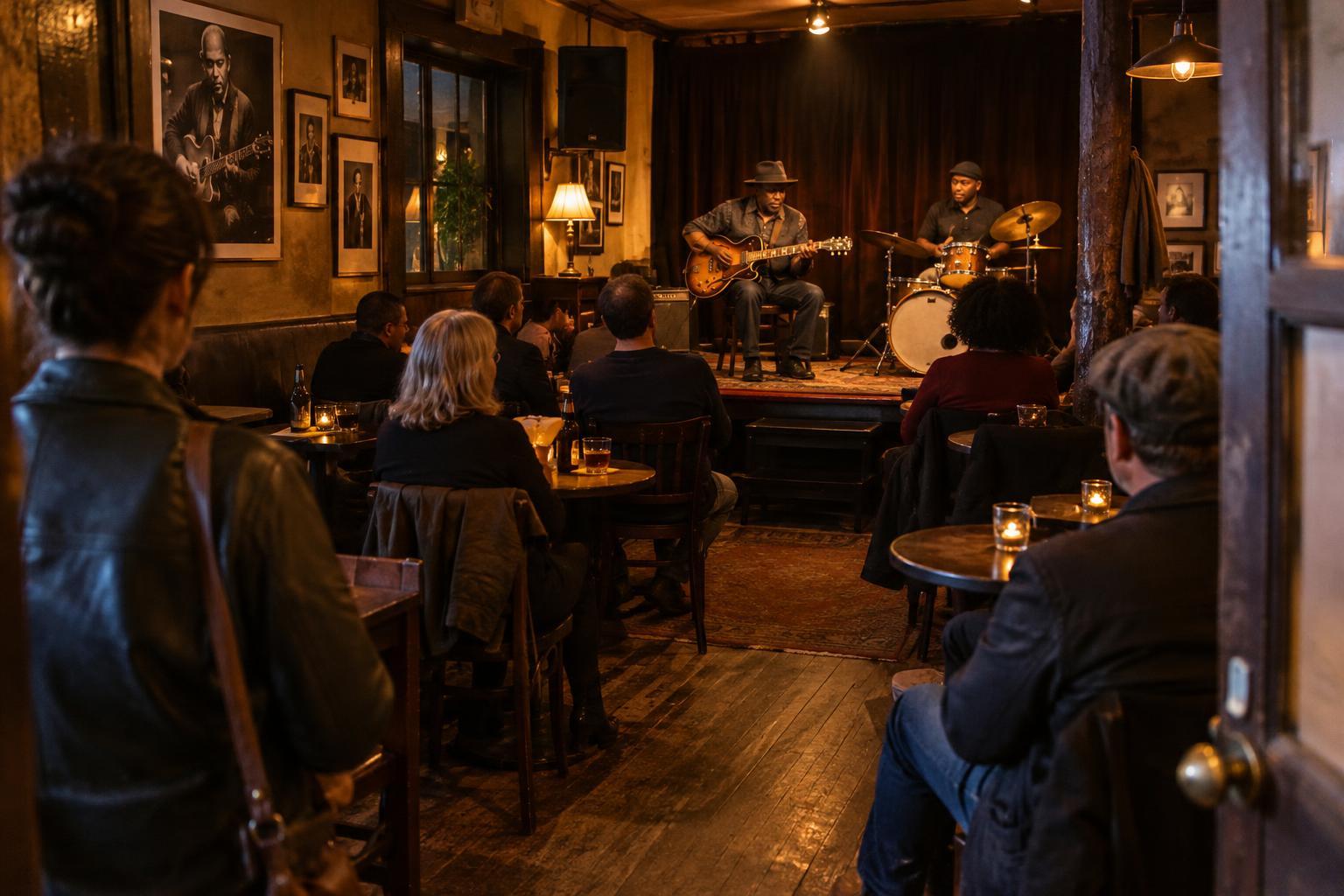
A blues performance may move between familiar song forms, personal interpretations and passages that change from night to night. You might hear a singer hold back for a verse, a guitarist answer a vocal line or a rhythm section shift the feel without stopping the song. You do not need to identify every technique. Follow what catches your ear, and notice how the musicians respond to one another.
Audience energy is welcome, but it helps to take your cue from the room and the performers. Applause after a song is straightforward; a brief cheer after a solo may fit a lively moment. During a quiet introduction or an unaccompanied verse, listening closely can be the most generous response. If you want to take a photo or short video, first check the venue’s rules. Avoid flash, raised screens that obstruct someone else’s view and recording when the performers have asked people not to.
Making the most of breaks
A set break is a good time to talk with friends, visit the bar or step outside if the venue permits re-entry. It is also a natural moment to ask staff a practical question or find out whether the band has recordings or merchandise available. Keep paths clear when people are moving between tables, the stage and the exit.
If musicians are meeting listeners during a break, a simple, specific compliment is plenty: you might mention a song or a moment you enjoyed. They may also be resting, speaking with friends or preparing for the next set, so let them set the pace of any conversation. The same consideration applies to other guests. Some came to socialize, while others are there mainly to hear the music; a break lets both groups enjoy the night without talking over a performance.
From the final song to the walk home
Near the end of the night, the band may announce a last song, and an encore may follow if the setting and schedule allow. It is not a promise or a test of how loudly the audience applauds. Enjoy the finish that happens, whether it is one final chorus, an extra number or a quiet goodnight. If you need to leave early, doing so between songs is less distracting than crossing the room during a soft passage.
Before you go, check your table and settle any bill. If you enjoyed the show, you can thank the performers or staff when there is an appropriate moment, and consider supporting the venue or artists in a way that suits your budget. A first blues club visit is not about following a secret code. Pay attention to the room, give the music space and let the live exchange between players and listeners be the reason you came.