Start with the pulse, not the fills
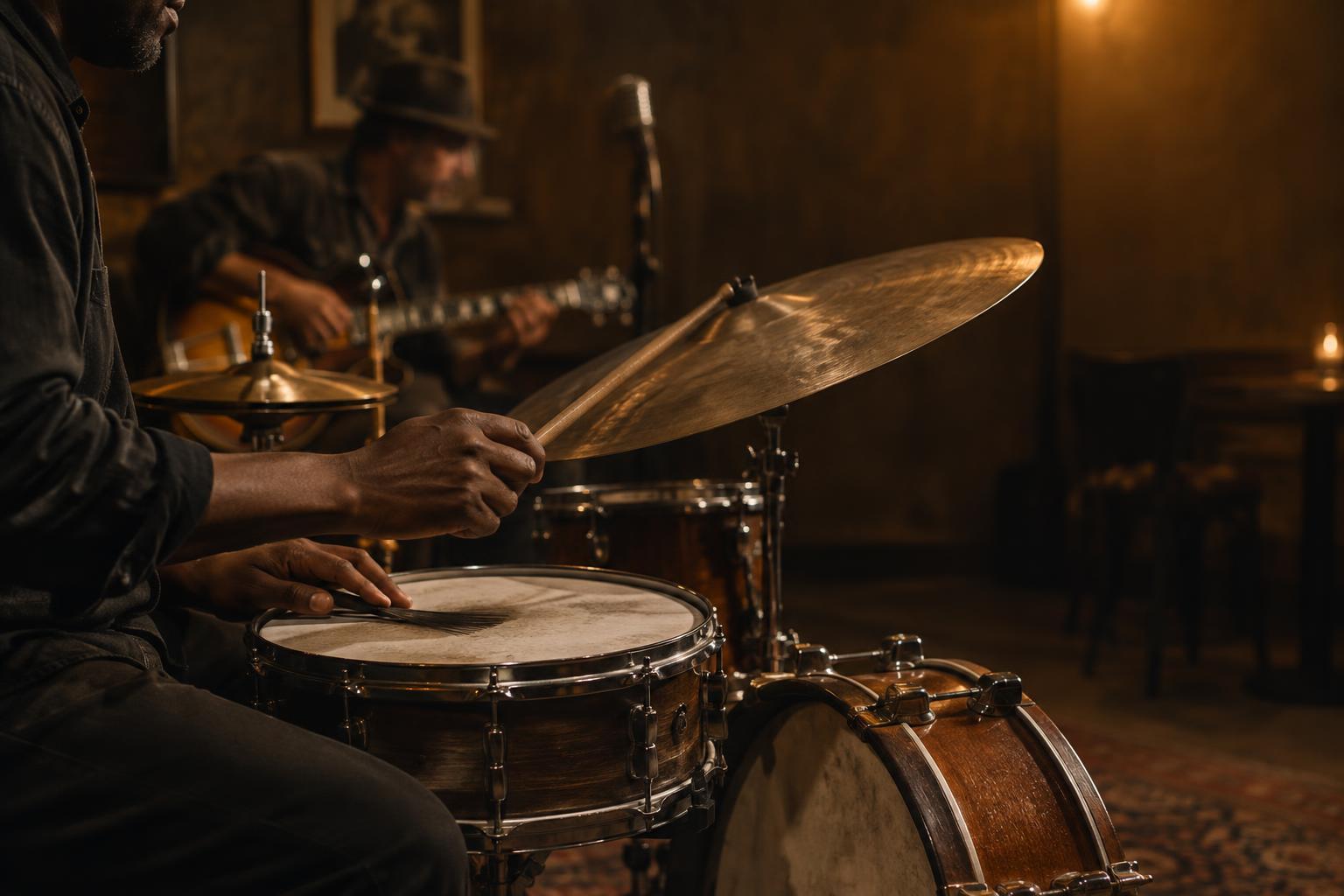
When you first listen to a blues drummer, try following the steady beat before focusing on any flashy moments. Tap your foot and notice which drum sounds help you stay oriented. The bass drum often marks a low, grounded pulse; the snare may give the beat a firm answer; and a cymbal or hi-hat can mark smaller subdivisions. Their roles vary from song to song, but together they give the other players a place to lean.
Then listen for how firmly the drummer holds that pulse. Some performances feel almost metronomic, while others breathe around the beat. A snare hit that seems slightly relaxed against the bass line can make a groove feel unhurried without making it slow. Rather than judging whether every hit lands in the same spot, ask whether the band sounds comfortable moving together.
Hear the difference between shuffle and straight time
A shuffle is one of the most recognizable feels in blues, though it is not the only one. Instead of dividing a beat into two evenly spaced parts, a shuffle gives it a long-short motion. You might hear that pattern on the hi-hat or ride cymbal as a repeating, loping sound. Try saying “long-short, long-short” along with a track, then listen for how the bass, guitar or piano supports or pushes against it.
A straight feel divides the beat more evenly. It can create a direct, insistent drive, especially when the drummer keeps a clear backbeat on the snare. Neither feel belongs exclusively to one kind of blues song, and a performance may sit somewhere between them. Pay attention to the whole band: the drummer’s cymbal pattern might suggest a shuffle while another instrument plays a simpler figure that keeps the rhythm open.
Notice the backbeat and the quieter notes around it
In many blues grooves, the snare draws attention to beats two and four. This backbeat can sound sharp and commanding or soft and understated. Listen to how it changes the character of a song. A strong snare accent may invite clapping or dancing, while a gentler one can leave room for a singer’s phrasing. The same basic pattern can feel different depending on how hard the drummer strikes it and what the other instruments are doing.
Between the obvious accents, listen for quieter snare taps, often called ghost notes. You may not pick them out immediately, especially in a full-band recording. They can make the rhythm feel busy beneath an apparently simple beat. A useful exercise is to replay a short passage twice: first follow the loud snare hits, then listen for the softer sounds connecting them.
Listen to space, volume and changes in texture
What the drummer leaves out matters as much as what they play. A brief pause before a vocal line, a lighter touch behind a guitar solo or a move from closed hi-hat to a ringing cymbal can change the energy without changing the tempo. Listen for these choices at the start of a verse, between sung phrases and when a soloist enters. They can help you hear the shape of the song.
Also notice how the drummer builds and releases intensity. A fill across the toms might announce a new section, but it need not be long to be effective. Sometimes a single cymbal accent is enough. If a performance grows louder, ask whether the drummer is adding notes, striking harder, changing cymbals or simply responding to the rest of the band. Those are different ways of creating momentum.
Follow the conversation with the band
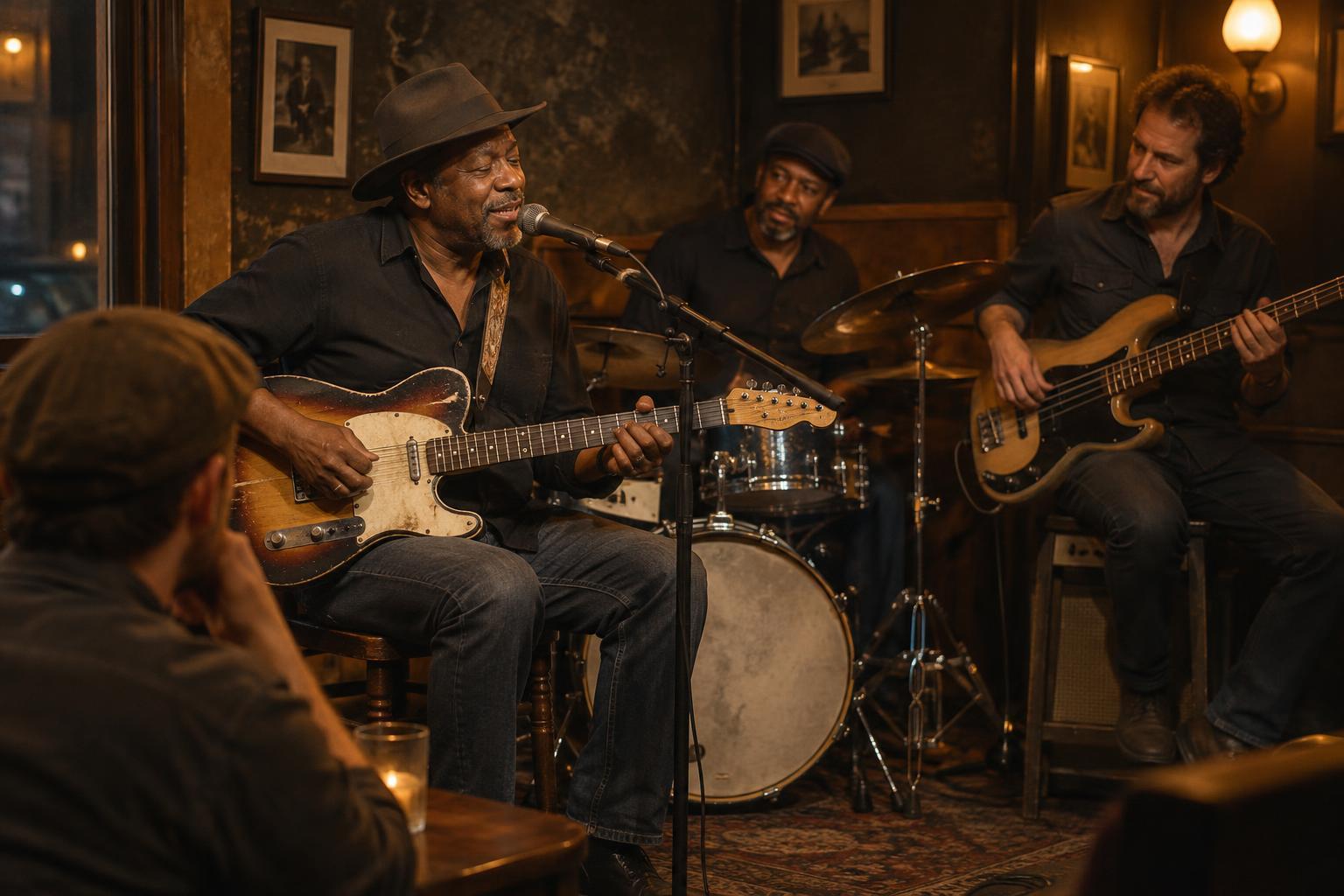
Blues drumming is rarely just a pattern repeated behind everyone else. Listen to the relationship between bass drum and bass guitar: do they reinforce the same accents, or does one leave space for the other? Notice whether a drummer marks the end of a singer’s phrase with a small fill, then settles back as the next line begins. These exchanges can be subtle, but they make a performance feel responsive.
For a focused listening session, choose one song and play it three times. Follow the pulse on the first pass, the snare and cymbals on the second, and the drummer’s responses to the singer or soloist on the third. You do not need to name every technique. If you can hear when the groove settles, opens up or gathers force, you are already listening closely to the drummer’s part in the story.