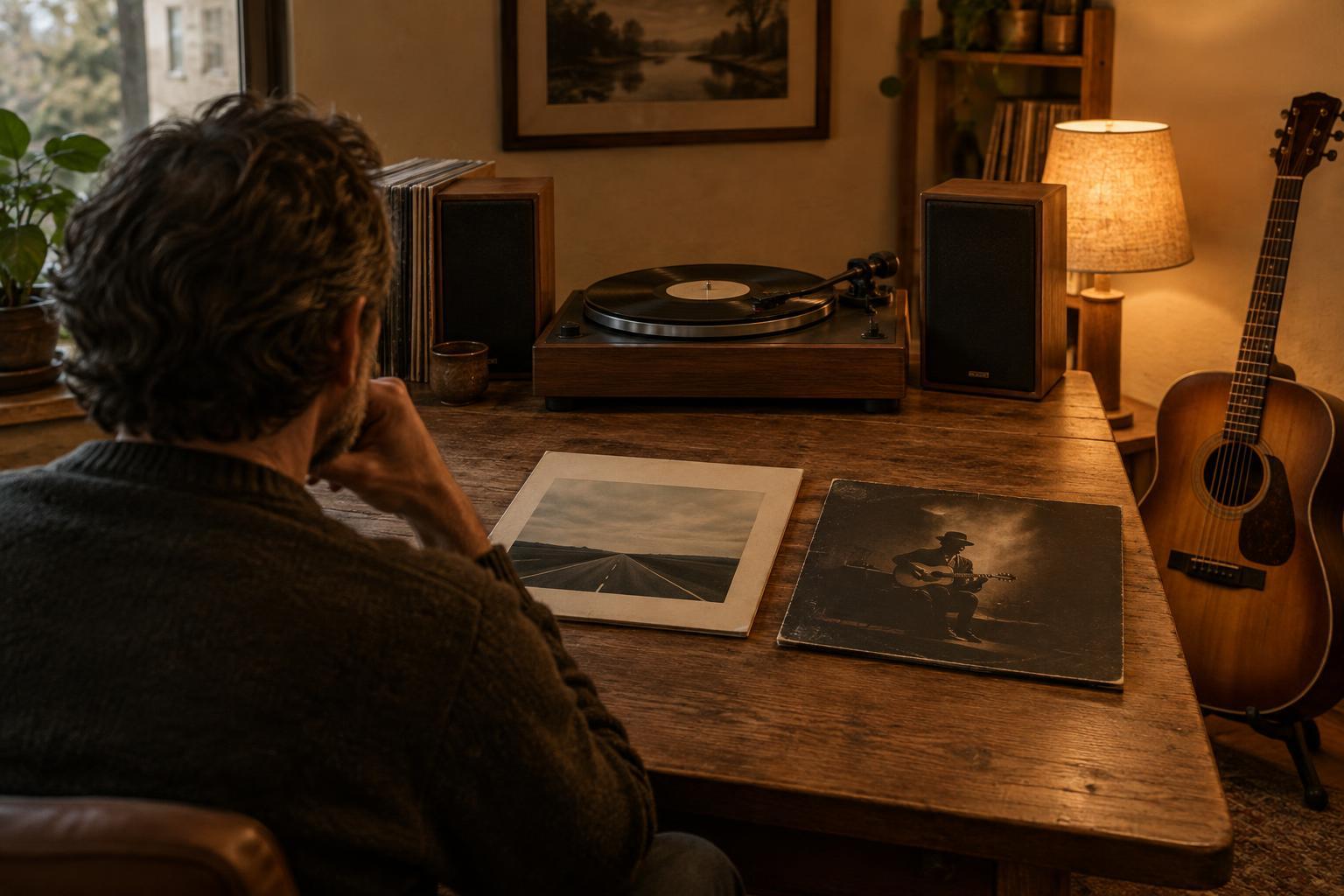
Start with what the performances share
Comparing two versions of a blues standard is not about deciding which one is correct. A standard gives musicians recognizable material to work with, but it leaves room for different choices. One performance might be spare and unhurried; another might turn the same song into a lively conversation among players. Listening for those choices can make a familiar tune feel new.
Begin by playing both versions without taking notes. Notice the broad impression each leaves: relaxed or urgent, intimate or expansive, playful or restrained. Then listen again for the elements you can recognize in both. These might include a recurring lyric, a melodic phrase, a rhythmic pattern or the point where the band returns to the opening idea. Establishing that common ground makes the differences easier to hear.
Listen to time and feel
Tempo is an obvious difference, but it is only a starting point. Two performances can move at similar speeds and still feel unlike each other. Listen to how the singer or lead instrument places notes against the underlying pulse. Do phrases land squarely on the beat, arrive a little early or linger behind it? Pay attention to the space between lines as well as the notes themselves.
The rhythm section can change the song’s character without changing its basic form. A walking bass line may keep the music in steady motion, while a repeating bass figure may give it a heavier, more insistent center. Drums, hand percussion or a firmly played guitar can emphasize different parts of the beat. As you compare, try describing what you hear in ordinary words—“bouncing,” “leaning forward,” “hanging back”—before reaching for technical terms.
Follow the voice and the lead lines
If both performances include singing, compare how the vocalists deliver the same words. A line can sound wry, weary or defiant depending on its timing, volume and emphasis. Listen for stretched syllables, clipped endings and pauses that give a lyric room to land. Rather than treating vocal embellishments as departures from the song, ask what they add to its meaning.
Instrumental leads offer another point of comparison. A guitarist might answer a sung line with a short phrase, while a pianist or harmonica player might develop a longer idea. Notice whether a solo repeats and varies a small motif or moves rapidly through contrasting phrases. Also listen for restraint: a player who leaves a gap may be inviting the rhythm section, the singer or the audience’s attention into that space.
Map the arrangement and the conversation
On a third listen, follow the order of events. Does each version begin with the whole band, a solo instrument or a vocal pickup? How many verses pass before an instrumental break? Does the group build toward a bigger sound, strip back for a quiet passage or end abruptly? You do not need to count every bar. A simple sequence of moments—opening, first verse, solo, return, ending—is enough to reveal the arrangement.
Then shift your attention from individual parts to their interaction. In blues, a short response from an instrument can make a vocal line sound like one side of a conversation. A drummer may mark a transition, or the band may pull back together to frame a solo. Ask whether the musicians leave one another room. The most striking difference between performances may lie less in what any one person plays than in how the group responds.
Make a fair comparison—and keep listening
Recording circumstances can affect what reaches your ears. A closely recorded vocal may seem more intimate than one heard at a distance, while a crowded or rough-sounding recording may obscure quiet details. Do not assume every difference in sound reflects a musical decision. If the audio quality varies, focus first on features you can hear reliably, such as phrasing, entrances, pauses and the overall shape of the performance.
To bring your observations together, choose one brief passage that appears in both versions and play it back to back. Write down one shared feature and two clear differences, then ask how those differences change your experience of the song. You may prefer one performance for its energy and the other for its sense of space. That is a useful outcome: comparing versions is a way to hear more carefully, not a contest that needs a winner.