Start with a journey, not a ranking
The blues is a broad tradition, so a beginner playlist does not need to settle which recordings are the most important. A more inviting goal is to hear how different performers use voice, rhythm, and instruments to shape a song. Choose eight to twelve tracks you can revisit, rather than building a long queue that turns into background music.
Blues grew from African American musical traditions, and its sounds have traveled through many communities and genres. Style labels such as country blues, Chicago blues, and blues rock can help you navigate, but they are not fixed boxes. A performer may draw on several approaches at once. Treat the labels as listening prompts, not rules for where an artist belongs.
You can use the recordings suggested below as a starting route, then substitute versions you can find and enjoy. If a track has multiple releases or performances, note which one you added. Differences in arrangement, tempo, and sound can become part of the pleasure of listening.
Begin with voice and acoustic guitar
Open with a sparse recording so you can hear the relationship between singer and instrument. Robert Johnson’s “Cross Road Blues” offers one starting point: pay attention to how the guitar answers or supports the vocal lines. Then try Mississippi John Hurt’s “Candy Man.” Rather than asking which track is more typical of the blues, listen to the distinct feel of each guitarist’s picking and phrasing.
On a second pass, follow the pulse. Can you tap along easily, or does the singer seem to stretch a phrase across the beat? Listen for repeated lines, small changes in wording, and pauses that make a lyric land. These details are useful guides even if you do not know any music theory.
Acoustic blues is more varied than any two tracks can show. If this opening holds your attention, make room later for another performer or a different recording by one of these artists. A beginner playlist is a doorway, not a survey completed in one sitting.
Add bands, a strong groove, and piano
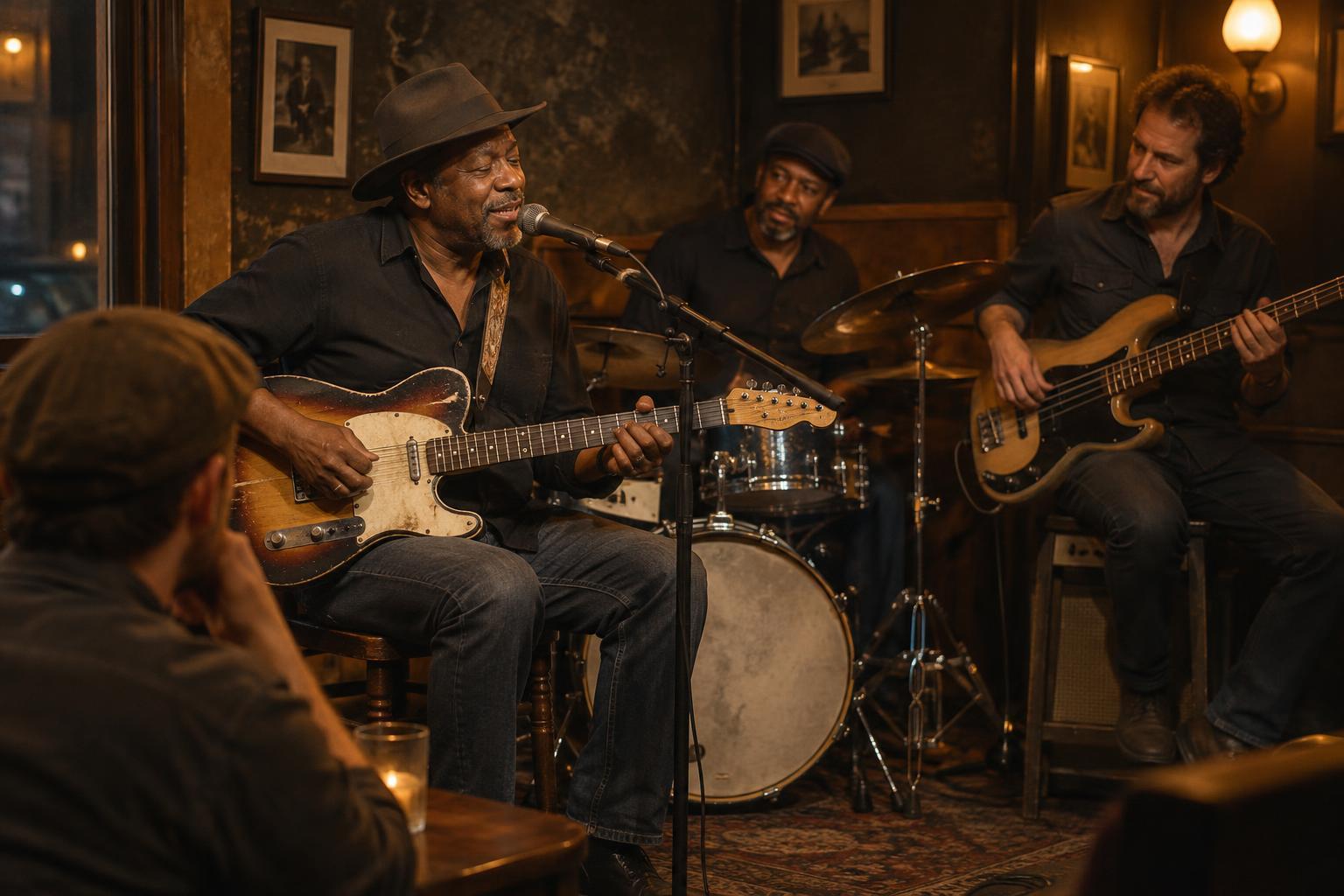
Next, change the texture. Muddy Waters’ “Hoochie Coochie Man” brings a band sound into focus. Listen for the spaces around the vocal and for the way instrumental accents give the song its weight. Follow it with John Lee Hooker’s “Boom Boom,” paying attention to the repeating rhythmic idea that keeps pulling the performance forward. The contrast helps show that an electric blues band does not have just one kind of groove.
For a different pace, add B.B. King’s “The Thrill Is Gone.” Notice how much expression can fit into a short guitar phrase, especially when it follows a sung line. Then make space for piano with Big Maceo Merriweather’s “Worried Life Blues.” Hear how the keyboard can anchor the rhythm while also giving the singer something to lean against.
Do not worry if you cannot name every instrument on the first listen. Ask a simpler question: what would be missing if this part fell silent? That turns a busy arrangement into a set of conversations you can follow.
Hear where the blues meets other sounds
A playlist across styles can end by showing how blues expression carries into other settings. Try Etta James’s “I’d Rather Go Blind” and listen to the restraint and release in her vocal delivery. Then play T-Bone Walker’s “Call It Stormy Monday (But Tuesday Is Just as Bad)” for a contrasting sense of swing and guitar-led phrasing. These tracks need not represent entire genres; their value here is the new set of questions they bring to your ears.
If you want to include blues rock, Stevie Ray Vaughan’s “Pride and Joy” makes a useful final turn. Compare its energy and guitar tone with the earlier tracks, while listening for continuities in rhythm and vocal phrasing. Ending with a familiar-sounding electric performance may also make it easier to return to the quieter opening and hear it afresh.
After one full playthrough, change the order. Put two slow songs together, or place an acoustic track beside an electric one. Keep brief notes: a rhythm you liked, a voice you want to hear again, or an instrument you want to explore. Your next playlist can grow from those observations rather than from a checklist of names.