Both instruments can teach you the blues
You do not need an acoustic piano to begin playing blues. The essentials—steady time, expressive phrasing, familiar chord patterns and conversation between the hands—can be learned on either an acoustic piano or a digital keyboard. What matters most at first is having an instrument you can sit down and play often.
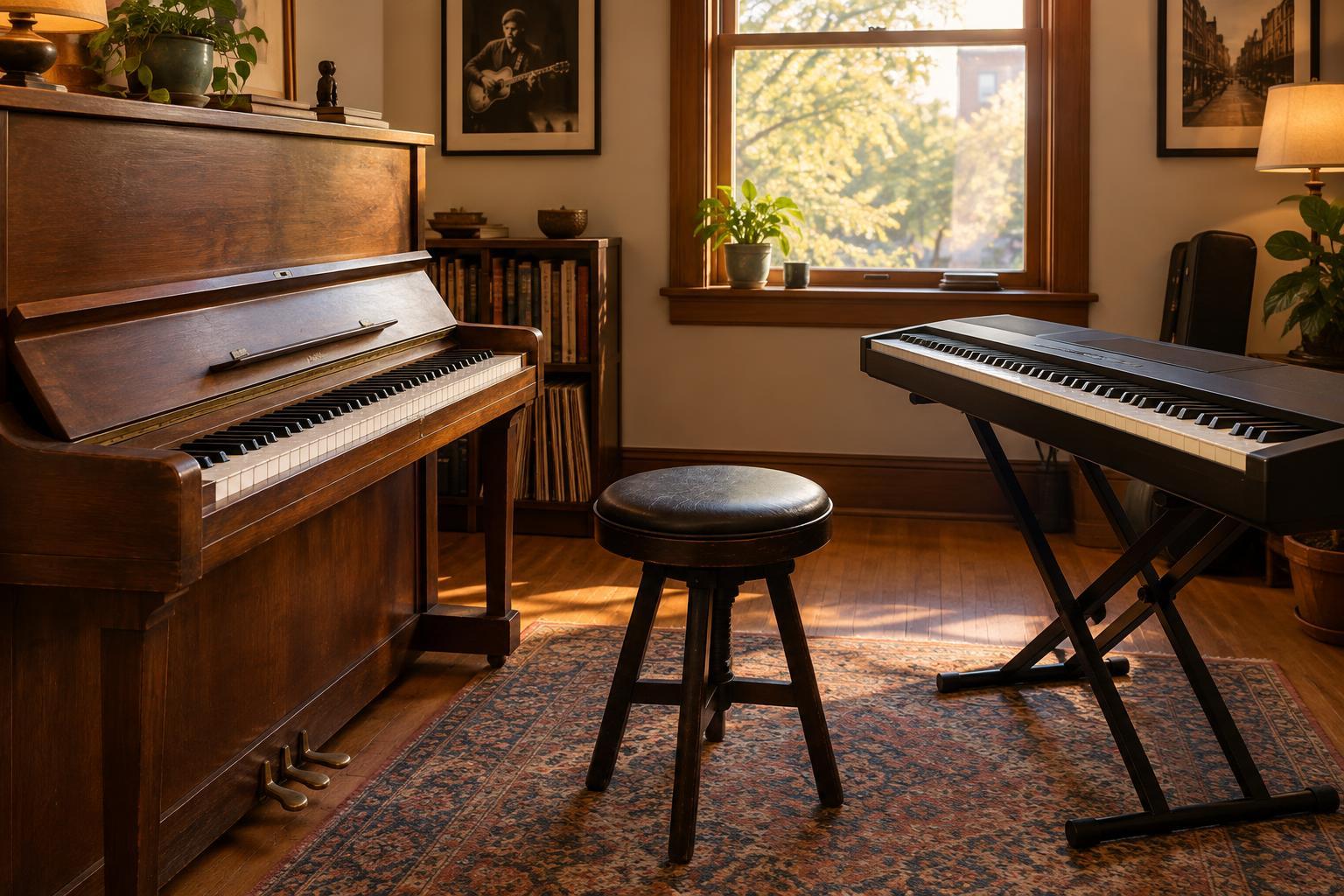
An acoustic piano makes its sound through hammers striking strings. Most digital keyboards produce sound electronically, though their keys and sounds vary widely. Some have light, springy keys and many instrument sounds; others are designed to feel and sound more like a piano. The label on the instrument tells you less than a short playing test will.
Pay attention to touch before extra features
Blues playing often moves between a soft response and a forceful accent. On a touch-sensitive keyboard, pressing a key differently changes the volume, giving you room to shape those phrases. A keyboard without touch sensitivity can still help you learn note names and chord shapes, but it makes expressive practice harder. If you are comparing digital instruments, touch sensitivity is a useful feature to prioritize.
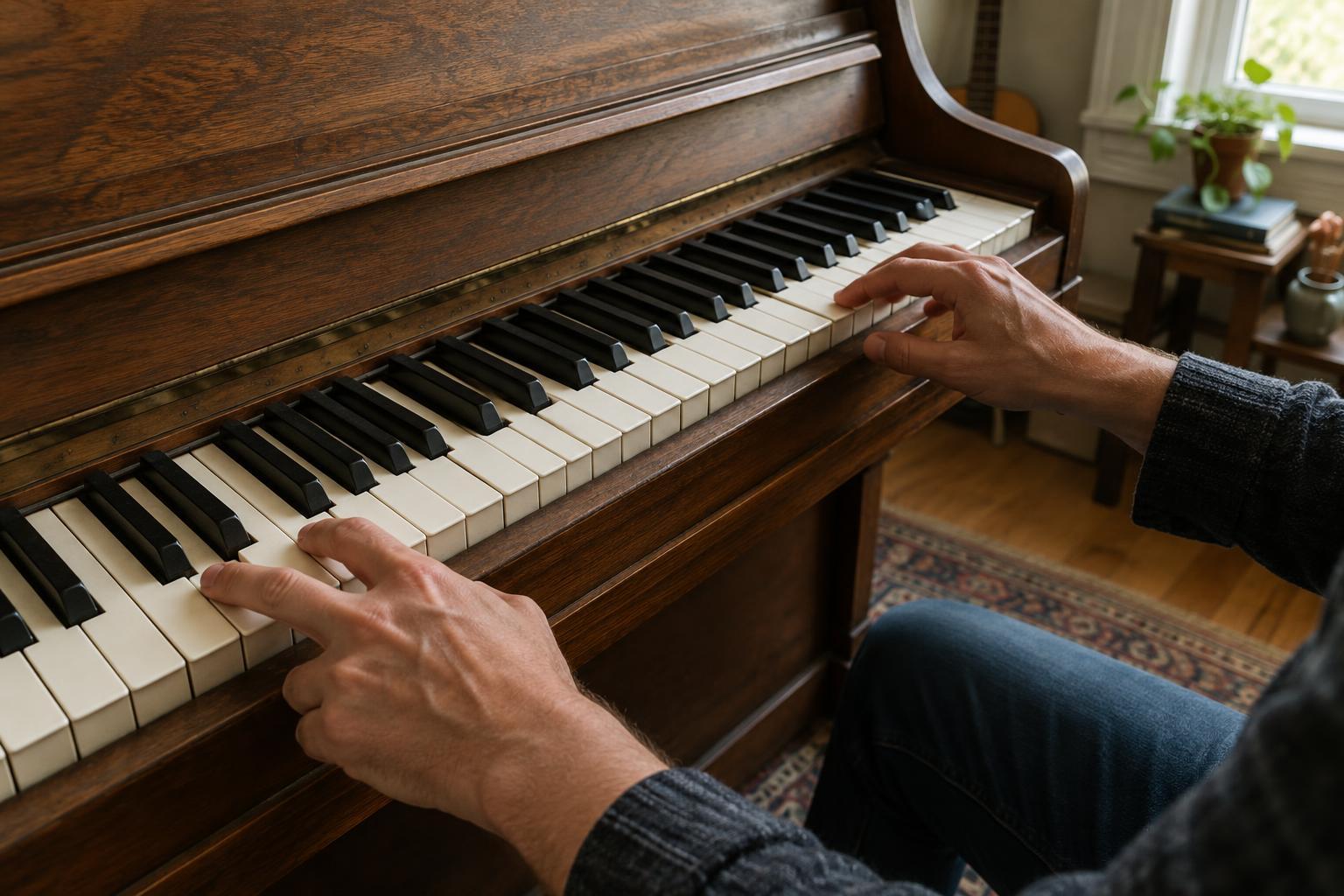
Acoustic piano keys offer a physical response that changes across the instrument. Some digital keyboards use weighted keys to approximate that feel; others use lighter keys that may be easier to press. Neither automatically makes someone a better blues player. Try a simple phrase at both quiet and loud volumes. Can you control the difference comfortably? Can you play repeated notes without fighting the keys? Those questions are more useful than choosing by specifications alone.
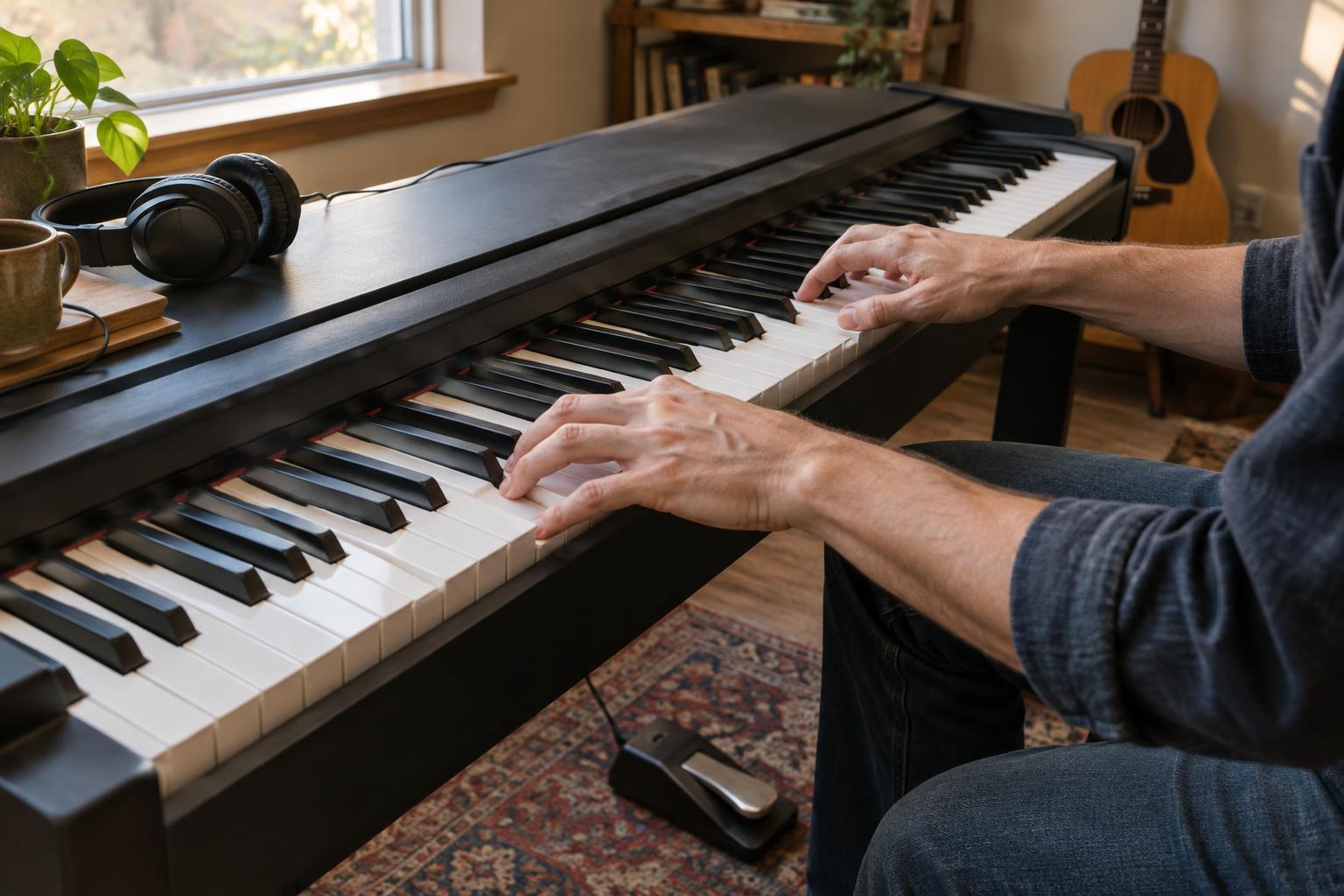
A sustain pedal is helpful for learning when to let notes ring and when to leave space. It is not a substitute for clean playing: too much pedal can blur the short, rhythmic phrases that give blues piano its character. If you choose a keyboard, check whether it accepts a pedal and whether one is included.
Choose a key range that suits your goals
An acoustic piano has a full 88-key range, as do some digital pianos. That space is useful when your left hand plays low bass notes while your right hand answers with a higher melody. A smaller keyboard can still teach you a great deal. On a 61-key instrument, you can practice many basic blues patterns, chords and improvisation exercises, although you may need to move a bass line or melody into a different octave.
Consider what you want to play in the next few months. If you hope to work on two-handed piano arrangements, a wider range gives you more room. If you mainly want to learn chord changes, accompany a singer or try short solos, a compact keyboard may be a practical start. Whatever the size, make sure the keys are large enough for you to play comfortably and that the instrument has a sound you enjoy hearing during repeated practice.
Think about where and when you will practice
An acoustic piano needs a suitable place to live and periodic tuning. It cannot be turned down or played through headphones. A digital keyboard is generally easier to move, and many models offer volume control and a headphone connection. Those differences can matter more than subtle differences in tone if you share a home or practice at odd hours.
Also consider the complete setup. A keyboard at an awkward height can make relaxed playing difficult, so a stable stand and appropriate seat are worth planning for. Check that any instrument you are considering works properly: play every key, listen for unwanted noises or uneven response, and test the pedal if it has one. For an acoustic piano, condition matters as much as appearance. If you are unsure how it plays, ask someone with piano experience to try it with you.
Start with a blues routine on the instrument you have
Begin by learning a simple 12-bar blues pattern in one key. Play the chord changes slowly with your left hand, counting steadily rather than rushing to the next shape. Then try short right-hand phrases using a small group of notes. Leave a gap after each phrase and imagine another musician answering you. That call-and-response habit can make even a few notes feel purposeful.
Once the changes feel familiar, vary one thing at a time: play a phrase more softly, shift an accent, or change where you leave silence. Listen closely to blues recordings for the way players place notes around the beat, then try to echo a brief phrase by ear. A keyboard’s extra sounds can be fun, but a clear piano sound will help you hear your timing and touch. Whether you practice on strings and hammers or electronic keys, those listening habits are where your blues playing begins.