Start with the way you want to play
Blues piano asks for more than the right notes. A left-hand bass pattern has to stay steady while the right hand bends the feel of a phrase through timing and touch. Before comparing instruments, think about what you will practice most: solo piano, accompaniment for a singer, playing along with recordings or preparing to use an acoustic piano at a venue.
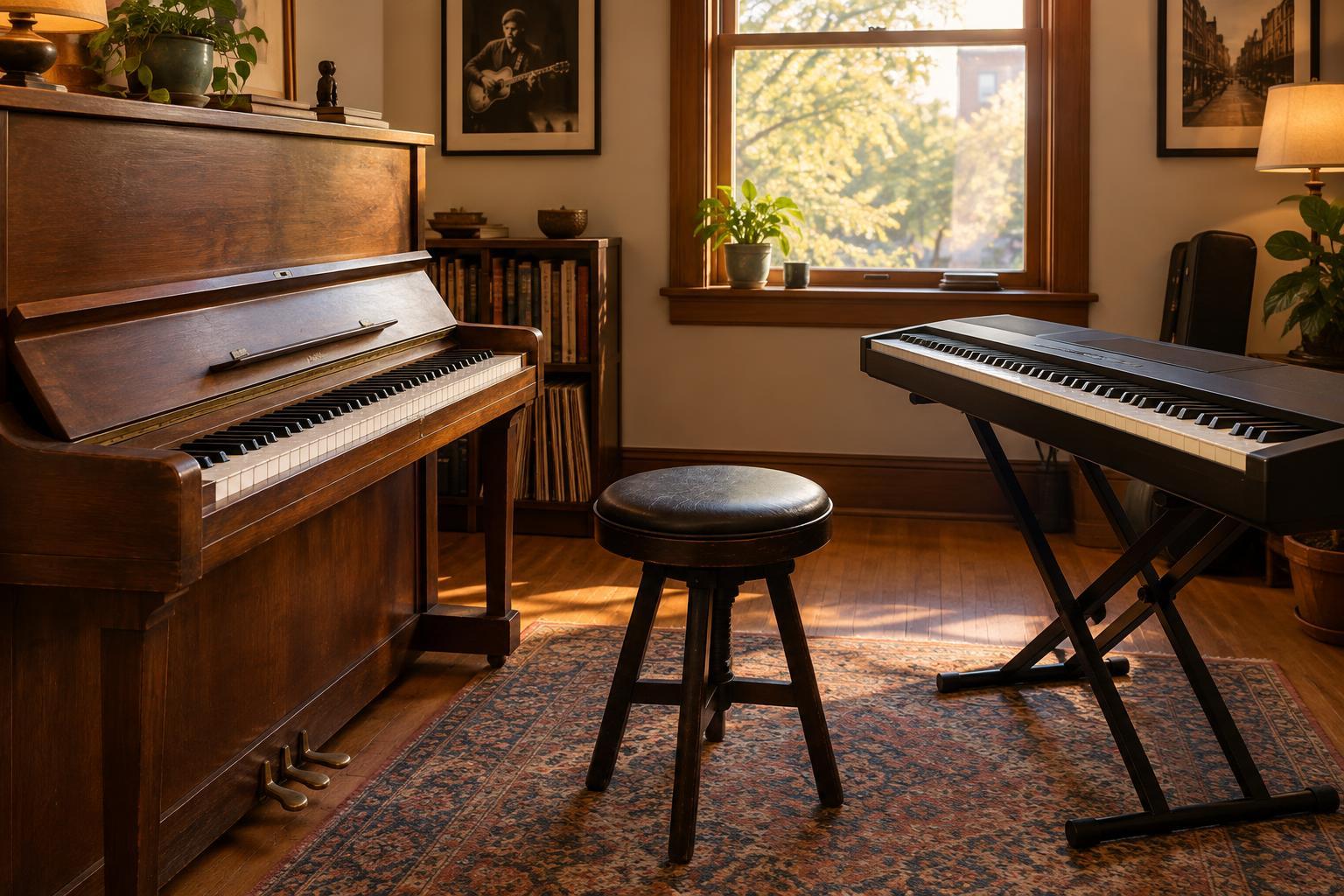
Your playing space matters too. A compact instrument may be easier to keep within reach, while a larger one may feel more comfortable if you play two-handed arrangements. Choose a setup you can leave ready, or assemble quickly. Regular practice on a piano you enjoy is more useful than an elaborate setup that is inconvenient to use.
Put key feel ahead of the feature list
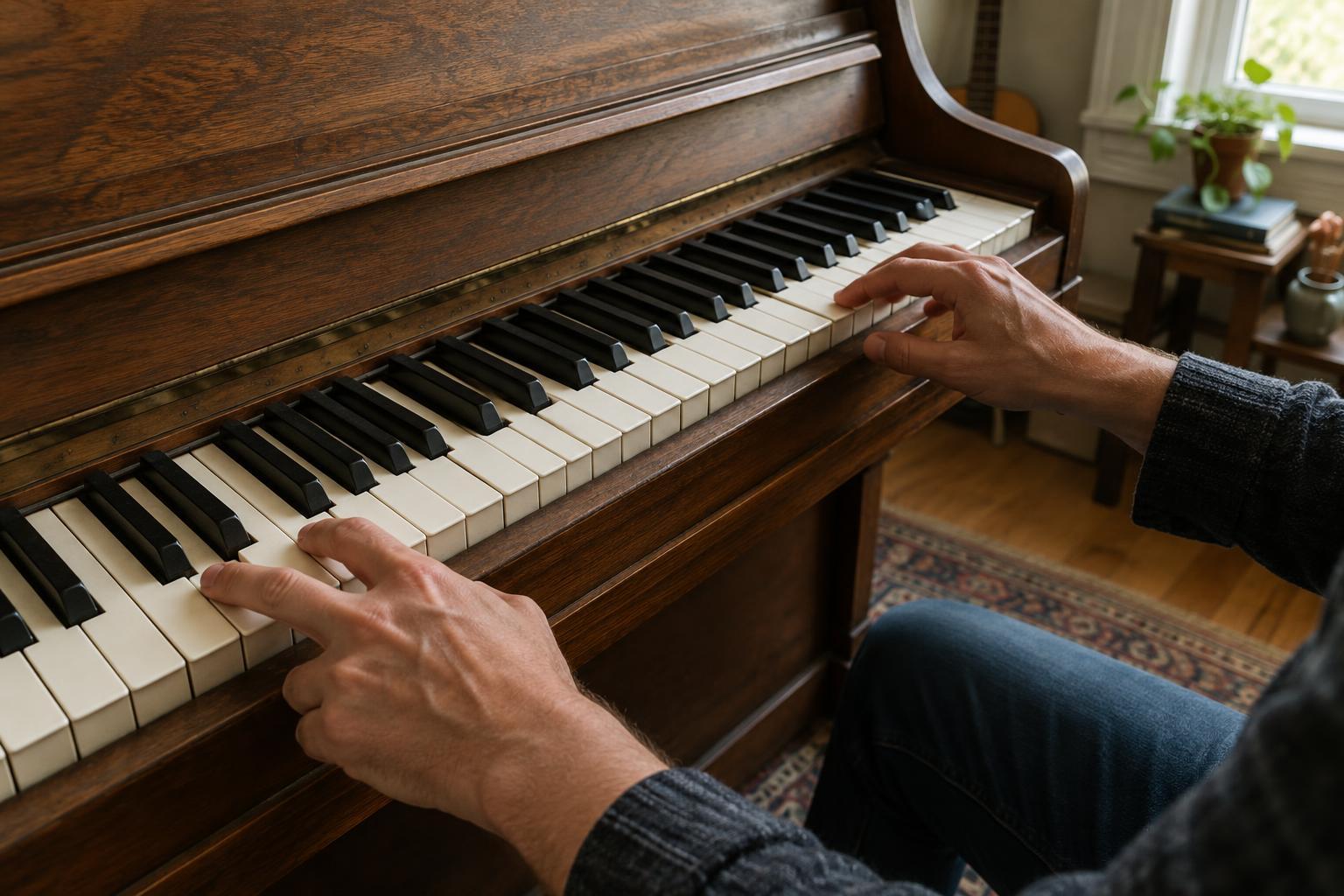
For many players, a weighted key action is the best starting point. Its resistance can help you practice the contrast between a quiet chord, a firm bass note and an accented fill. Key actions vary, though: one may feel heavy, another springy, and another slow to return. If possible, try the same short blues pattern on several instruments rather than judging them by a few isolated notes.
Play softly, then gradually increase the volume of your touch. Try repeated notes, a shuffle rhythm and a slide from a neighboring key into a chord tone. Listen for whether the instrument responds in ways you can control. Full-size, 88-key models offer the most familiar layout for piano practice, but a smaller keyboard can be a sensible compromise when space or portability is the priority. Whatever size you choose, make sure the keys give your hands enough room to play comfortably.
Listen for a sound that invites expression
The main piano sound deserves more attention than a long list of extra voices. For blues practice, test whether soft notes remain clear, loud notes stay pleasant and chords sound balanced across the keyboard. Play a walking bass line below a simple melody. If the bass overwhelms the melody or the upper notes sound thin to you, try another setting or instrument.
An electric piano sound can also be useful for blues and related styles, especially when you want a different character for chords and riffs. Treat it as a bonus rather than a substitute for a piano sound you like. Built-in speakers affect what you hear: a model that sounds convincing through headphones may sound different through its own speakers. If you expect to practice both ways, test both ways.
Check pedals, headphones and useful connections
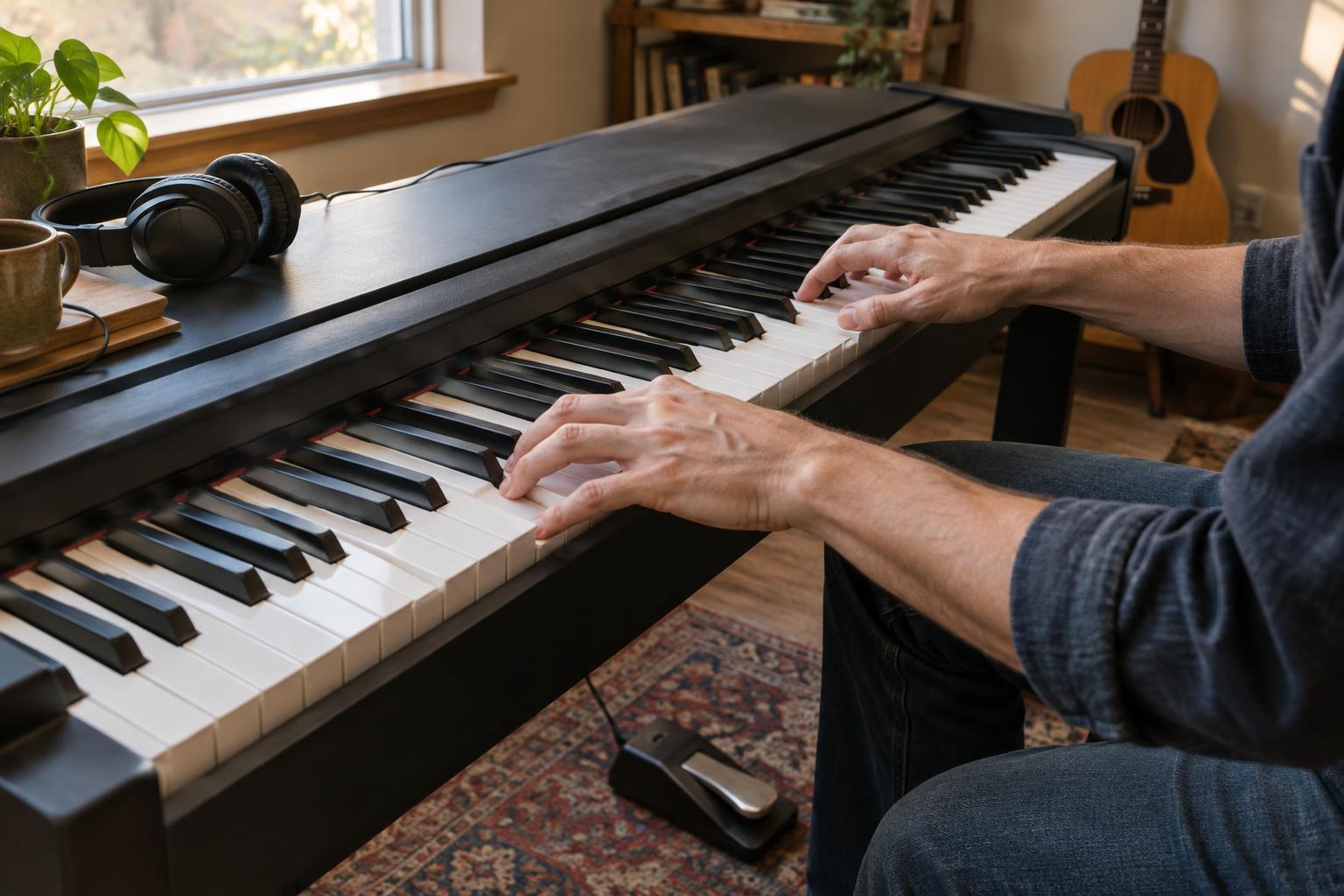
A sustain pedal lets notes ring together, making it important for phrasing and harmony. Check whether a pedal is included, whether it stays put on the floor and whether the piano supports more gradual pedaling if that matters to you. For blues, also practice without the pedal: clear left-hand rhythms and short, deliberate right-hand phrases can lose their shape under too much sustain.
A headphone output helps when you need to practice quietly, but comfort matters during longer sessions. If you want to record ideas or use learning software, check the piano’s available audio and MIDI connections rather than assuming they work the same way. A MIDI connection sends note and performance information; it does not necessarily send the piano’s sound. Likewise, a headphone output is not always the most convenient way to connect to external speakers. Decide what you actually need before paying for extra connectivity.
Make a short, repeatable audition
Set a budget that includes essentials such as a stable stand, a suitable bench, a pedal and headphones if you need them. Sit at the height you would use at home. Then play the same few minutes of music on each candidate: a slow twelve-bar progression, a left-hand shuffle, a quiet turnaround and a louder passage. This makes differences in touch and sound easier to notice than switching between random preset demonstrations.
If you cannot try a model in person, look closely at its specifications and the seller’s return terms, while remembering that descriptions cannot tell you exactly how an action will feel to your hands. The best choice is not necessarily the one with the most sounds. It is the digital piano that lets you hear your timing, shape your dynamics and look forward to playing the next chorus.