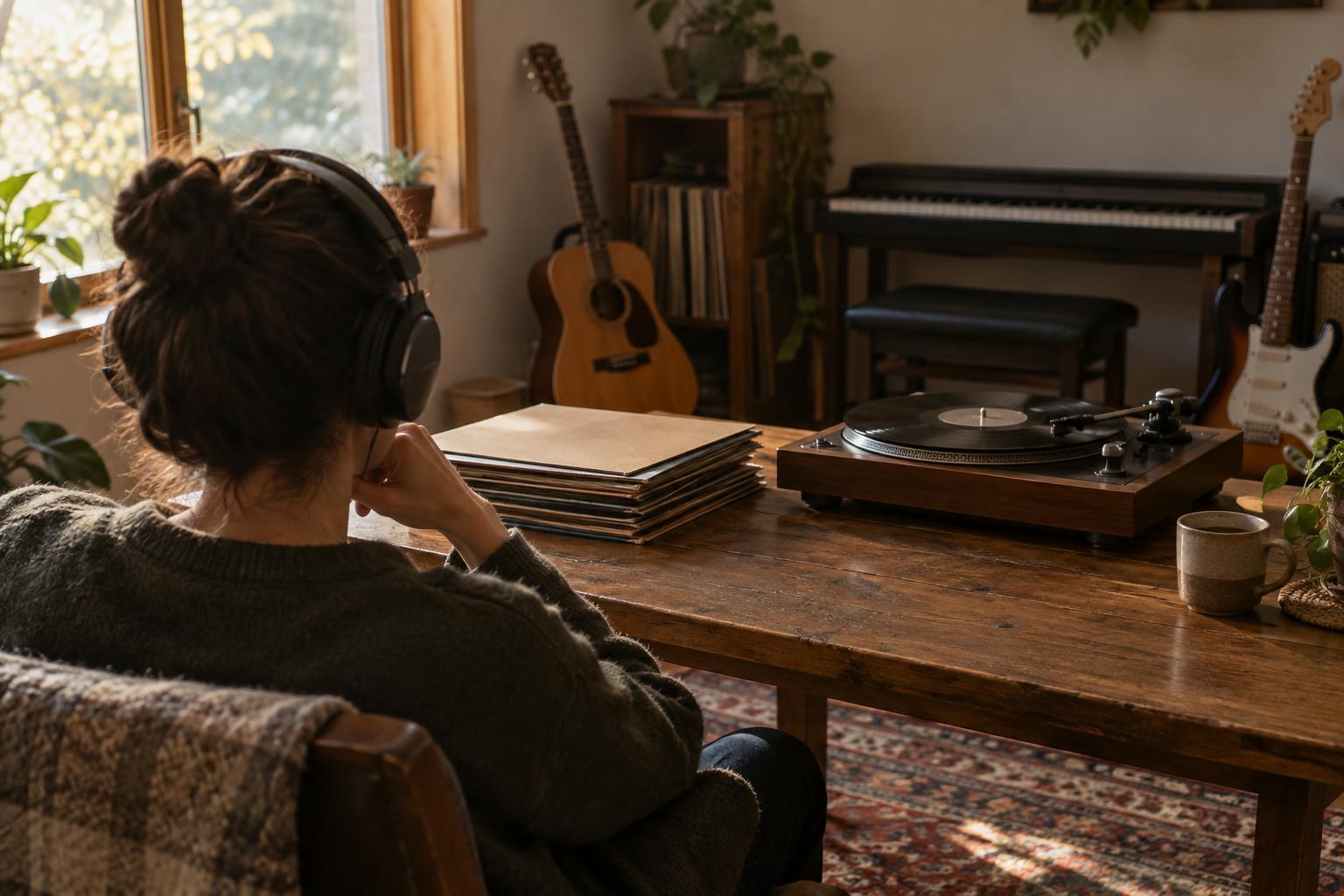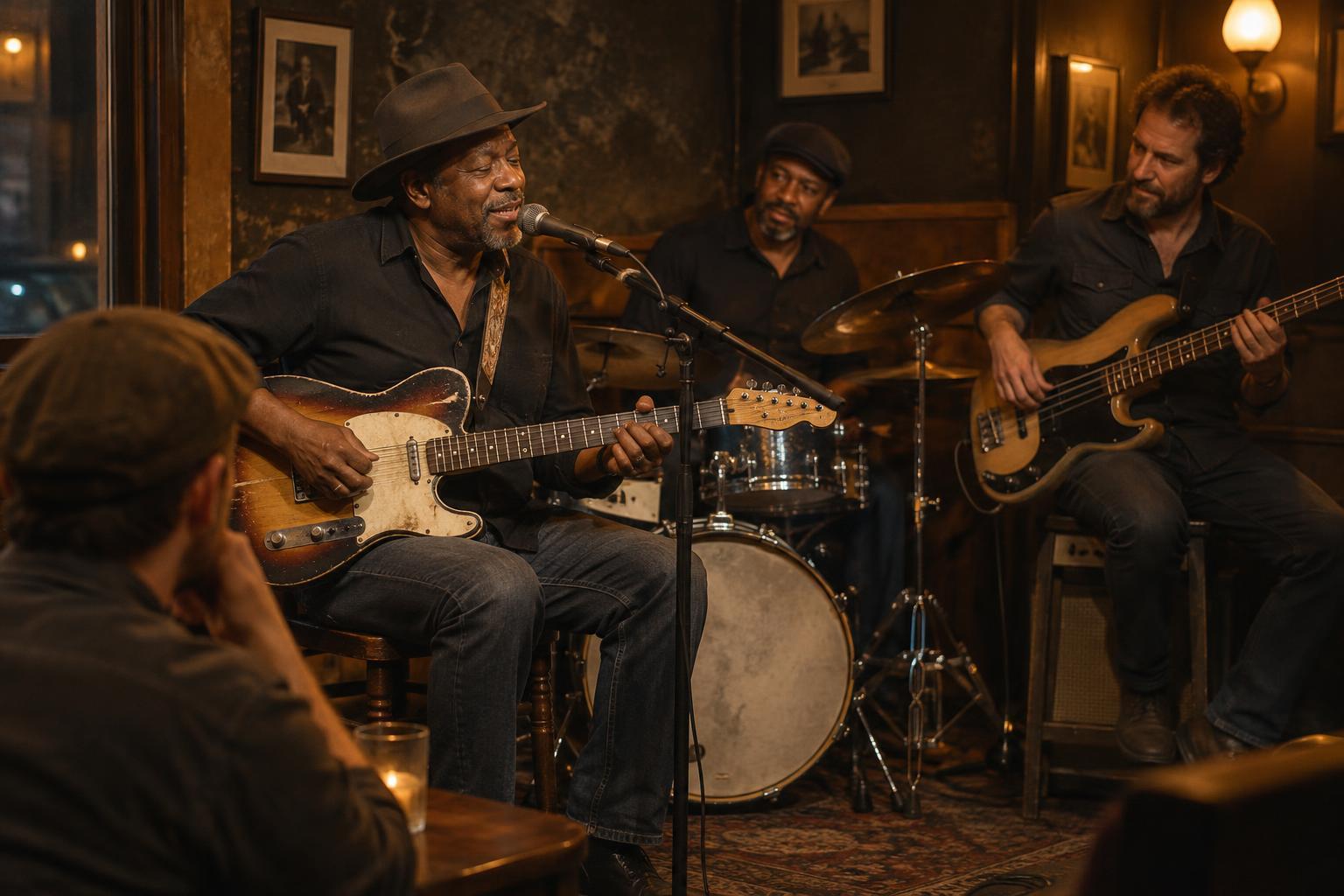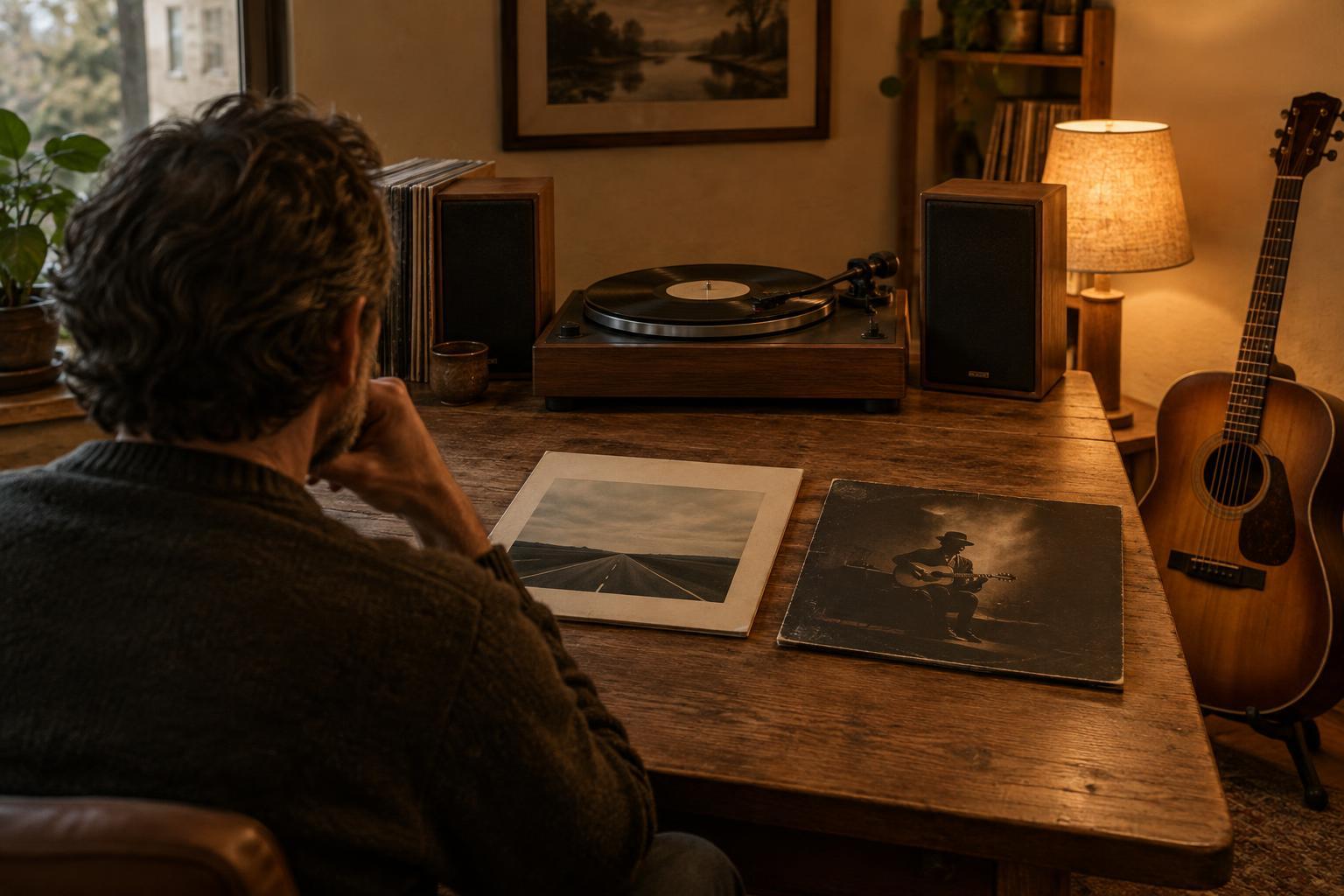
Two settings, two ways into a song
A studio recording often offers a clear introduction to a blues song. The musicians can settle on an arrangement, balance the instruments, and record another take if something does not work. A live recording captures a performance moving forward in real time, with room noise, audience reactions, and small surprises along the way. Neither setting is automatically more authentic. Each reveals different choices.
Try listening to both versions of a song without treating one as the definitive version. Start with what stays the same: the melody, the lyric’s central idea, or a familiar guitar figure. Then notice what changes. A singer may leave more space between lines onstage, while a studio version may bring a quiet instrumental detail into focus. Those differences can show how flexible a blues song can be.
What changes in the sound
In a studio recording, microphones and mixing can make individual parts easier to distinguish. You may hear the edge of a slide guitar note, the movement of a bass line, or the way a drummer shifts from a firm backbeat to a lighter touch. That clarity can help when you are learning how the musicians fit together. It does not mean the performance is less spontaneous; it means the recorded sound gives you a particular view of it.
Live sound usually includes more of the space around the musicians. Applause may carry into the first notes, and instruments may blend with voices and room reflections. Sometimes that creates a sense of being among the audience. Sometimes it makes a detail harder to pick out. Recording equipment, venue acoustics, and the mix all affect the result, so a muddy live track is not proof that the players sounded muddy in the room.
Listen for phrasing, timing, and risk
Blues performance depends on more than the notes a musician chooses. Listen to when a singer enters a line, how long a guitarist holds a bend, or whether the band waits an extra beat before coming back together. A studio take may preserve especially precise exchanges. Onstage, musicians may stretch a pause or repeat a phrase because the moment seems to call for it.
Improvisation can make those shifts especially noticeable, but not every live performance includes a long solo, and not every studio performance follows a rigid plan. Compare how each version builds tension. Does a player answer the singer immediately, or let the vocal line hang? Does the rhythm section keep the groove steady, or briefly change its weight behind a solo? These are useful questions even if you do not know the technical names for what you hear.
The audience is part of the live recording
A live blues recording lets you hear how a performance meets a room. Listeners may respond to a lyric, clap along, or go quiet during a softer passage. Performers may speak between songs, invite a response, or change the pace before the next number. Such moments offer a glimpse of the exchange between stage and audience that a studio track usually leaves outside the frame.
Audience noise can also shape your own attention. A cheer after a solo might encourage you to listen for the turn that prompted it. But the loudest reaction does not necessarily mark the most interesting musical moment. Listen past the applause, too: a restrained vocal inflection or a subtle change in the groove may matter just as much. If a recording includes an introduction or spoken aside, treat it as part of that performance rather than a guaranteed account of the song’s whole history.
A simple side-by-side listening exercise
Choose a song for which you can find both a studio and a live recording by the same artist. Play each version once without stopping. On a second listen, focus on one element at a time: the vocal, a lead instrument, the rhythm section, and the spaces between phrases. Notice the length of each performance, but do not assume a longer version is more adventurous. An extra chorus may deepen an idea; a shorter take may say everything it needs to.
Finally, ask which version helps you connect with the song today, and why. You might prefer the studio track’s detail when learning the arrangement and the live track’s momentum when you want to feel the give-and-take of a band. Your preference may change with the recording, your surroundings, or your mood. Listening across both settings is less about picking a winner than hearing how blues musicians make familiar material feel alive in different ways.