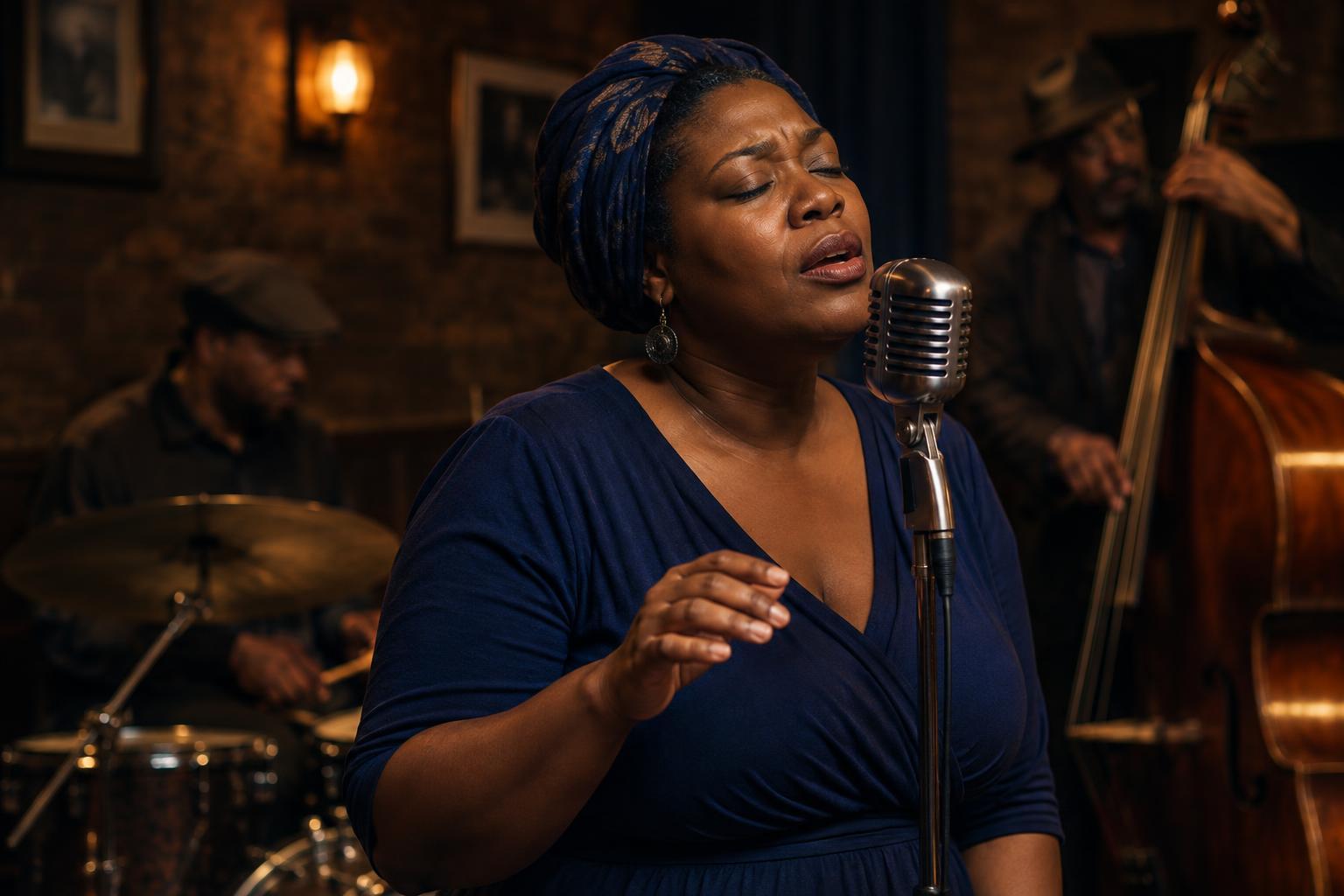
Start with the shape of a phrase
When listening to a blues vocal, begin with the shape of one sung line rather than trying to identify a singer’s style all at once. Notice where the voice enters, which words are stretched, and whether the line ends firmly or seems to trail into the next instrumental sound. A singer can give a short phrase room to breathe by leaving a gap after it. Another may carry the final syllable across that space. Both choices affect how the lyric lands.
Try following a line without concentrating on its meaning at first. Hear its movement: a quick opening, perhaps, followed by a long note or a clipped last word. Then listen again with the words in mind. Did the singer linger on a word that changes the emphasis of the sentence? Repeated lyrics are especially useful for this exercise. Even when the words return unchanged, their phrasing may make the second statement sound more insistent, weary or playful.
Hear the voice in relation to the beat
Timing is easier to hear when you first find a steady reference in the accompaniment. Tap lightly with the pulse, then notice where the vocal syllables fall. A singer may enter squarely with the beat, lean into a word just ahead of it, or let a phrase arrive a little later than you expect. These are listening descriptions, not rules for how blues must be sung; the feel depends on the singer, the band and the song.
Pay attention to what happens while the voice holds a note. The accompaniment may keep moving beneath it, making the note feel suspended. At other moments, the singer may fit several syllables into a small space and then pause. If the timing seems loose, listen to the whole phrase before deciding it is unsteady. An entrance that feels delayed can resolve precisely when the band reaches the next strong beat.
Notice expression without reducing it to volume
Expression is more than singing loudly or softly. A change in tone, a slight rasp, a clear sustained vowel, or a nearly spoken ending can alter a line’s character. Listen for contrasts within the same performance: does the singer deliver the first line plainly and return to it with more edge? Does a softer phrase invite you closer after a forceful one? The effect often comes from the change, not from any single vocal sound.
It is tempting to treat every rough tone as pain or every high note as triumph, but those readings can flatten an individual performance. Start by naming what you can hear: the vowel opens, the volume falls, the consonant arrives sharply. Then consider how those choices work with the lyric and accompaniment. Your interpretation may change on another listen, and that is part of the value of paying close attention.
Listen to the spaces around the singer
Blues vocals often make particular sense in conversation with instruments. After a sung line, a guitar, piano or harmonica might answer with a brief figure. Listen to whether the instrumental response echoes the voice’s contour, contrasts with its rhythm, or simply fills the space the singer has left. The exchange need not be exact to feel connected.
Also notice when the accompaniment stays restrained. A held chord or steady pattern can make a small vocal hesitation more audible. Conversely, a busy passage may prompt the singer to use shorter, more sharply defined phrases. Hearing these relationships keeps the vocal from becoming an isolated display. Phrasing and timing are choices made within a shared performance, even when one voice draws most of your attention.
Build a simple repeat-listening habit
Choose one recording and listen three times with a different question each time. First, follow the words and mark where the singer pauses. Second, attend to the beat: which entrances or endings surprise you? Third, listen for changes in tone and for any instrumental answers. You do not need technical vocabulary or perfect recall. A few plain observations, such as “the last word hangs over the guitar fill,” are enough to sharpen your ear.
Finally, compare two performances of the same song if you have them available. Rather than ranking them, ask how each singer handles one shared line. One may leave more silence; another may compress the words or stress a different syllable. Returning to that small difference can reveal more than a broad label such as “emotional” or “laid-back.” The aim is not to find a single correct interpretation, but to hear the decisions that make each performance distinct.