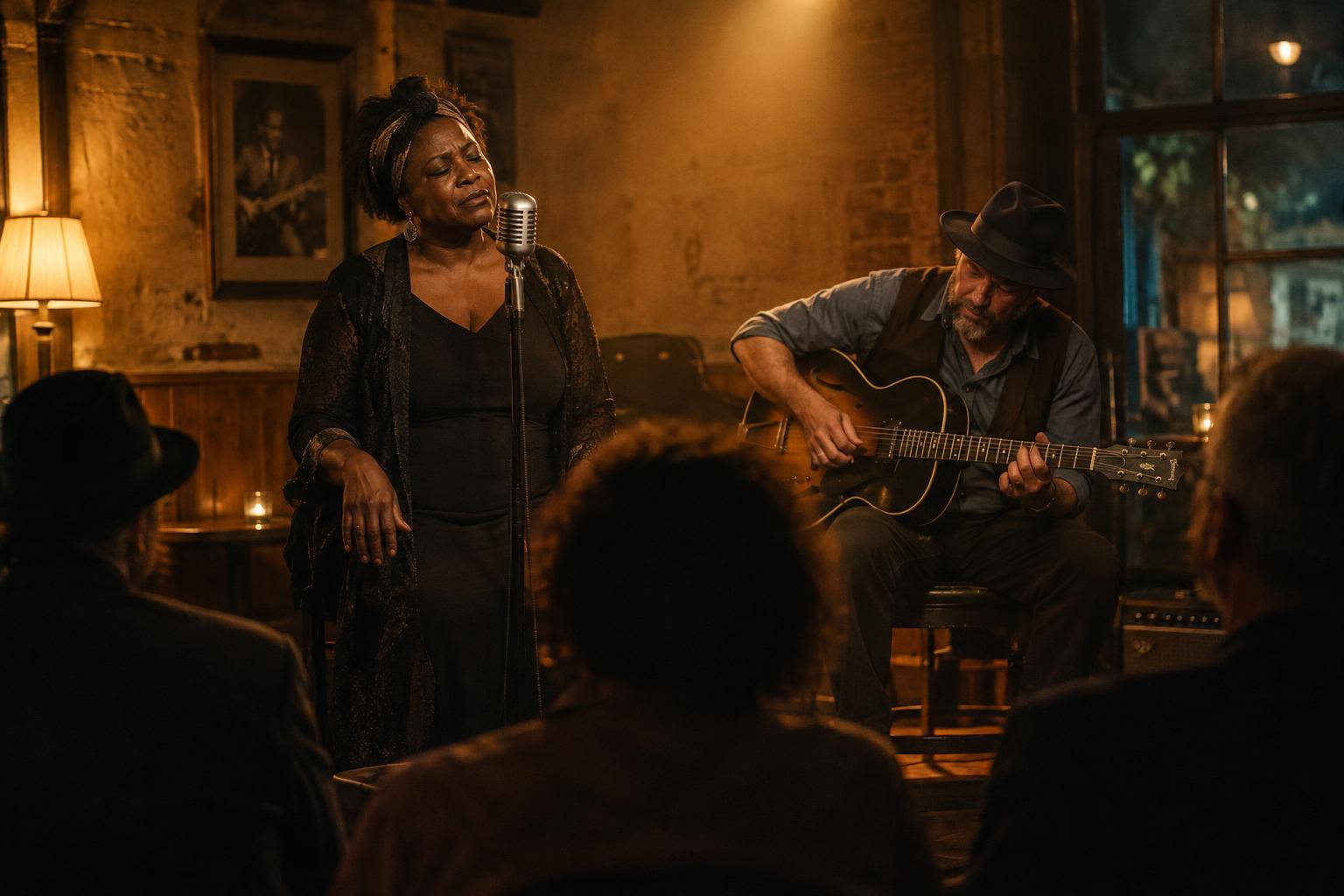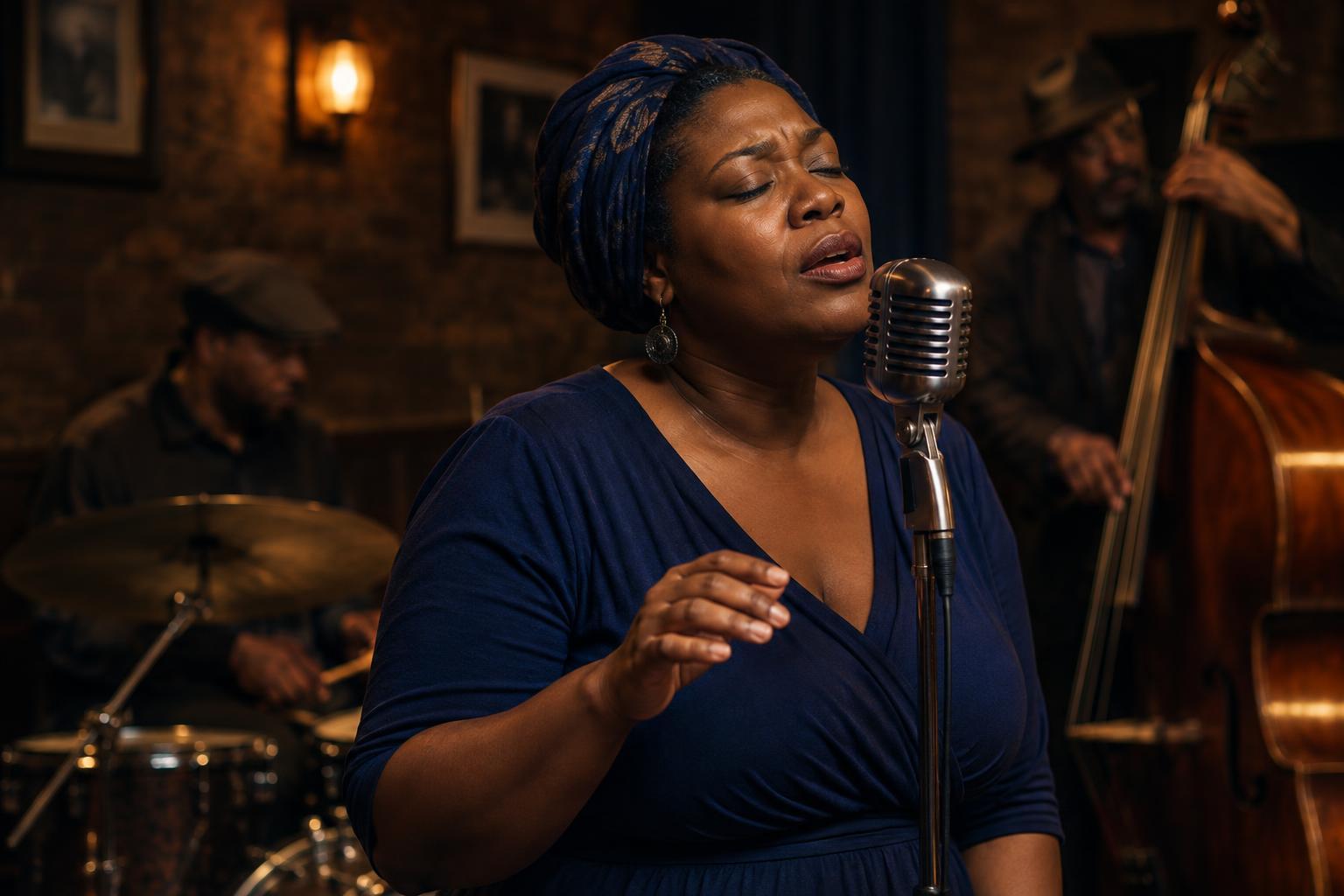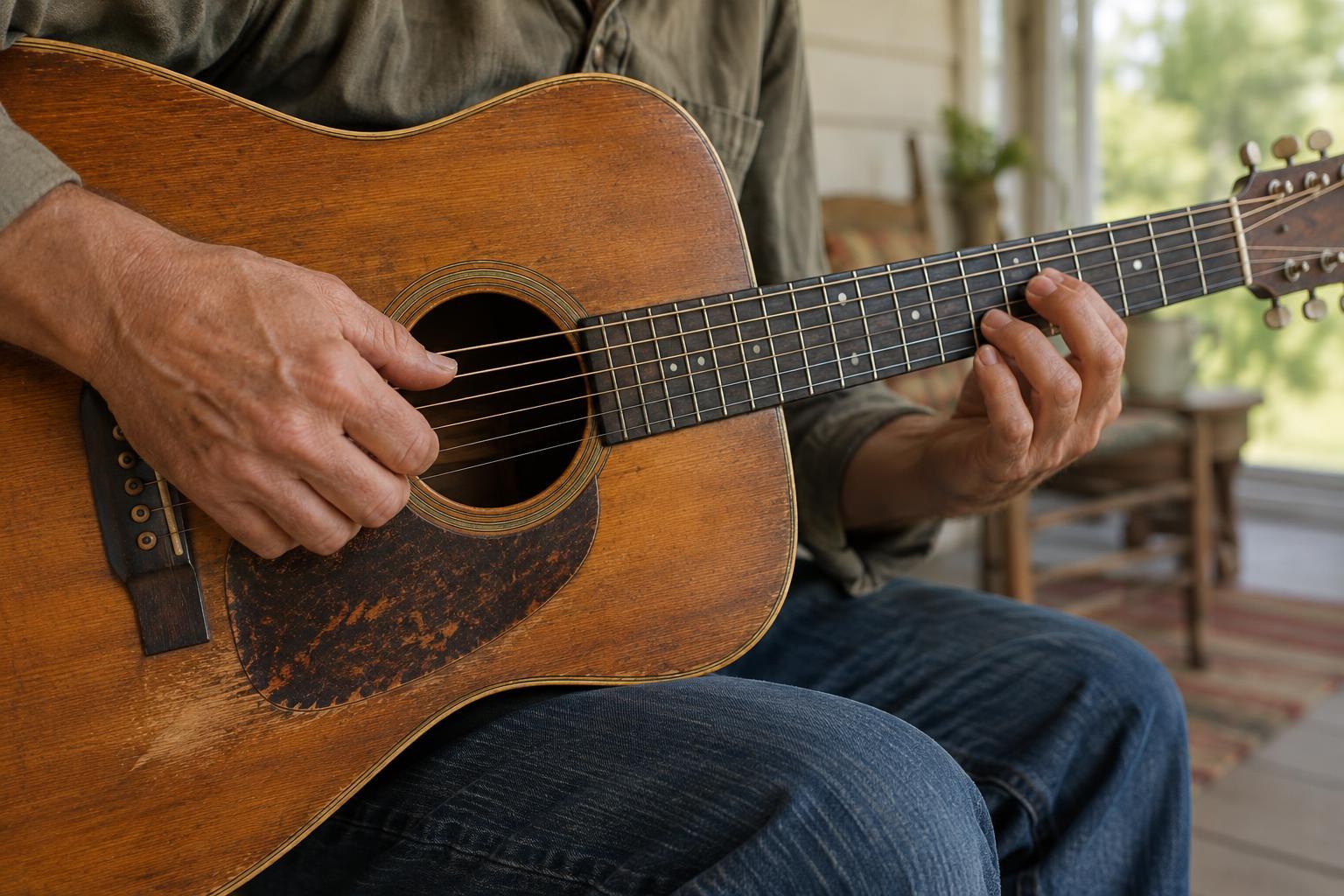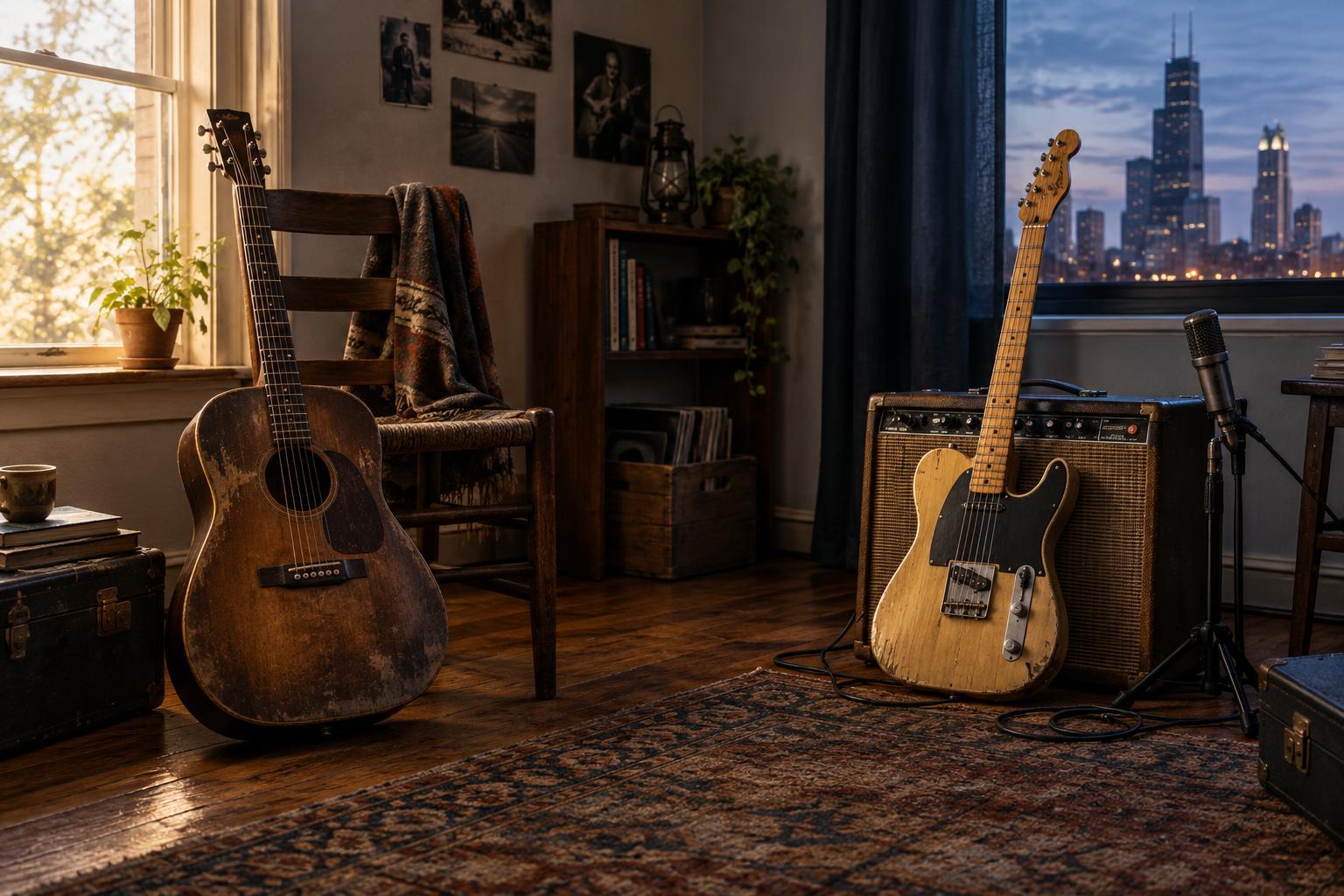
Start with the labels, then listen past them
“Delta blues” generally refers to a tradition associated with the Mississippi Delta, while “Chicago blues” names music shaped in an urban setting where many Southern musicians lived and worked. The labels are useful starting points, not two sealed categories. Musicians traveled, changed instruments and borrowed ideas from one another. A recording can carry features of both traditions, and neither style has a single required sound.
A common shortcut is to call Delta blues acoustic and Chicago blues electric. That contrast can help you begin listening, but it misses much of the music. Instead, ask what each performer does with the available space: Is one guitar supplying rhythm, bass movement and melodic replies? Or are several players dividing those jobs among themselves? Those questions reveal more than the presence or absence of an amplifier.
Hear how the guitar fills the space
In a solo or small-group Delta performance, the guitar may seem to play several roles at once. A low, repeating figure can anchor the pulse while higher notes answer the singer. A slide may stretch between pitches, making a phrase sound almost vocal. Listen for the contrast between a steady pattern and the little changes around it: a clipped chord, a ringing string or a pause that gives the next sung line extra weight.
In many Chicago blues arrangements, an amplified guitar has room to cut through a band. It might play a short riff behind a verse, leave space for the singer and then step forward for a solo. Rather than listening only for volume or distortion, notice its timing. Does a phrase begin just before the beat? Does a bent note hang over a chord change? Those choices can make a familiar blues pattern feel urgent or relaxed.
Try following the lowest notes for one verse, then the highest notes for the next. In a solo performance, you may hear both parts coming from one player. In an ensemble, you may hear the bass, guitar and other instruments share the work.
Follow the pulse, not just the tempo
Delta blues can feel rhythmically flexible. A singer may hold a word longer than expected or move into the next line early, while the guitar keeps a recognizable pulse underneath. Not every performance follows an identical twelve-bar cycle. If a verse seems to gain or lose a beat, keep listening before deciding that anyone has made a mistake; the shape of the vocal phrase may be guiding the accompaniment.
Chicago blues often puts a rhythm section in clearer focus. Bass and drums can establish a walking, shuffling or firmly accented groove that other players work around. This does not mean the music is mechanically regular. A drummer can lighten a beat, a bassist can push a transition, and a singer can still lean ahead of or behind the pulse. Tap your foot, then notice which sounds make you adjust it.
Listen to the conversation around the voice
The voice is central to both traditions. Pay attention to how a singer shapes a line rather than looking for one supposedly definitive blues vocal style. A quiet phrase, a rough edge or a note held across a pause can all change the meaning of the words. In a sparse setting, silence after a vocal line may be as expressive as the guitar’s reply.
A Chicago blues band offers more potential voices in that conversation. Harmonica, piano, guitar and sometimes horns may answer the singer or repeat a compact riff between lines. Listen for restraint as well as activity: players who leave room for one another make a dense arrangement easier to follow. On another pass, choose just one instrument and track when it enters, drops out or echoes a vocal idea.
Make a comparison without turning it into a contest
For a simple listening exercise, choose one performance presented as Delta blues and one presented as Chicago blues. Play each twice. On the first pass, notice the overall feel. On the second, write down what carries the pulse, what answers the singer and how much space separates the phrases. You do not need specialist vocabulary; descriptions such as “the guitar rings after the line” or “the bass keeps moving” are useful observations.
Finally, look for similarities. Both traditions can rely on repetition with subtle variation, call-and-response gestures and a close relationship between voice and instrument. The most rewarding distinction is not that one style is more authentic or more sophisticated. It is hearing how musicians make expressive choices within different settings—and recognizing that the blues remains adaptable wherever it is played.