Start with habits that keep the instrument clean
A harmonica sits close to your mouth, so simple habits do much of the work. Play with clean hands, and rinse your mouth with water if you have just eaten or had a sweet drink. This helps keep crumbs and sticky residue out of the holes. You do not need to wash the instrument after every tune; the goal is to prevent buildup without exposing its internal parts to unnecessary moisture.
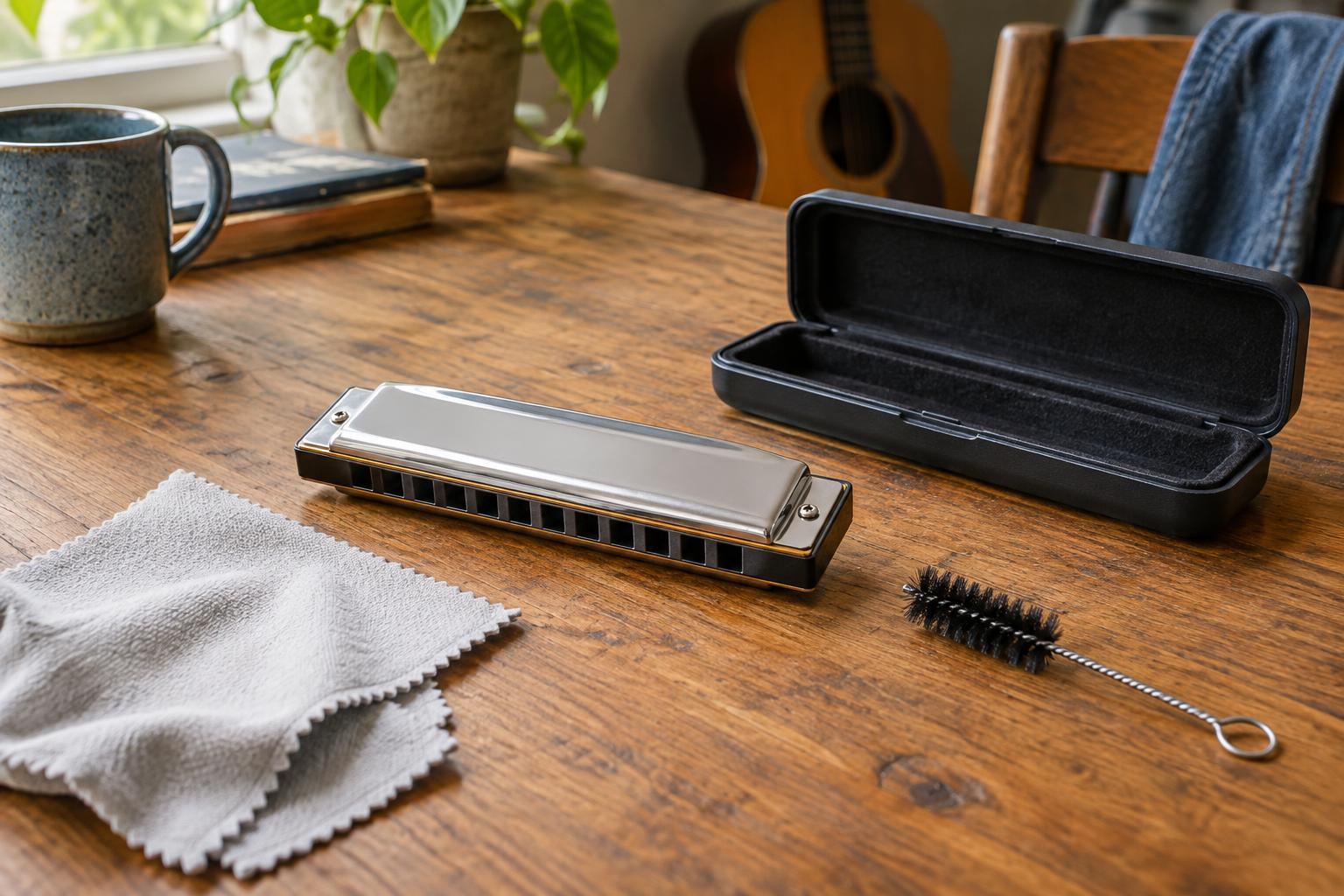
When you finish playing, hold the harmonica with its holes facing down and tap it gently against your palm to dislodge loose moisture. Wipe the mouthpiece and covers with a clean, soft cloth, then let the instrument air out before putting it in its case. Avoid forceful tapping, which can damage covers or internal parts. If you lend a harmonica to someone, clean the mouthpiece before playing it again; having your own instrument is the simpler approach.
Clean according to the harmonica you own
Not every harmonica tolerates water in the same way. Wood combs can swell, and valves on some chromatic harmonicas can stick when wet. Metal components may also retain moisture in places you cannot easily dry. For routine care, a lightly damp cloth on the exterior is safer than soaking an assembled instrument. Keep cleaning liquids out of the holes unless the maker’s instructions specifically allow rinsing that model.
If buildup remains around the mouthpiece, use a soft brush carefully on accessible surfaces, with the holes facing down so loosened debris can fall away. More thorough cleaning may require removing the covers or reed plates. Before opening the instrument, check its construction and any care instructions: small screws are easy to lose, reeds are delicate, and some parts need to go back in a particular orientation. If you are unsure, a harmonica repairer can clean it without risking an improvised fix.
Avoid sharp tools, abrasive scrubbing and household cleaners inside the instrument. A reed is a thin spring that must move freely through a narrow slot; bending it or leaving residue behind can create a new problem while you are trying to solve an old one.
Store it dry, protected and easy to find
Put the harmonica away only after surface moisture has had a chance to evaporate. Its case protects the covers from dents and keeps lint, grit and other small objects out of the holes. A loose harmonica in a pocket or bag may collect debris, while heavy items can press on the covers. If a case has become damp or dirty, clean and dry the case too.
A stable indoor spot is preferable to a hot car, a wet bag or a windowsill with strong sun. This matters especially for instruments with wood parts, which may respond to changes in humidity. For players who carry several keys to a session, labeling cases can also reduce unnecessary handling: you can pick the right instrument without opening every box.
Troubleshoot a bad note before blaming the reed
A note that squeals, buzzes, sounds weak or refuses to speak does not automatically mean its reed is broken. First, try the note softly and check your embouchure and breath direction. Some notes, particularly on diatonic harmonicas, respond differently depending on playing technique. Compare the suspect note with nearby notes and, if possible, ask an experienced player to try the instrument.
If the problem persists, look for visible debris at the hole and clean only what you can reach safely. Moisture or a small obstruction can temporarily interfere with a reed or valve. A note that remains noticeably flat, rattles or stops sounding after gentle cleaning may need closer inspection. Playing harder to force it to work is unlikely to help and could worsen damage.
Know when replacement makes sense
Reeds can fatigue or break with use. A cracked reed cannot be restored by cleaning or retuning; it needs replacement. Replacing one reed requires suitable parts, tools and skill to fit it correctly. Depending on the harmonica, a technician may instead replace the whole reed plate, which holds multiple reeds. On a lower-cost instrument, replacing the harmonica may be more practical than paying for a complex repair.
If you can identify a persistently faulty note but cannot see the cause, ask a repairer or the instrument’s maker about available parts and service before taking it apart. For a harmonica you value, that pause can prevent avoidable damage. Regular gentle care will not make reeds last forever, but it can help you distinguish an ordinary cleaning issue from a part that has reached the end of its playing life.