Start with the sound you need
There is no single blues amplifier sound. A player accompanying a singer may want a clear, rounded tone that leaves space for the voice. A guitarist taking a solo may prefer an edge of breakup: a little grit when the strings are struck hard, with a cleaner response to a lighter touch. Both can work in blues, and neither requires a particular type of amplifier.
An amp is only one part of that response. The guitar, pickups, speaker, pedals and playing technique all affect what listeners hear. So does the room. A tone that feels full when played alone can become muddy beside a bass guitar, while a bright setting that cuts through a band may feel harsh at home. When comparing amps, use your own guitar if possible and listen at a volume close to the one you expect to use.
Tube amps: responsive, but not always convenient
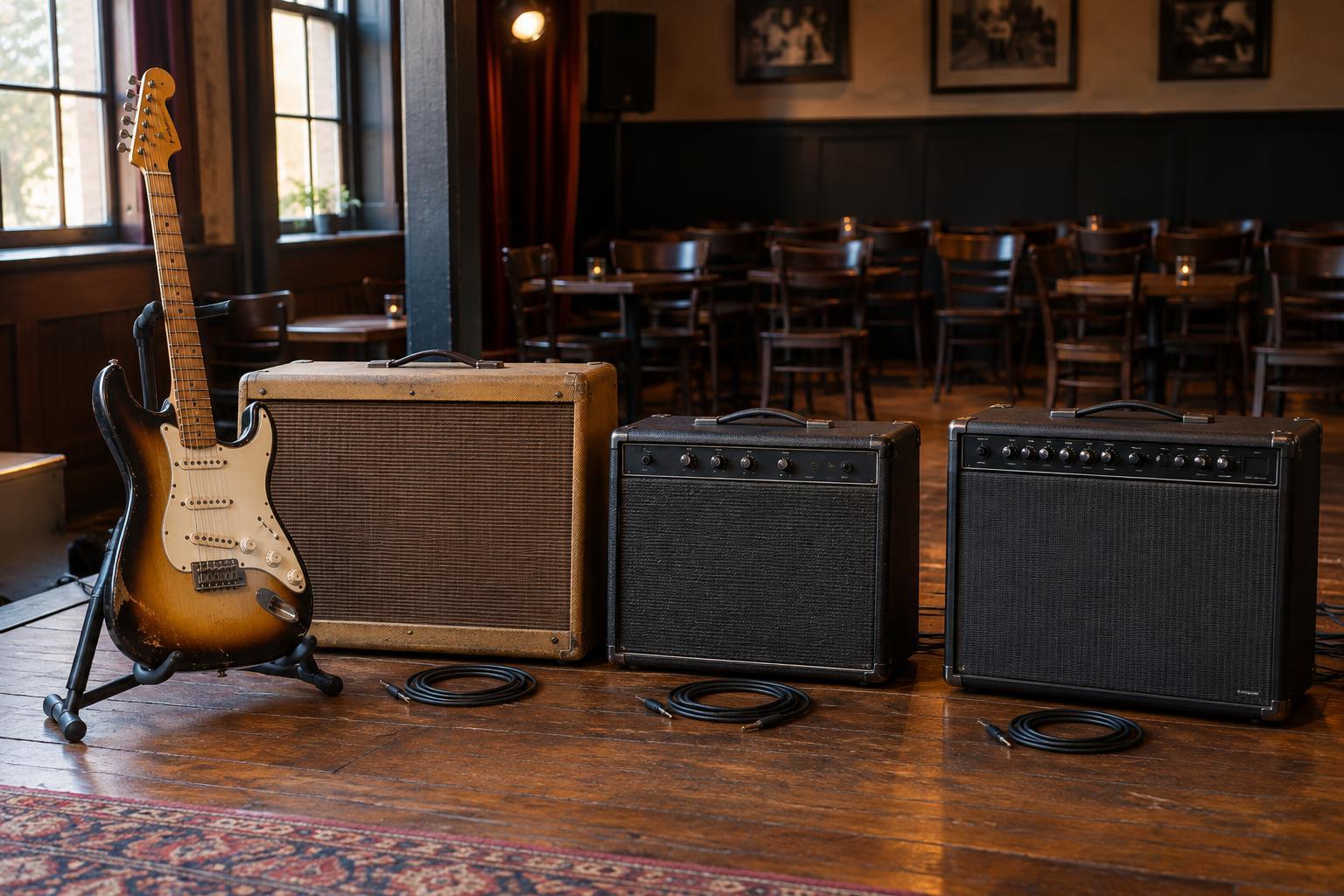
Tube amplifiers are often associated with blues because many players enjoy the way they move from clean to overdriven as the input gets stronger. Turning up the guitar’s volume control or picking harder can change the texture without changing channels. Tube amps vary greatly, though: some stay clean at useful playing volumes, while others break up sooner. The tube label alone cannot tell you which response you will like.
Consider where you will play before choosing one for its driven sound. An amp that reaches your favorite breakup only when turned up may be too loud for a small room or a quiet performance. A master-volume control or an overdrive pedal can offer other ways to add grit, but the result may feel different from turning up the whole amp. Tube amps also tend to need more maintenance than many alternatives. Follow the manufacturer’s guidance, and leave internal repairs to a qualified technician; an unplugged amp can still contain hazardous voltages.
Solid-state amps: dependable choices with their own character
Solid-state amps use electronic components rather than tubes for amplification. Many are straightforward to operate and suit players who want consistent settings from one session to the next. Their clean sounds can make a useful foundation for pedals, and some offer convincing built-in drive sounds. As with tube amps, designs differ too much to judge the entire category by one model.
A solid-state amp can be a practical choice if you carry your gear often, play at modest volume or prefer not to plan for tube replacement. Listen beyond the first impression of its preset or default settings. Adjust the gain and tone controls, then try both gentle and firm picking. If you use an overdrive pedal, test it through the amp’s clean setting. What matters is whether the combination gives you a sound you can control, not whether it imitates another technology.
Modeling amps: flexibility for varied rooms and styles
Modeling amps use digital processing to create a range of amplifier and effect sounds. That range can be helpful for a player moving between a quiet practice space, rehearsals and live sets. One setup might provide a clean rhythm sound, a slightly driven lead sound and a reverb setting without extra pedals. Some models also offer headphone or direct-output options, although their connections and features vary.
Flexibility has a trade-off: a large menu can make it harder to settle on a sound. Start with one simple amp setting, turn off effects you do not need and learn how its gain, volume and tone controls interact. Check whether changing presets causes an unwanted jump in loudness. If you plan to play with others, test your main sounds at rehearsal volume; a preset built through headphones may need adjustment when heard through a speaker in a room.
Choose for the gig, not the label
Begin with practical limits: the volume you can use, the weight you are willing to carry and the space available for the amp. Speaker size and cabinet design influence how an amp feels and fills a room, but bigger is not automatically better. Wattage is not a simple loudness score, either. It is more useful to ask whether the amp gives you enough clean headroom or controllable breakup at your actual playing volume.
When trying an amp, set the controls to a plain clean sound before exploring its extras. Play a few familiar phrases softly and loudly, use the guitar’s volume control, and listen for notes that remain distinct in chords. Then try the amount of grit you would use in a song. If possible, ask a bandmate to listen from across the room: the sound beside the amp is not always the sound the audience hears.
Finally, consider the people sharing the space. A good live blues tone supports the song without forcing a singer or another musician to compete with the guitar. The best choice may be a tube amp, a solid-state workhorse or a modeling setup. It is the one you can carry, control and enjoy at the volumes where you actually play.