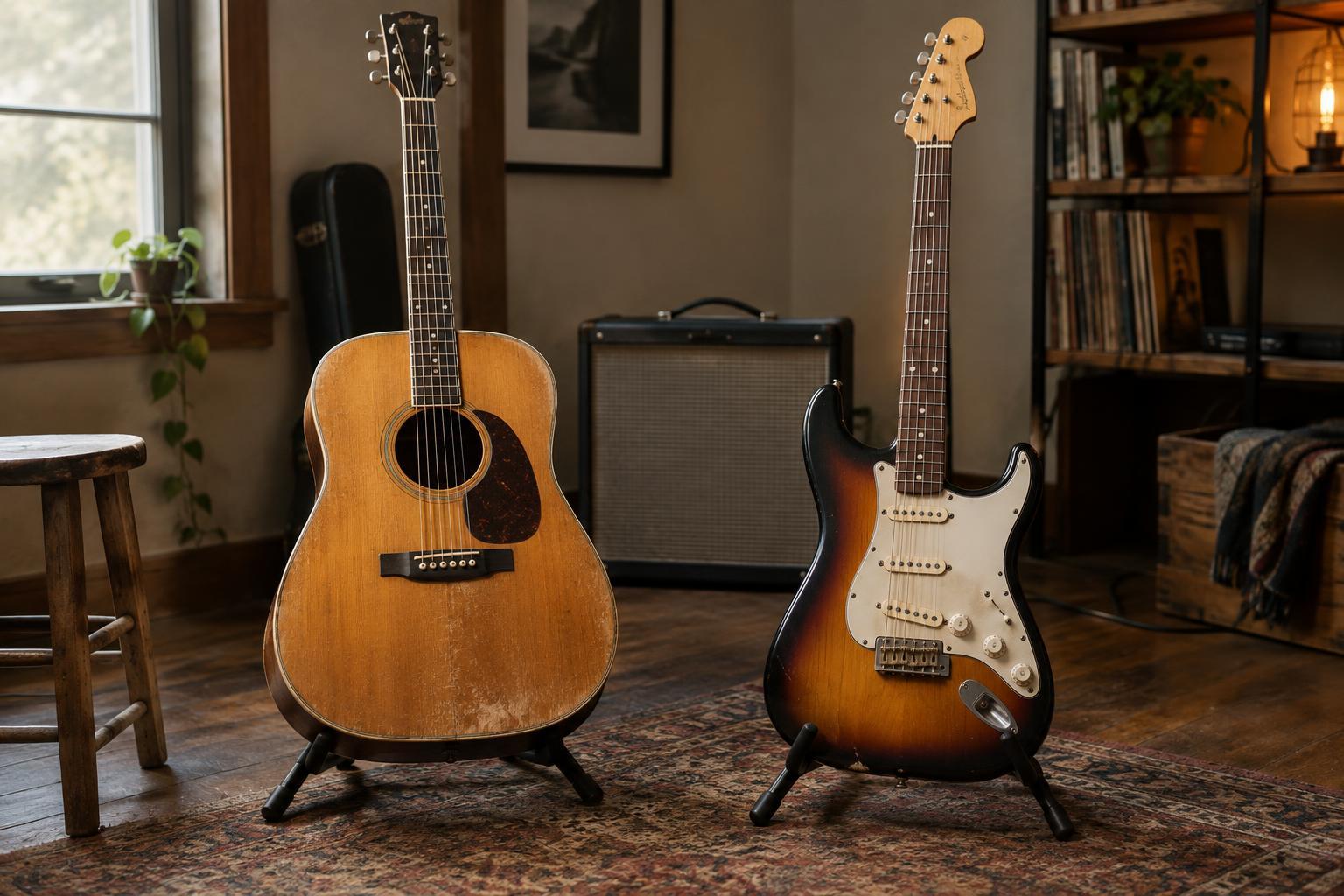
Start with the sound, not the label
“Acoustic blues” and “electric blues” are useful labels, but they do not describe two sealed-off styles. A song can keep the same melody, lyrics and basic rhythm when a player changes guitars, yet feel strikingly different. Conversely, an electric guitar played quietly and cleanly can sound more restrained than a forcefully strummed acoustic one. The most useful question is not which version is more authentic, but what the instrument and performance bring forward.
An acoustic guitar makes sound through its vibrating strings and resonant body. An electric guitar uses pickups to turn string vibration into a signal that an amplifier and speaker reproduce. Either instrument can also be recorded or amplified with microphones, and performers may combine those methods. Those different paths from string to ear affect attack, sustain, texture and how clearly each note sits alongside a voice or band.
Listen for attack, sustain and space
On an acoustic guitar, the first strike of a note often stands out: the pick or finger meets the string, the body responds, and the sound begins to fade. That quick shape can make a thumbed bass note, a clipped chord or a ringing open string especially noticeable. Body resonance may blend neighboring notes together, giving a solo performance a sense of rhythm and harmony at once.
An electric guitar can hold a note longer and reshape it as it fades. A player might bend a string, add vibrato or let an amplifier give the note a rougher edge. A clean electric tone can sound rounded and distinct; a heavily driven tone can add grit and compression. Neither effect is guaranteed by the instrument alone. Pickup choice, amplifier settings, playing touch and recording all matter. When listening, follow one note from its beginning to its end rather than judging only its overall loudness.
Notice what the player’s hands can emphasize
Acoustic blues playing often asks one instrument to cover several jobs. A steady bass pattern can mark the pulse while higher strings answer the singer or outline a chord. Fingerpicking, strumming, slides and muted strokes create contrast without needing another player. Listen for the small gaps: a singer may leave space for a short guitar reply, or a guitarist may quiet the strings to make the next beat land harder.
Electric guitar does not replace those ideas; it gives players other ways to shape them. Amplification can bring lightly touched notes forward, while a sustained bend or a brief phrase can remain audible over drums and bass. In an ensemble, the guitarist may play fewer notes because other instruments carry the beat and harmony. A spare electric line can therefore feel spacious rather than simple. Try listening for the guitar’s role: is it keeping time, supporting the voice or stepping out as a second voice?
Hear the whole arrangement
The contrast people hear is often partly a contrast between settings. One singer with an acoustic guitar exposes every shift in tempo and every pause between lines. Add bass, drums, keyboard or another guitar, and the same song may gain a stronger backbeat, a fuller low end and more opportunities for call and response. Those are arrangement choices, not fixed rules about acoustic or electric blues.
Room and recording choices matter, too. A close microphone may highlight finger noise and breath; a more distant sound may reveal the room around the performance. An electric guitar’s speaker can become part of its character, while an amplified acoustic may retain much of its familiar body sound or take on a new edge. If one recording seems warmer, older or more forceful than another, avoid crediting the guitar alone. The musicians, mix and listening volume may all be contributing.
A simple way to compare what you hear
Choose two blues performances with different guitar sounds and listen to each twice. On the first pass, follow the pulse and the voice. Does the guitar fill the spaces between sung lines, or play continuously underneath? On the second, focus on individual guitar notes: how sharply do they begin, how long do they last, and what happens as they fade? Listen for string noise, body resonance, bends, vibrato and the grain of an amplifier.
Then consider the performance as a whole. Count the instruments you can distinguish, and notice which one carries the low notes and which marks the beat. There is no need to rank acoustic against electric. Both can be intimate, forceful, delicate or raw. Hearing how each sound supports a song gives you a more useful vocabulary than either label alone.