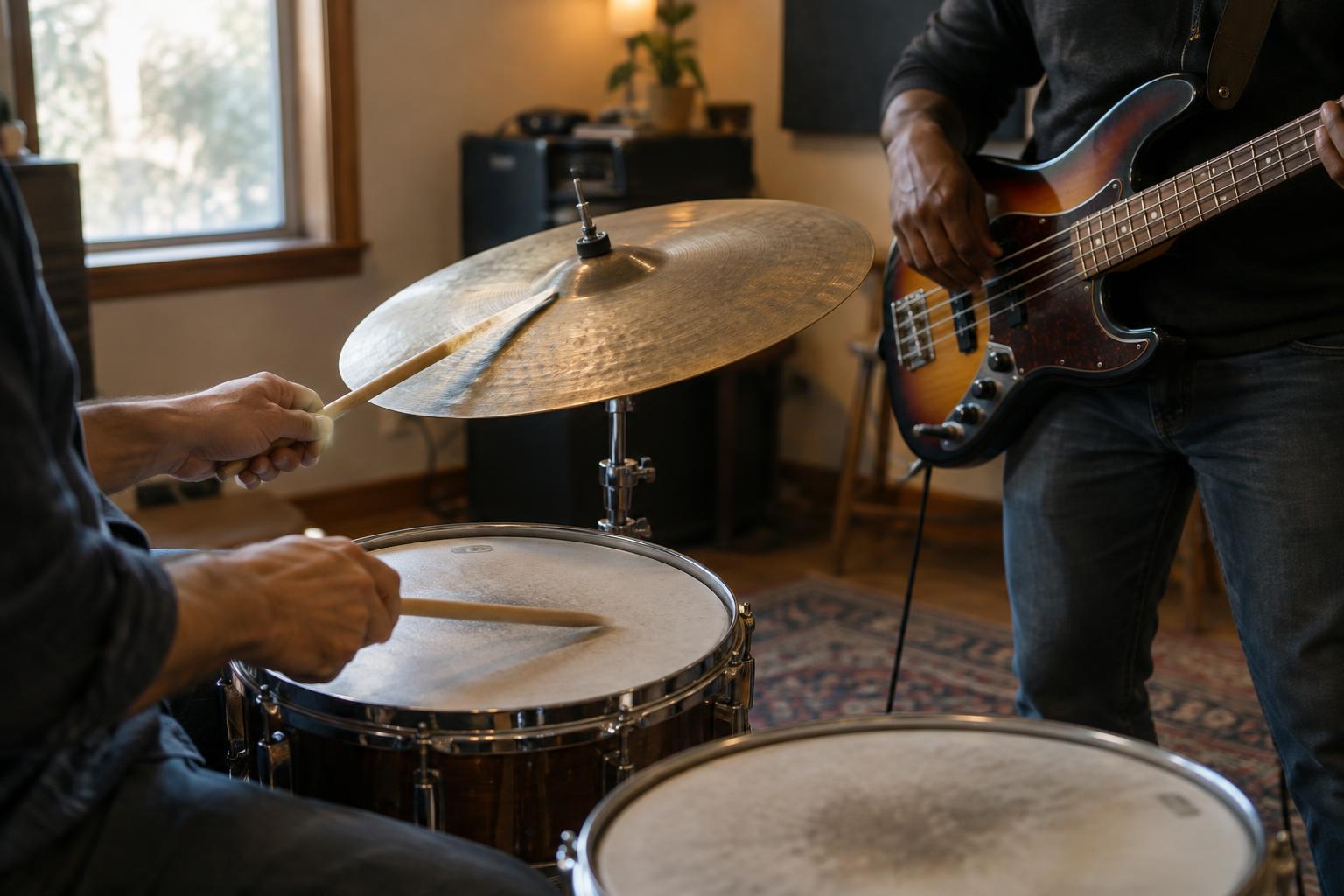
What makes a musical conversation?
Call and response is an exchange of musical ideas. One voice or instrument offers a phrase—the call—and another phrase answers it. The answer might echo the call, finish its thought, change its mood, or push against it. You do not need to identify notes or chords to hear the pattern. Listen for the moment one phrase ends and another seems to reply.
In blues recordings, the exchange often happens between a singer and a guitar, piano, or harmonica. A singer delivers a line, leaves a little room, and an instrument fills that room with a short phrase. The roles can change, too: an instrument may introduce an idea before the singer enters. Not every sound between vocal lines is an answer, but treating it as a possible reply is a useful way to begin listening.
Start with the voice and the gap
Choose a recording with a vocal you can follow comfortably. On the first listen, pay attention only to where the singer stops. Does an instrument enter immediately, or is there a beat of silence? Does it play for the whole gap or just part of it? These small spaces help give the music its conversational pace.
On a second listen, notice the shape of each vocal line. A phrase may rise toward a question-like ending, or fall as though making a firm statement. The instrumental reply may copy that shape or take it somewhere else. Imagine, for example, a singer holding the last word of a line while a guitar answers with two clipped notes. The contrast between a long sound and a brief reply can make the exchange clear even without words.
Some blues lyrics repeat a line before offering a different concluding line. Listen to how the singer changes the delivery of the repeated words. A slight pause, a rougher tone, or a different emphasis can make the second pass feel less like a copy and more like another turn in the conversation. Lyric structures vary, so let the recording guide you rather than trying to fit every song into one pattern.
Follow the replies across the band
Once you can hear a voice-and-instrument exchange, widen your attention. A piano might answer the singer while a guitar adds a quieter comment underneath. A drummer may mark the end of a phrase with a fill, while the bass keeps the pulse steady. These parts do not always take turns neatly. Sometimes several musicians respond at once, creating the feeling of a lively group conversation.
Try following just one instrument through a full verse. When does it play, and when does it hold back? Does it use nearly the same reply each time, or adjust to the singer’s phrasing? Repeated responses can give a performance a familiar anchor. Changing responses can make each line feel newly considered. Neither approach is inherently better; both can serve the song.
Listen for more than imitation
A response does not have to sound like the call. A bright, quick instrumental phrase can follow a weary-sounding vocal line. A singer may return after a forceful solo with a much quieter phrase. The connection lies in timing and placement as much as in matching notes. Ask yourself what the second phrase does to the first: reinforce it, soften it, interrupt it, or leave it hanging?
Silence matters here as well. If everyone plays continuously, there is less room for a phrase to stand out as a reply. A musician who waits before entering can make a short answer feel especially pointed. Listening to what the band leaves unsaid can be as revealing as listening to the notes it plays.
Make it a repeatable listening habit
For a simple exercise, play one verse or short passage three times. First, find the pauses in the vocal. Next, follow whichever instrument is most audible in those pauses. Finally, listen to the whole group and notice whether its replies stay similar or change. If you lose track, return to the singer’s line and start again. There is no need to catch every detail.
Call and response is a way of paying attention, not a test with one correct answer for every phrase. As you hear more recordings, you may notice exchanges within a singer’s repeated lines, between soloists, or between a lead instrument and the rhythm section. The pleasure is in hearing musicians make space for one another—and in recognizing how much can be said in a brief reply.