A jam is a shared practice, not an open rehearsal
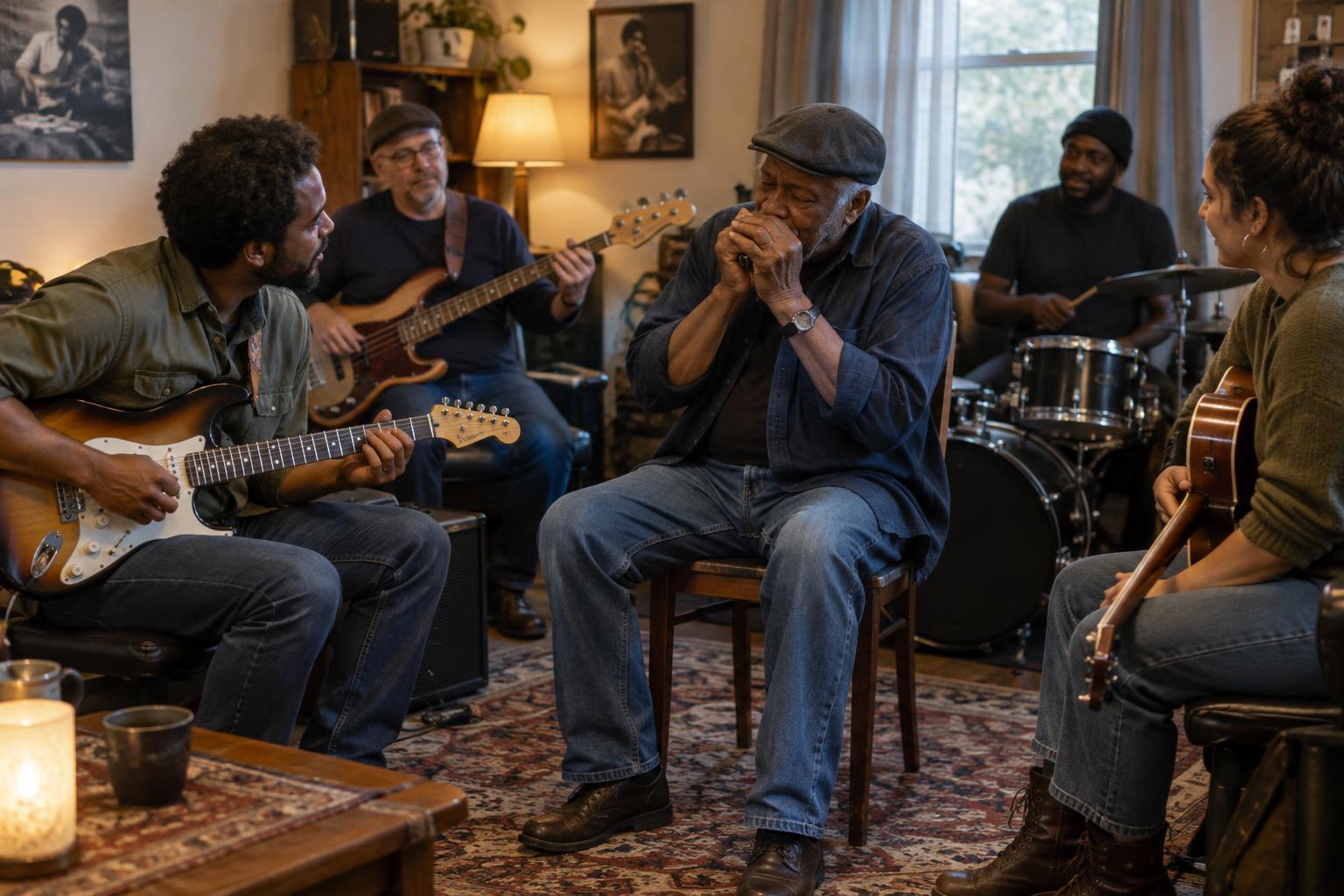
A community blues jam brings musicians together to make music without rehearsing a full set in advance. Its shape varies from place to place: a host may organize short groups, invite players up one at a time or leave more room for spontaneous combinations. Some gatherings welcome beginners; others expect participants to know a working repertoire. Watching how a particular jam runs is more useful than assuming every room follows the same rules.
The tradition depends on cooperation. Players need to hear one another, agree on a song’s basic shape and leave space for someone else to lead. A guest who understands that shared purpose can contribute even without being the loudest or most experienced person in the room.
Listen before asking to play
If you are new to a jam, arrive with enough time to hear a few songs. Notice how the host calls musicians, how long each group plays and whether singers or instrumentalists choose the material. Look for practical details, too: where people put instrument cases, whether an amplifier is provided and whom players approach to join the list. If the process is unclear, ask the host during a break rather than interrupting a performance.
Listening also reveals the room’s musical vocabulary. A jam might favor familiar blues forms, but blues does not mean every song has the same twelve-bar structure, tempo or ending. Pay attention to how musicians signal a stop, repeat a verse or hand off a solo. Those cues often carry more immediate value than knowing a large number of songs by name.
Bring a song other players can follow
When your turn comes, a clear, modest plan helps everyone. If you are leading, give the group a song title or describe the feel, name the key and explain any unusual changes or breaks before starting. A singer may need a key that suits their voice rather than the one heard on a recording. If you are not leading, wait for that information and ask a short question when something matters. Guessing at a complicated arrangement can make the group’s job harder.
Shared repertoire does not require identical performances. Musicians may know different versions of a song, or they may know its groove without knowing its lyrics. Agreeing on a simple opening, a likely ending and who will cue the changes gives the group enough common ground to make its own version. If you are unsure of a tune, it is fine to say so and sit it out.
Make room in the music
A good contribution is not measured by the number of notes played. When someone sings, accompany them at a level that leaves the words audible. When another instrument takes a solo, support the rhythm instead of competing for attention. If you are offered a solo, watch for the leader’s cue and hand the music back when your turn is done. These choices help players with different levels of experience work together.
The same consideration applies offstage. Avoid adjusting another person’s equipment without asking, and keep conversation low enough that the audience can hear quiet passages. Thank the host and fellow players whether or not you get a turn. A jam can involve long waits and changing lineups; accepting that uncertainty is part of being a considerate guest.
Prepare for the room, not just the stage
Before leaving home, check what you need to carry, whether your instrument is ready to use and whether you can manage your belongings without blocking walkways. Dress for the venue’s conditions and for the time you may spend standing or seated; there is no single outfit that makes someone a blues musician. If you are traveling and want practical ideas for keeping a small performance wardrobe usable, browse Clothing Care · Jarlzy Style. For ways to organize the personal items you bring, browse Accessories · Jarlzy Style. For broader style ideas that you can adapt to the room rather than treat as a dress code, browse Jarlzy Style.
You can also participate by listening. Applauding other players, buying something from the venue if you are able and respecting the people who make the gathering possible all help create a welcoming atmosphere. Whether you play one song or none, the aim is to leave space for the music and the community that sustains it.