Hear the chorus as a return, not a reset
In blues, a chorus is one complete pass through the repeating musical form. Many songs use a twelve-bar pattern, but blues forms vary. As the band returns to the beginning, the guitarist gets another chance to speak over familiar ground. A solo can therefore feel like a series of connected statements rather than a collection of unrelated licks.
To hear that connection, listen for the point where the form begins again. The bass and drums may keep the same groove while the guitar changes its approach. On one pass, the player might offer a brief phrase and wait. On the next, that phrase might return with a different ending. You do not need to count every bar to notice the effect: the backing sounds familiar, but the lead line moves the story forward.
Start with an idea small enough to remember
A short motif gives listeners something to recognize. It might be three notes, a bent note followed by a descent, or a particular rhythmic shape. The guitarist can repeat it, shift where it starts, answer it with another phrase, or leave its ending unfinished. Because the original idea is simple, even a modest change can feel meaningful.
This is one reason a restrained opening chorus can be effective. A few clear notes establish the guitar’s sound and leave room for development. Listen for the spaces after each phrase, too. They let the rhythm section remain audible and give the next entrance a purpose. If you are learning to solo, try recording one chorus using only a small idea and its variations. The exercise directs your attention toward phrasing rather than the number of notes you can fit in.
Change the conversation through rhythm and register
Development does not have to mean adding notes. A guitarist might play the same pitch pattern early in one chorus and delay it in the next. A clipped phrase can become a longer, more sustained answer. Repeated notes may gain urgency when placed closer together, while a pause can make a single note stand out. Against a steady groove, these rhythmic choices are often easy to hear.
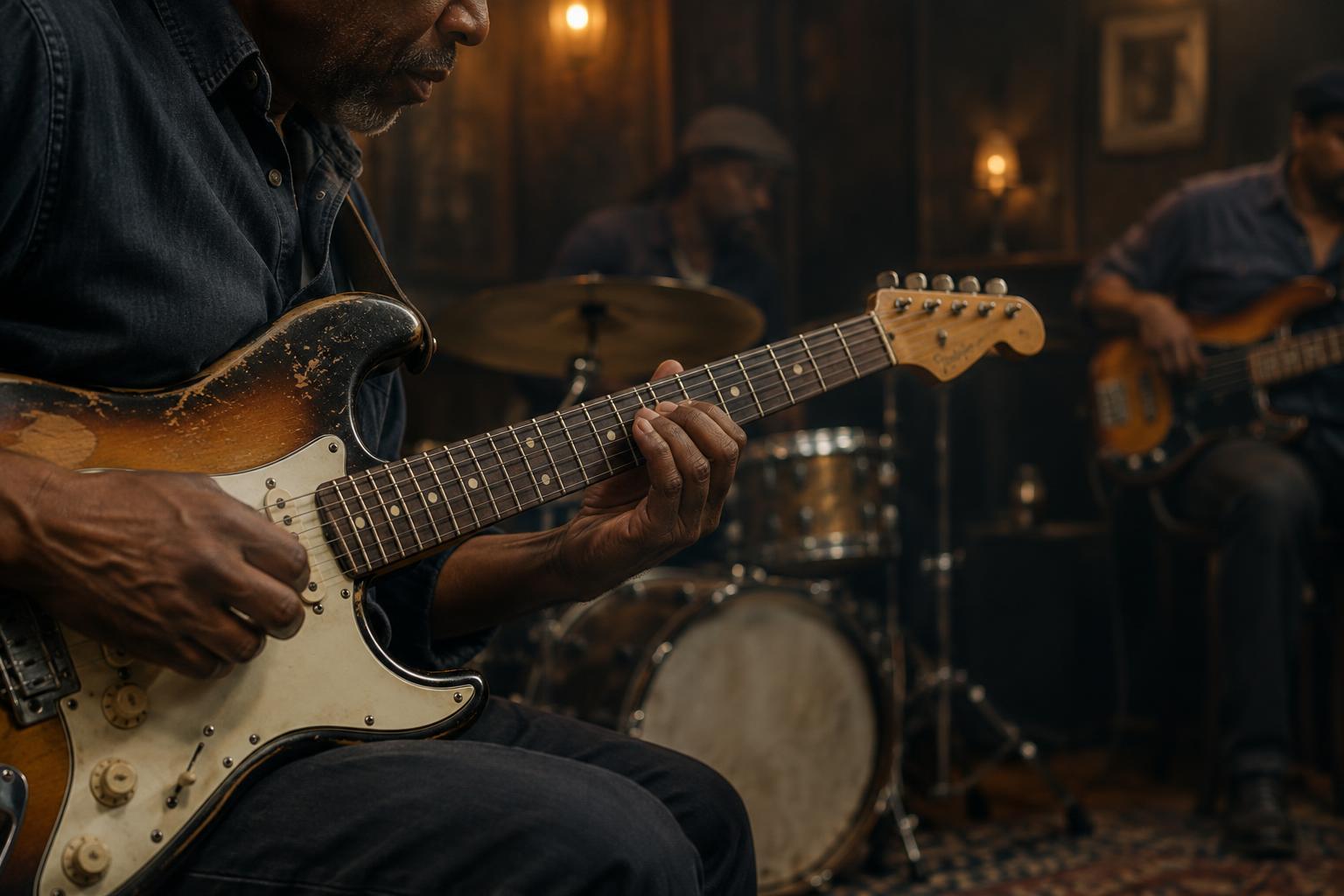
Register offers another way to shape the arc. A low phrase can sound conversational; a move higher up the neck may feel more insistent, especially when bends or sustained notes enter. These are possibilities, not fixed emotional rules: touch, tone and the band’s response all matter. As you listen, notice whether the player moves upward all at once or saves the higher notes for a later chorus. Either choice can make a peak feel earned.
Let the band and the harmony guide the next pass
The backing pattern repeats, but its changing chords provide landmarks. A guitarist may hold a note that feels settled over one chord, then move when the harmony turns. Another player may emphasize a distinctive note only briefly before returning to a familiar phrase. You can listen for these shifts without naming the chords: ask whether the guitar seems to lean into a change, resist it for a moment, or resolve as the form comes home.
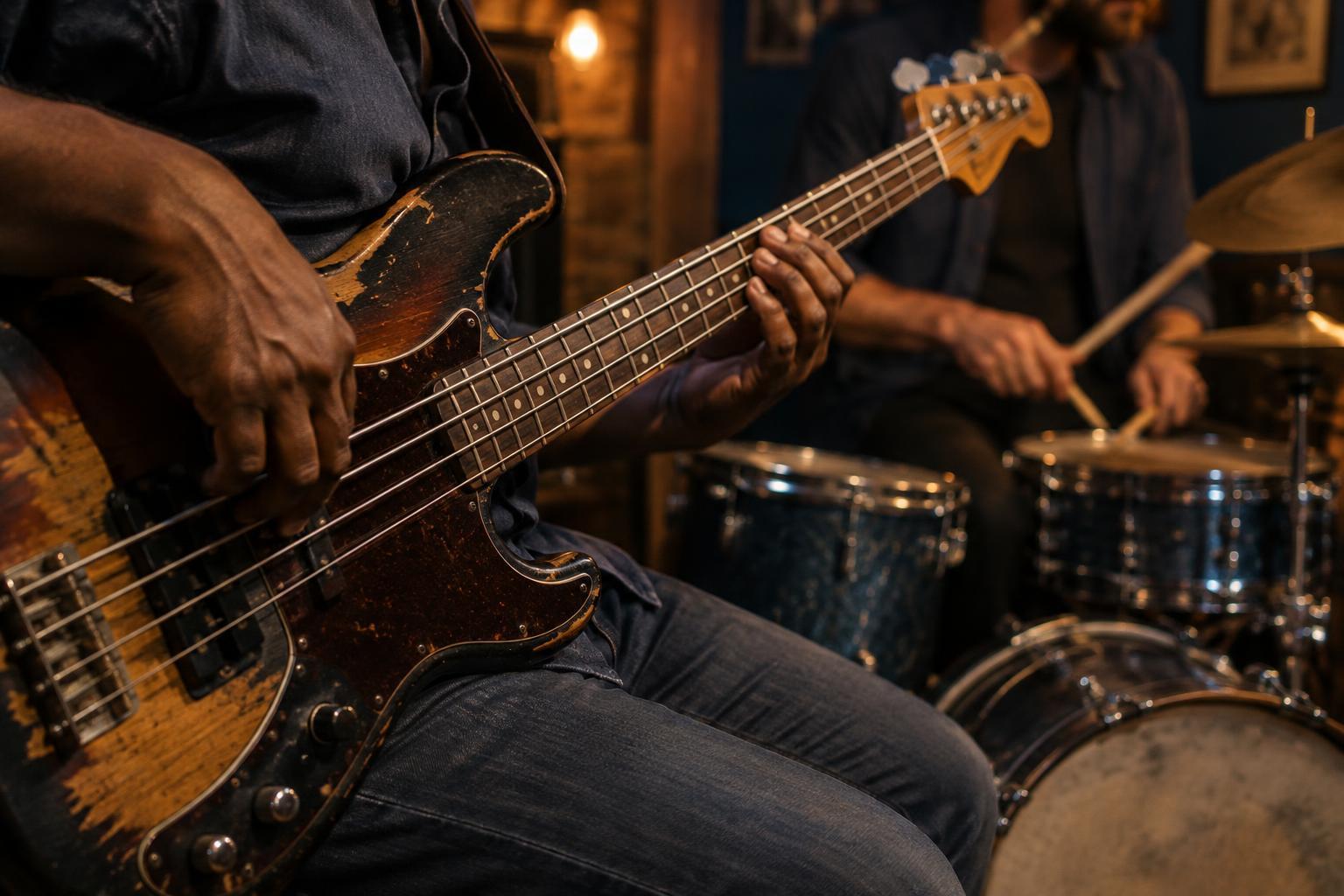
The rest of the band helps shape the solo as well. A drummer may respond to a strong phrase with an accent, or a keyboard player may fill a gap the guitarist leaves open. Not every performance builds steadily toward maximum intensity. Sometimes a guitarist follows a loud chorus with a quieter one, making the groove feel wider. The solo develops through its relationship with the ensemble, not just through what the lead instrument plays.
Listen for the peak and the way out
A well-shaped solo often gives its strongest gesture some context. After several choruses of small changes, a longer bend, a denser run or a repeated high note may sound like a peak. What follows is just as important. The guitarist might return to the opening motif, play a shorter final phrase, or make space for a vocal entrance. An ending can feel satisfying because it recalls an earlier idea rather than because it is the fastest passage.
For a focused listening session, follow one solo three times. First, notice where each chorus begins. Next, listen only for recurring phrases and the silences around them. Finally, track changes in rhythm, register and intensity while keeping an ear on the band. This approach makes even a modest solo easier to appreciate: each return through the form becomes an opportunity to say something familiar in a new way.